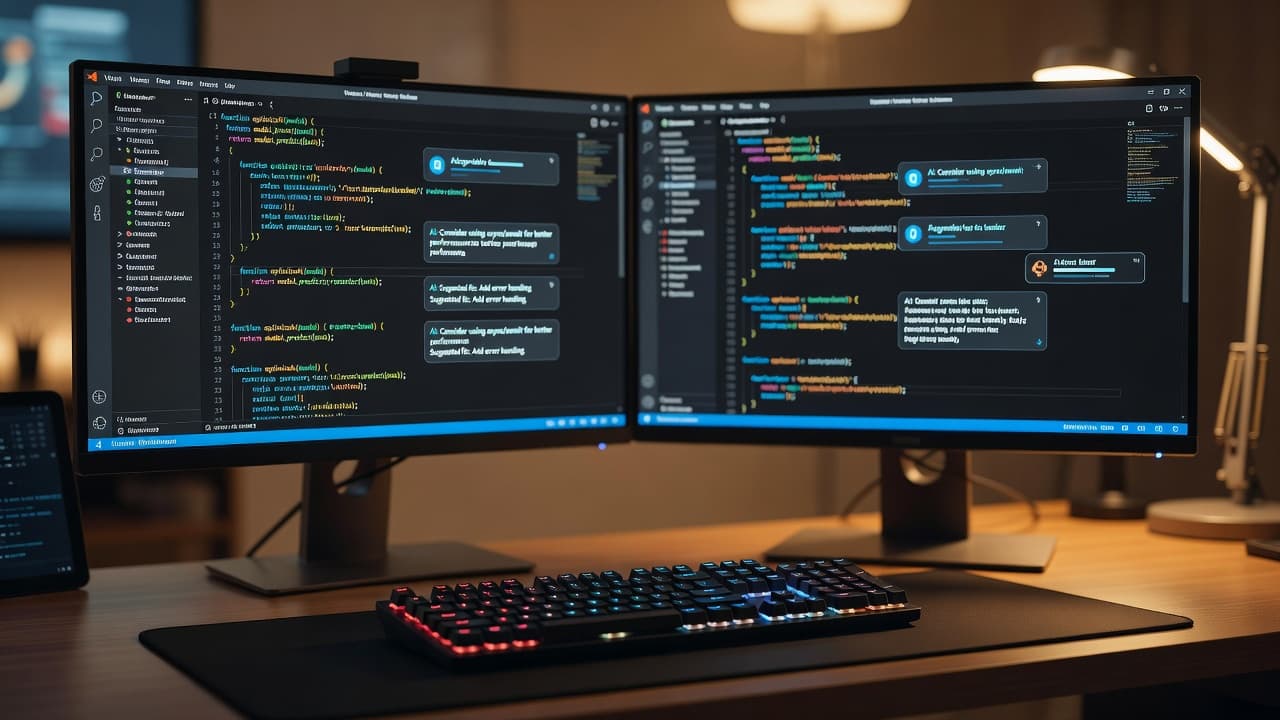
AI Tools for Developers in 2026: Cursor Rules, Multi-Model Workflows Win
AI Tools for Developers in 2026: Cursor Dominates, Multi-Model Workflows Rule
A comprehensive survey of 110 software professionals reveals a clear picture of which AI tools are actually moving the needle in engineering teams—and the ones that aren't. The findings challenge conventional wisdom and expose a critical skill that most companies haven't yet recognized.
The Top Tools (And Why)
Cursor dominates. 47% of survey respondents use it; among software engineers specifically, adoption is near-universal. The reason is simple: full-codebase context. Standard chat tools see one file. Cursor reads the entire repository and reasons across it. Engineers report saving 2-5 hours per day.
Claude and ChatGPT are complementary, not competitive. Claude wins for depth—complex architecture decisions, large-codebase exploration, code review. ChatGPT wins for speed—quick questions, brainstorming, documentation. Most power users run both and switch deliberately based on task type.
GitHub Copilot has been displaced. Once the standard, it's now a supporting tool. Engineers use it for inline completion and boilerplate, but shifted their primary workflow to Cursor or Claude Code for anything beyond a few lines.
Figma Make has reshaped design workflows. UI/UX designers use it to generate responsive layouts and design variations from prompts in minutes—eliminating hours of manual wireframing. The productivity is real, but adoption is constrained by credit limits on lower tiers.
The Surprising Finding: Orchestration Beats Tools
The most striking result didn't come from a single tool. It came from a workflow.
One senior engineer built a complete React Native mobile application in roughly 60 minutes using a four-tool pipeline: Gemini → Claude → ChatGPT → Cursor. The manual estimate for the same work was three to four weeks.
This is not an outlier. Other senior engineers reported 50-70% productivity gains using five-tool stacks that include Mermaid AI, Gemini, Claude, and NotebookLM. The pattern is repeatable.
The insight: Senior engineers aren't using the most tools. They're using two or three tools in choreographed sequence, each playing to its strength. That's the skill worth hiring for in 2026. That's the skill separating teams pulling ahead from ones keeping up.
Productivity by Role
The survey breaks down productivity gains by department:
- Software engineers: Up to 70% improvement with Cursor + Claude/ChatGPT + Copilot. The modal high-performance stack.
- Project managers & business analysts: Five to seven hours saved daily by orchestrating ChatGPT, Gemini, Figma, Gamma, and Fathom. Highest single time-saving figure in the survey.
- Specialists: QA engineers use Playwright Code gen. Designers use Midjourney and Recraft.ai. The general-purpose chatbots are table stakes; the multipliers come from role-specific tools.
The Friction: Free-Tier Limits Are Expensive
Honest finding: the single most common complaint wasn't about tool quality. It was about access.
- Figma Make credit limits: Seven designers cited caps as a daily blocker. The fix is straightforward—budget for the paid tier.
- Amazon Q account suspensions: Three engineers reported intermittent suspensions disrupting flow.
- Free-tier token limits: Multiple respondents flagged rate-limiting as a friction point.
These aren't philosophical problems. They're literal hours lost to budget constraints. Tech companies evaluating AI stacks should note: if your highest-output people are losing time to free-tier limits, you're saving the wrong dollars.
Recommendations for Tech Companies
Based on the survey data:
-
Standardize Cursor across all software engineers. Highest ROI development tool. Already widely adopted by senior engineers—institutionalize it.
-
Run multi-model workflow training. The one-hour mobile app build is teachable. Share the pipeline, document the prompts, run an internal workshop. Compounding effect across 50 engineers is significant.
-
Invest in Figma Make paid credits. Small budget impact. Measurable productivity impact.
-
Expand meeting AI (Fathom, Fireflies) to all teams, not just PMs and HR. Already proven effective; easy adoption, high return.
-
Deploy Claude Code to senior engineers. They report 70-80% time savings on code review and exploration. Currently underutilized.
-
Resolve access issues with Amazon Q and similar tools. Multiple engineers affected. Backup tools are a workaround, not a solution.
What's Not Happening Yet
Meeting intelligence is severely underutilized. Fathom, Fireflies, and Otter.ai are effective for PMs and HR, but adoption is concentrated. Engineers and designers—who spend significant hours in meetings—rarely use them. Broader rollout is one of the lowest-effort, highest-return interventions a tech company can make.
The Bottom Line
The 2026 story isn't which model is smartest. The frontier-model gap between Claude, ChatGPT, and Gemini is now small enough that most users can't tell the difference on routine tasks. The story is about who uses the tools well, and who leaves them in tabs.
The teams pulling ahead aren't running ten tools in isolation. They're running two or three tools in deliberate sequence, with a clear sense of which model excels at which step. That orchestration skill is currently invisible on most résumés and entirely missing from most engineering job descriptions.
The companies that recognize and develop it first will compound the productivity gains the fastest.
Source: LinkedIn - Top AI Tools for Software Engineers and Tech Companies 2026
Comments
Loading comments...