Space
April Skywatching: Lyrids Meteor Shower, Bright Comet, and Mercury at Peak Visibility
April 2026: Exceptional Month for Stargazers and Astrophotographers
If you've been waiting for clear skies to set up your equipment, April 2026 is delivering. Between the Lyrid meteor shower peak, a potentially bright comet, and Mercury at its most visible annual position, there's plenty to observe from dark skies or urban locations with modest equipment.
The Lyrid Meteor Shower Peaks April 21-22
The Lyrids are among the oldest known meteor showers—records of observations date back over 2,600 years. The shower radiates from the constellation Lyra (the Harp), near the bright star Vega, making it easy to locate even in light-polluted skies.
Optimal viewing: Look east starting around 10 p.m. on April 21st and continue through the predawn hours of April 22nd. From dark sites, expect up to 20 meteors per hour at peak. The debris creating the Lyrids comes from Comet Thatcher, which last passed Earth in 1861.
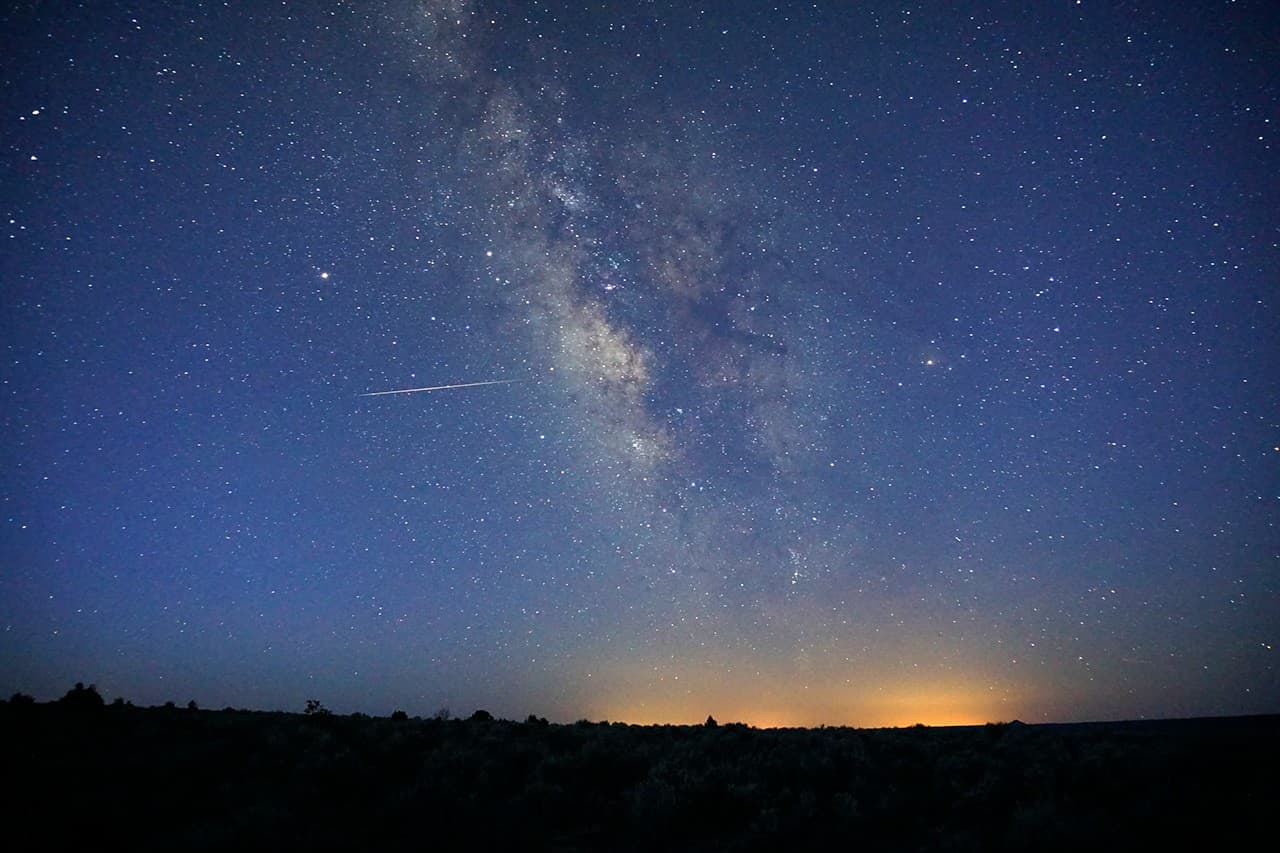
For astrophotographers, the Lyrids present an interesting challenge: capturing meteors while maintaining exposure settings for background constellations or the Milky Way. A wide-angle lens and high ISO will catch more activity. Consider shooting intervals of 15-30 seconds to maximize your capture window.
Comet C/2025 R3: Potentially the Brightest of 2026
April 17th offers your best chance to spot Comet C/2025 R3. The comet reaches its closest approach to Earth on April 27th, passing within 44 million miles of our planet—close enough in astronomical terms for a bright magnitude.
Experts estimate it will reach magnitude 8, requiring binoculars or a modest telescope to observe. The comet will be visible in the eastern predawn sky in the constellations Pegasus and above Pisces throughout mid-to-late April in the Northern Hemisphere, moving into evening visibility for Southern Hemisphere observers in early May.
For astrophotographers: comets exhibit varying brightness and occasional outbursts. High-resolution CCD or CMOS imaging during this window could capture interesting detail in the coma and tail structure, especially with moderate aperture (6-8 inches) telescopes.
Mercury at Greatest Elongation: April 3rd
On April 3rd, Mercury reaches its greatest elongation—its maximum angular distance from the Sun as seen from Earth. This is your best opportunity all year to spot the often-elusive planet without requiring optical aid (though binoculars help).
Look east in the predawn sky just above the horizon and slightly south of Mars. Mercury will be noticeably bright but requires a clear eastern horizon and some patience. It's best observed 30-60 minutes before sunrise.
The Broader Picture
April 2026 represents a convergence of observational opportunities. The new and waxing moon phases provide dark skies during prime meteor observation. The comet and Mercury visibility place interesting objects across multiple constellations.
Whether you're imaging with a ZWO camera and modest telescope, using binoculars from an urban location, or planning a dark-site session with a camera rig, April offers rewards for every skill level.
Source: NASA Skywatching
Comments
Loading comments...