Space
Artemis 2 Astronauts Witness Rare Solar Eclipse from Beyond the Moon
A Cosmic Rarity
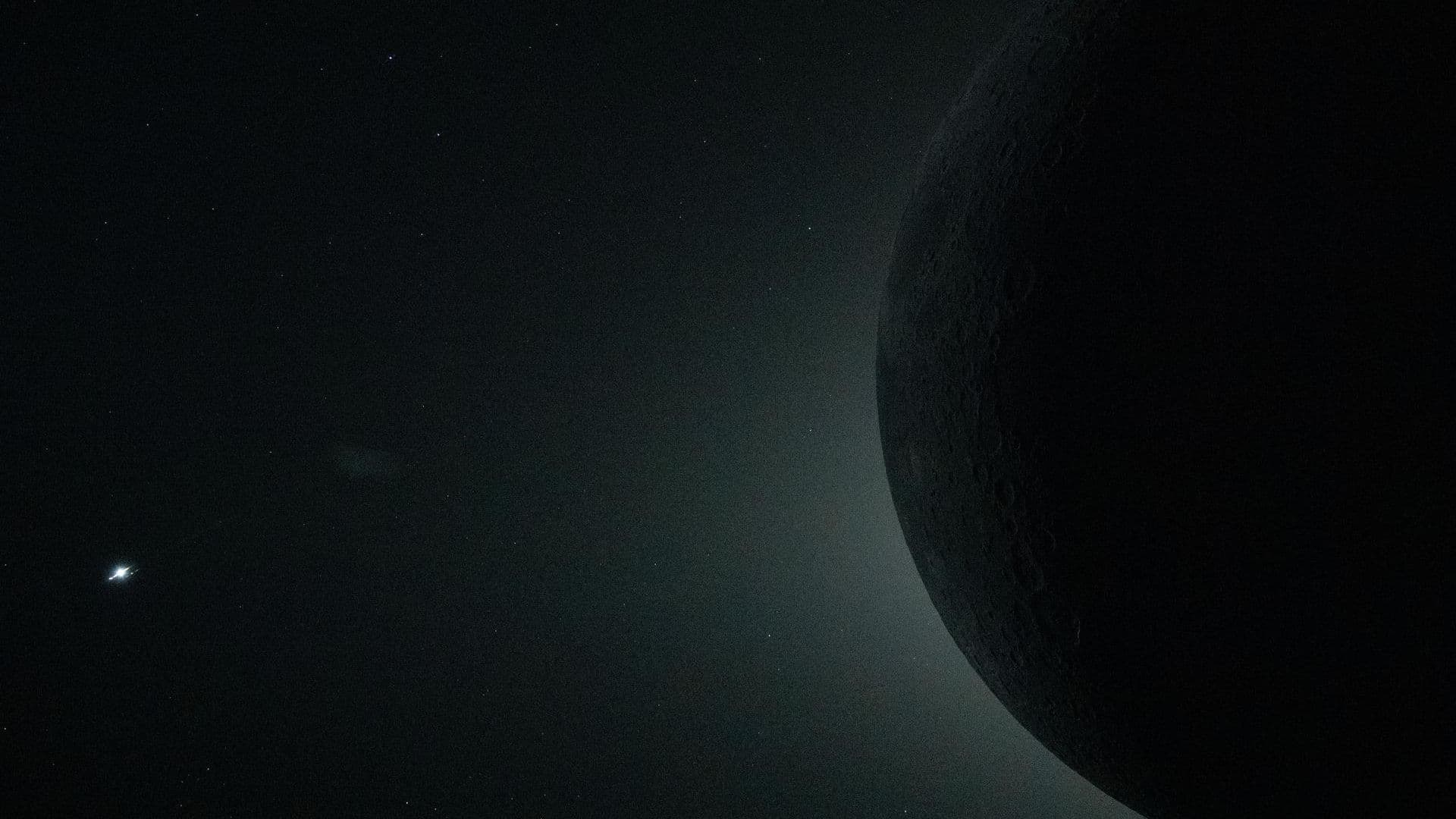
The Artemis 2 astronauts experienced something that separates them from nearly every human who's ever lived: they watched a total solar eclipse from beyond the moon. Unlike ground-based eclipses lasting minutes, they observed nearly an hour of uninterrupted totality.
As Orion passed behind the lunar far side on April 6, the moon gradually obscured the sun until only the brilliant solar corona remained visible. The observation lasted approximately 53 minutes — an extended duration made possible by their trajectory around the moon. Apollo-era missions, by contrast, moved through the shadow far more quickly.
Why This Matters
The extended viewing window is scientifically significant. Without Earth's atmosphere scattering light, the corona's faint structures become visible with exceptional clarity. The crew could observe fine details, background stars, and faint earthshine illuminating the lunar surface.
Orion's cameras captured the event in a timelapse that reveals the dynamic evolution of the solar atmosphere. It's the kind of observation that teaches us about the sun in ways Earth-based telescopes cannot.
A Vantage Point Worth Considering
For anyone serious about astrophotography or space observation, this underscores why missions beyond low Earth orbit matter. The vantage point changes everything: no atmosphere, extended viewing windows for rare events, and instruments functioning with precision in the thermal vacuum.
The crew — Reid Wiseman, Victor Glover, Christina Koch, and Jeremy Hansen — weren't just traveling to the moon. They became scientists observing phenomena from a perspective that opens new understanding of our universe.
Source: Space.com
Comments
Loading comments...