Technology
When Robots Stop: Baidu's Autonomous Vehicles Halt Mid-Traffic, Exposing Reliability Gaps
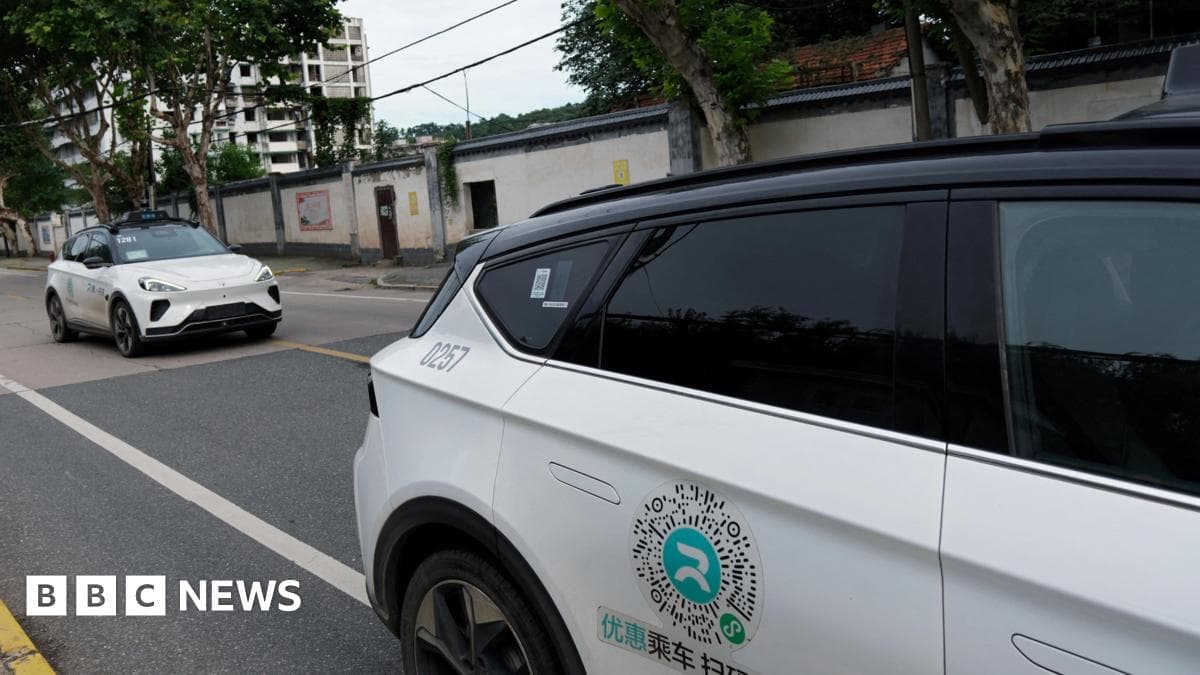
The future of autonomous vehicles just hit a traffic jam. On March 31, 2026, dozens of Baidu's Apollo Go self-driving taxis stopped dead in traffic across an unnamed Chinese city, creating congestion and raising uncomfortable questions about the reliability of autonomous vehicle fleets.
The Outage
Exactly what triggered the simultaneous failure remains unclear, but the incident highlighted a critical weakness in fully autonomous systems: when they fail, they fail everywhere at once. Unlike human drivers, who have individual foibles and occasional errors, a software bug or system glitch can disable an entire fleet in minutes.
Jack Stilgoe, professor of science and technology policy at University College London, told the BBC that while autonomous vehicles "may be safer on average" than humans, "this incident showed it could still go wrong in completely new ways."
He's right. Human drivers are unreliable in predictable ways—fatigue, distraction, occasional bad judgment. Autonomous systems are reliable until they're not, and when they fail, the failure mode can be catastrophic: dozens of vehicles stopping mid-traffic, intersection gridlock, emergency vehicle access blocked.
A Pattern Emerging
This isn't an isolated incident. In December 2025, a power outage in San Francisco caused Waymo taxis to malfunction simultaneously, creating massive traffic disruptions. In August 2025, a Baidu Apollo Go robotaxi carrying a passenger literally fell into a construction pit in Chongqing.
These aren't edge cases. They're warnings.
The Systemic Challenge
The problem isn't that robots can't drive safely—in many metrics, autonomous systems outperform human drivers. The problem is that we're deploying these systems at scale without fully understanding the novel failure modes they introduce.
"If we're going to make good choices about this technology," Stilgoe argued, "we need to understand entirely new types of risk."
Right now, we're learning those risks in real-time, on city streets, with passengers in vehicles. That's a high-stakes experiment, and the traffic jams in Baidu's latest failure are just the visible symptom of a deeper reliability problem.
Source: BBC News - Baidu's Apollo Go self-driving cars stop mid-traffic
Comments
Loading comments...