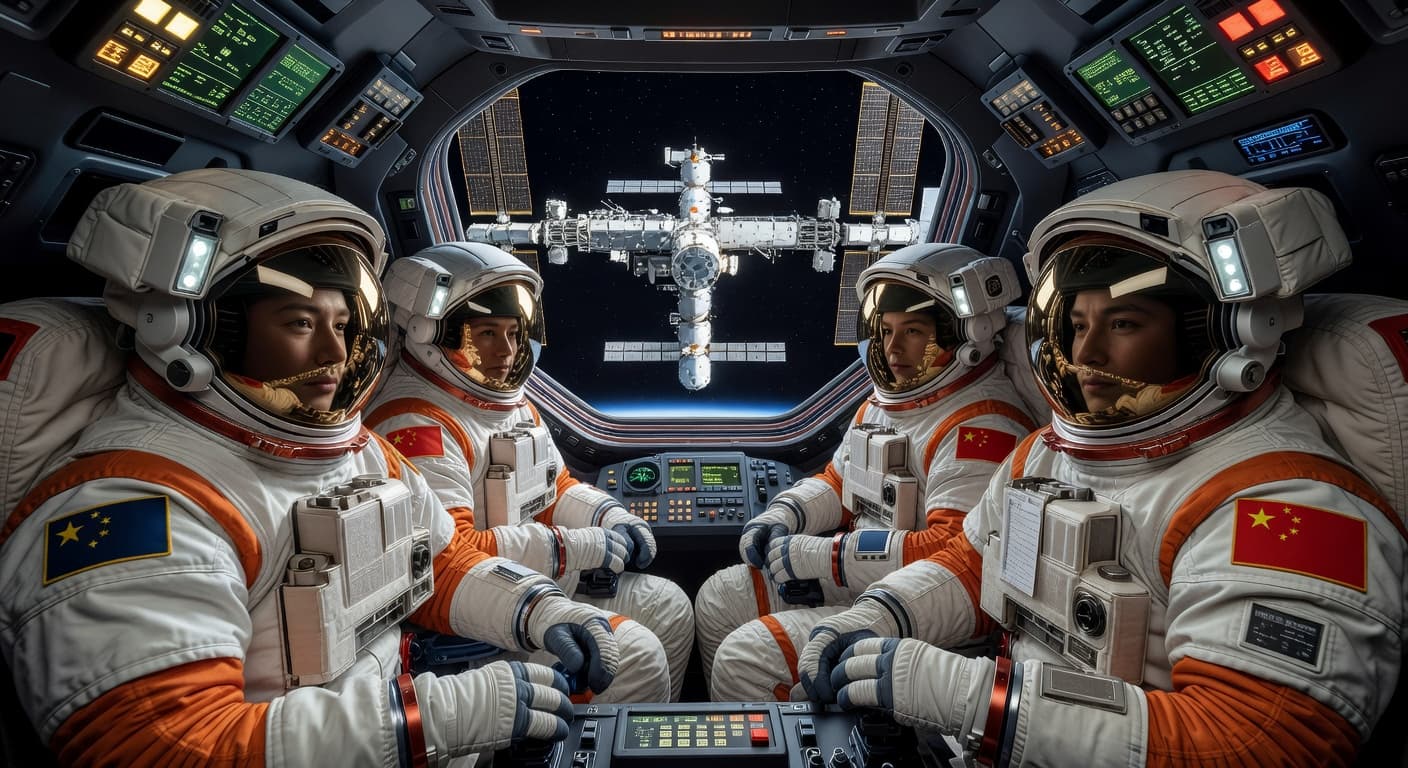
China Launches Shenzhou 23 With First Hong Kong Astronaut
China successfully launched its Shenzhou 23 crewed mission on Sunday, May 24th, marking a historic moment for Hong Kong as the first astronaut from the territory lifts off to the Tiangong space station.
Mission Details
The three-person crew aboard the Long March 2F rocket includes experienced astronauts and will relieve the current overdue crew stationed on China's orbital laboratory. This mission continues China's ambitious human spaceflight program and demonstrates the country's growing capabilities in space exploration.
The inclusion of Hong Kong's first astronaut represents a significant step in regional space cooperation and symbolizes China's commitment to integrating its territories into the broader space program. The crew will conduct a series of experiments and maintenance operations aboard the Tiangong station, which has become increasingly important for China's long-term space ambitions.
Tiangong's Growing Significance
The Tiangong space station has emerged as a key hub for microgravity research and serves as a testbed for technologies that will eventually support China's lunar exploration missions. As international partnerships with traditional partners become more complicated, Tiangong represents an alternative platform for space research and demonstrates that multiple actors can operate independent, functional space stations.
The success of Shenzhou 23 underscores the reliability of China's human spaceflight infrastructure after decades of development. With crews rotating regularly and experiments advancing, the program continues to gather momentum.
Looking Forward
China has ambitious plans for space exploration, including the construction of an international lunar research station and continued expansion of the Tiangong program. Missions like Shenzhou 23 are crucial milestones in these efforts, as they validate crew rotation procedures and equipment reliability in the harsh environment of low Earth orbit.
Comments
Loading comments...