Space
Comet PanSTARRS 'Switches On' Its Ion Tail During Close Encounter with Earth
Watch Comet PanSTARRS 'Switch On' Its Second Tail
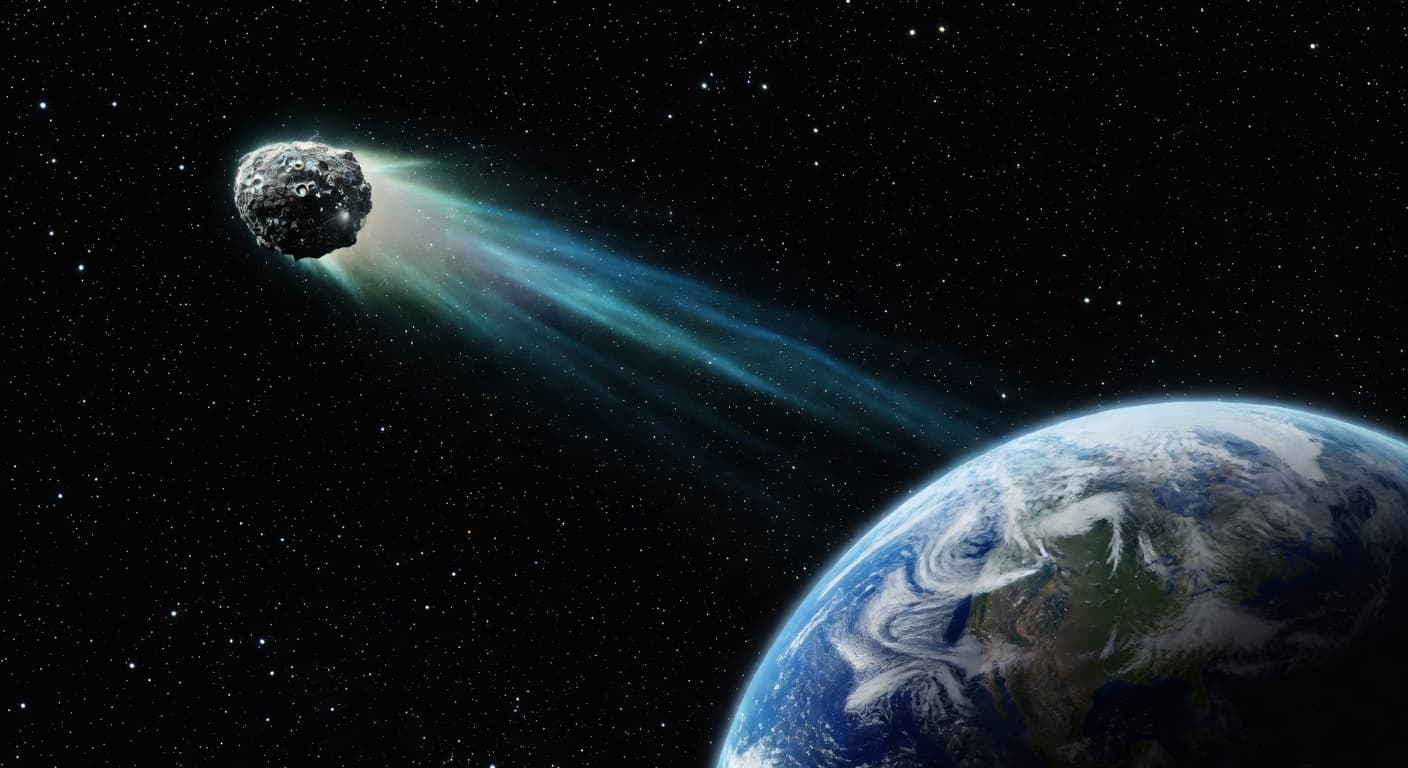
On April 26, 2026, Comet C/2025 R3 (PanSTARRS) reached its closest approach to Earth—just 45 million miles away—giving observers and space-based instruments a spectacular show. The NASA/ESA Solar and Heliospheric Observatory (SOHO) captured one of the comet's most dramatic features: the sudden brightening and directional shift of its ion tail, creating what scientists describe as the comet "switching on" its second tail.
Why Comets Have Two Tails
Unlike what many people assume, comets don't just have one tail trailing behind them. As a comet approaches the sun and heats up, the solid nucleus releases both dust and ionized gas through a process called sublimation. These create two distinct tails:
The Dust Tail is broad and often curved, formed as heavier dust particles are pushed back by sunlight. It can stretch for millions of miles and reflects sunlight spectacularly—the reason why bright comets are sometimes visible to the naked eye.
The Ion Tail is straighter and narrower, composed of charged gas particles caught in the solar wind. This tail always points directly away from the sun, driven by particles traveling at hundreds of kilometers per second. The ion tail brightens as the comet approaches the sun and more gas is ionized by ultraviolet radiation.
A Rare Capture
SOHO's coronograph—an instrument that blocks the sun's bright disk to reveal fainter objects nearby—captured PanSTARRS' ion tail as it brightened dramatically during closest approach. The imagery shows the tail shifting to stream directly away from the sun, a visual demonstration of the delicate dance between a comet's outgassing and the solar wind's relentless push.
Comet PanSTARRS was discovered in September 2025 and generated excitement among comet enthusiasts worldwide about its potential to become the "great comet" of 2026. While it didn't reach naked-eye brilliance for most observers, the SOHO images prove that even from space, this icy visitor continues to put on a show as it swings past our world.
**Source: Space.com - Watch comet PANSTARRS 'switch on' its second tail as it makes closest approach to Earth
Comments
Loading comments...