AI
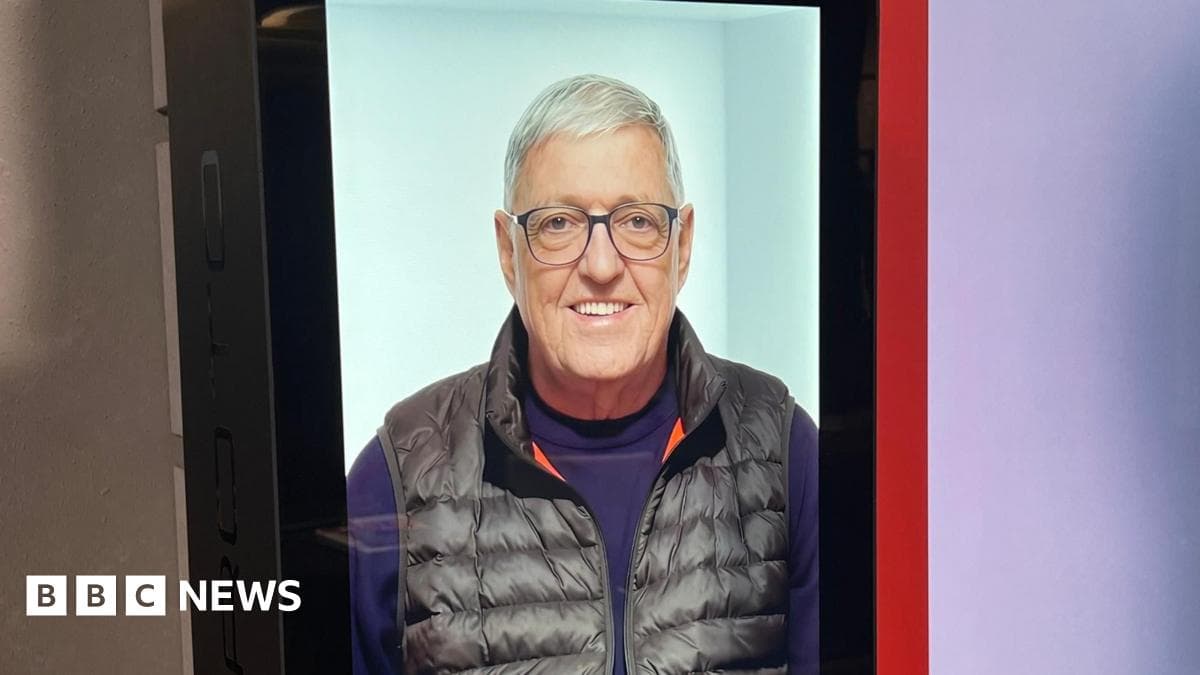
The Future of Farewell: Woman Brings Her Husband's Hologram to His Own Funeral
When Pam Cronrath's husband Bill died last year after nearly 60 years of marriage, she knew what she wanted to do: keep the promise she'd made him. "I promised him a super wake," she told the BBC.
What followed is a remarkable intersection of grief, technology, and human determination—one that hints at how we might mourn in the years ahead.
A Tech Enthusiast's Vision
Pam is a self-confessed tech enthusiast living in Wenatchee, Washington. Years ago, while speaking at a medical conference, she witnessed a doctor appear as a full-body hologram, broadcast live across the United States. The moment stayed with her.
After Bill's death, that memory crystallized into an idea: what if the same technology could be used not for corporate presentations, but for remembrance? For a man who'd spent nearly 60 years building a life with her?
The Technical Challenge
Finding the right partners proved difficult. Most companies Pam contacted were either uninterested or prohibitively expensive. Eventually, she connected with Proto Hologram and Hyperreal, companies working at the frontier of avatar and hologram technology.
"When you hear they're working with Michael Jackson's estate, and then it's me—Pam from Wenatchee—you do wonder how it's going to work," she reflected.
The process was intensive. Hyperreal's approach differs from other "speak with the deceased" systems that rely on pre-recorded answers selected by software. Instead, Hyperreal created a more dynamic avatar, trained to respond in ways that captured Bill's essence.
The Cost of Memory
Pam's original budget was $2,000. The final cost was, by her estimate, "at least 10 to 15 times" that figure. It wasn't cheap. But she remains convinced it was worth it.
"I still think Bill would be very much inspired by all of this, and thankful that it happened," she said.
What This Means
We're in the early days of a shift in how technology intersects with death, grief, and memory. For decades, memorial services have been bound by physical constraints: the body, the grave, the photograph on the mantle.
Now, emerging technologies—holograms, AI avatars, voice synthesis—offer new possibilities. Not replacements for traditional mourning, but augmentations. Ways to say goodbye that reflect how we lived: increasingly digital, increasingly mediated by technology.
Pam's choice to bring Bill to his own funeral wasn't about denying death. It was about honoring a life lived together, using the tools of the present to do it.
Source: BBC News - I brought my husband back to his funeral as a hologram
Comments
Loading comments...