Space
Interstellar Comet 3I/ATLAS Found Hiding in Pre-Discovery Images
Interstellar Comet 3I/ATLAS Found Hiding in Pre-Discovery Images
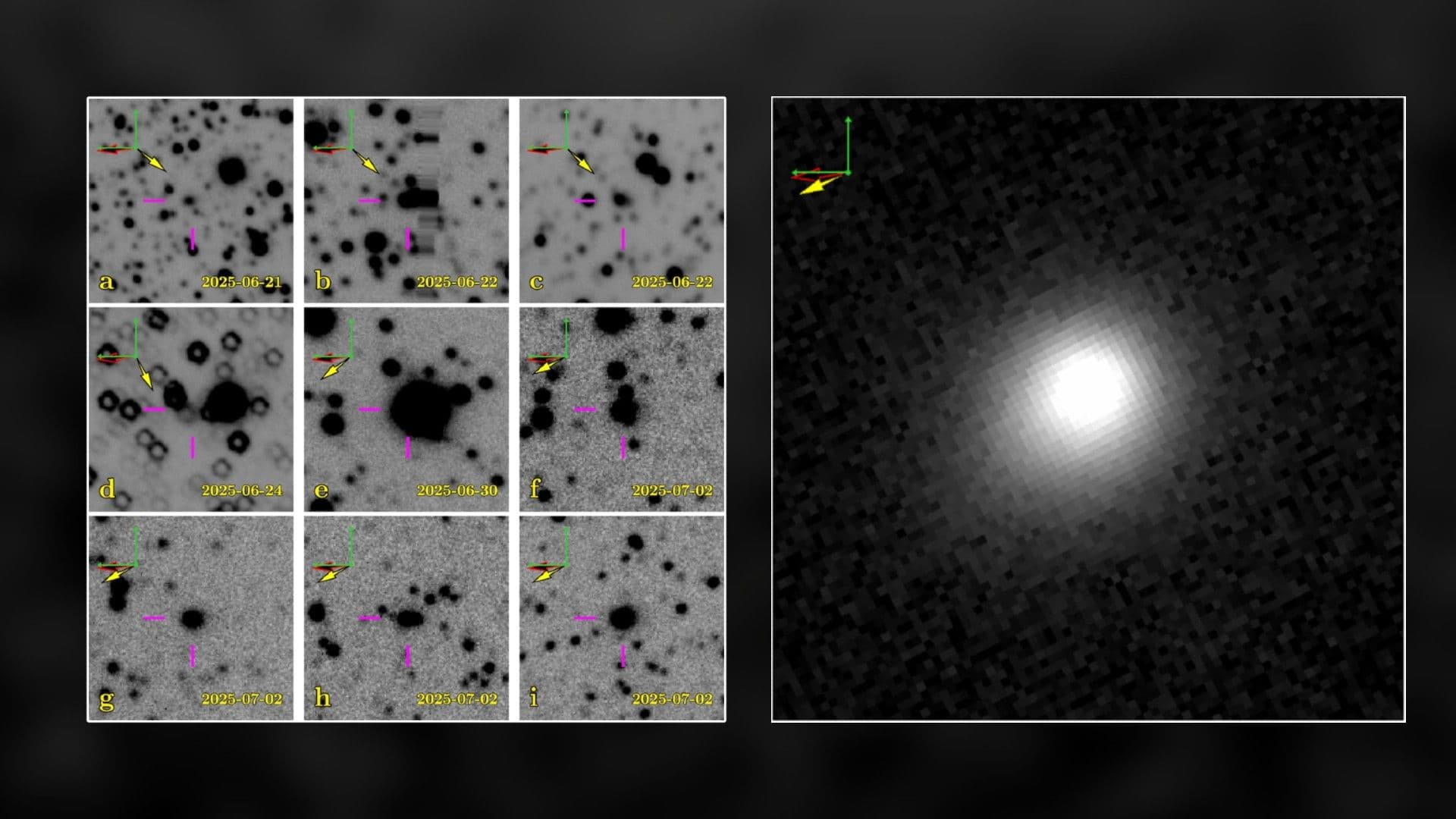
In a fascinating bit of astronomical timing, researchers have discovered that the recently identified interstellar comet 3I/ATLAS was already captured in images from the Vera C. Rubin Observatory—before the comet's official announcement.
Finding a Visitor from Deep Space
The discovery highlights how modern sky surveys can reveal cosmic treasures hiding in plain sight. The Vera C. Rubin Observatory, which began its science validation phase earlier this year, captured the comet in its initial observations without initially recognizing it as an interstellar visitor.
Interstellar comets are rare celestial wanderers that originate from outside our solar system, ejected from other star systems and drifting through the galaxy. 3I/ATLAS represents only the third confirmed interstellar comet discovered, making this discovery significant for our understanding of how objects migrate between star systems.
Data Deep-Diving
The retrospective analysis involved combing through archived images and comparing observations with new data, allowing astronomers to identify the comet's signature across multiple observations. This detective work demonstrates the value of comprehensive sky survey data—information that might be overlooked in real-time observations becomes invaluable when properly analyzed.
Implications for Future Discovery
This discovery underscores the importance of systematic archival analysis for astronomical surveys. Had the Vera C. Rubin Observatory's science validation been delayed by just a few weeks, it might have captured the comet's discovery first.
The find also suggests that many more interstellar objects may already exist in survey data, waiting to be rediscovered through careful analysis and computational methods.
Comments
Loading comments...