Space
NASA's Ignition: $20B Lunar Base Plan With Nuclear Power Systems
NASA's Ignition: $20B Lunar Base Plan With Nuclear Power Systems
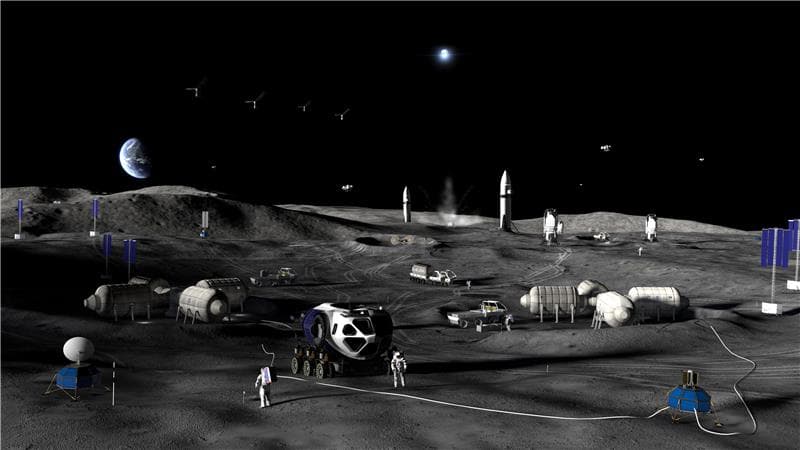
On March 24, NASA announced "Ignition"—a sweeping agency-wide initiative to execute President Trump's National Space Policy. The result: an ambitious three-phase plan to build a sustained human presence on the Moon with nuclear power, accelerated Artemis missions, and an entirely reimagined approach to space exploration.
The Big Picture
NASA Administrator Jared Isaacman was direct: "The clock is running in this great-power competition, and success or failure will be measured in months, not years."
This isn't incremental progress. NASA is:
- Landing astronauts on the Moon every 6 months (after Artemis IV)
- Building a nuclear-powered lunar base ($20 billion commitment)
- Launching nuclear-powered spacecraft to Mars (Space Reactor-1 Freedom, before end of 2028)
- Restructuring the entire ISS transition to preserve US presence in LEO
Three-Phase Lunar Architecture
Phase 1: Build, Test, Learn
- Robotic missions ramp up to 30 CLPS (Commercial Lunar Payload Services) landings by 2027
- Deploy rovers, science instruments, and tech demonstrations for mobility, power generation, communications
- Rapid iteration and data gathering
Phase 2: Early Infrastructure
- Semi-habitable modules and regular logistics
- JAXA's pressurized rover
- Astronauts begin surface operations on recurring schedules
- International partner contributions expand
Phase 3: Long-Duration Presence
- Heavy cargo-capable human landing systems deliver habitation modules
- Italian Space Agency multi-purpose habitats
- Canadian Space Agency lunar utility vehicles
- Transition from expeditions to permanent base
Nuclear Power on the Moon
Nuclear systems will provide reliable, all-weather power generation—essential where solar arrays fail during lunar night. Radioisotope heater units, thermoelectric generators, and advanced reactors will power habitats and operations for years without resupply.
Space Reactor-1 Freedom: Nuclear Propulsion to Mars
NASA will launch the first nuclear-powered interplanetary spacecraft before end of 2028. Space Reactor-1 Freedom demonstrates nuclear electric propulsion in deep space and will deploy Ingenuity-class helicopters on Mars.
Nuclear propulsion enables:
- Efficient mass transport across solar system
- Missions beyond Jupiter (where solar arrays are useless)
- 55% faster transit times and higher payloads
- Heritage for future Mars expeditions
The Workforce
Ignition includes massive workforce investment: converting thousands of contractor positions to civil service, rebuilding core competencies in engineering and operations, and opening pathways for industry talent to bring space expertise into NASA.
NASA is embedding subject-matter experts across the supply chain to accelerate production and challenge assumptions.
What This Means
This is a fundamental reset. Not a return to Apollo—that was about flags and footprints. This is about building. A base. Infrastructure. Sustained presence. The systems that enable Mars.
The $20 billion commitment and accelerated cadence signal serious intent. The nuclear systems demonstrate NASA's willingness to embrace advanced technology that was previously languishing in lab studies.
The coming months will see RFIs and RFPs for lunar infrastructure, habitation modules, logistics, and spacecraft. The industrial base is about to mobilize.
Source: NASA Unveils Initiatives to Achieve America's National Space Policy
Comments
Loading comments...