NASA Prepares Moon Base with Rovers and Scout Drones
NASA Prepares Moon Base with Rovers and Scout Drones
NASA is accelerating its return to the Moon with a series of contract awards for the infrastructure needed to establish a sustained crewed lunar base. NASA Administrator Jared Isaacman announced the selections on Tuesday, cementing the space agency's commitment to what promises to be humanity's most ambitious effort on the lunar surface since the Apollo program.
Rovers Ready by 2028
The agency selected two companies—Astrolab and Lunar Outpost—to build approximately one-ton rovers capable of delivering mobility to astronauts on the Moon. Each company received roughly $220 million to develop their rovers, building on initial contracts awarded two years ago.
Astrolab's CLV-1 rover and Lunar Outpost's Pegasus rover will each have a 200-kilometer range and be capable of autonomous driving under Earth-based control or direct astronaut operation. Blue Origin secured an additional $280.4 million contract to deliver both rovers to the lunar surface using its Blue Moon Mark 1 lander.
The awards expand Blue Origin's role in NASA's lunar program significantly, positioning the company as a critical cargo provider for the Moon Base initiative while supporting future human missions via the larger Mark 2 lander variant.
Scout Drones and High-Resolution Mapping
Before astronauts set foot on the Moon, NASA plans to deploy the MoonFall program—a constellation of three to four drone scouts, each about 1 meter tall and weighing 225 kilograms with propellant included. These autonomous aircraft will be built by NASA's Jet Propulsion Laboratory and delivered by Firefly Aerospace.
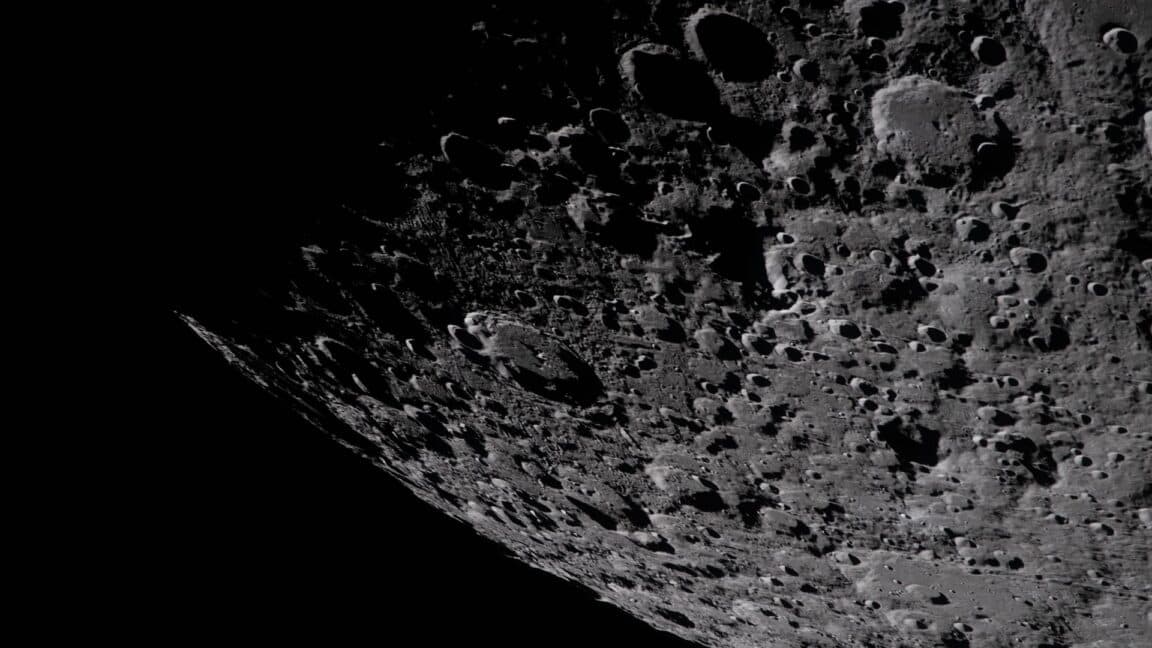
The drones serve a critical mission: improving NASA's understanding of the lunar environment. Current orbital imagery of most of the Moon has a resolution of 1 meter. MoonFall drones will capture images at 1-centimeter resolution, mapping landing sites, identifying water ice in permanently shadowed craters, and assessing soil mechanics and lighting conditions essential for lunar operations.
At the end of their operational lives, the drones will be repositioned to form a perimeter around the Moon Base—a move that raises fascinating questions about territorial claims on the Moon.
The "Perimeter" Question
The idea of establishing a boundary around the Moon Base touches on international space law. The 1967 Outer Space Treaty, ratified by all spacefaring nations including the United States and China, explicitly forbids any country from claiming sovereignty over lunar territory. However, NASA and 67 other nations have signed the Artemis Accords, which allow for the concept of "safety zones"—areas where nations can establish operational boundaries to prevent harmful interference with their activities.
NASA hasn't explicitly confirmed that the perimeter represents a safety zone, but the implication is clear. "We do want to get there and explore [areas of great interest on the lunar surface]," said NASA Administrator Isaacman. "We also obviously want to be very mindful of the Outer Space Treaty, so that we are respectful of other nations that are putting assets on the lunar surface."
This diplomatic language masks a underlying reality: the Moon race is heating up, with NASA's Artemis program in direct competition with China's lunar exploration initiatives, both targeting the resource-rich south polar region.
The Grand Return
NASA's Moon Base represents a fundamental shift from the Apollo model of brief visits to establishing sustained human presence. With rovers providing mobility, drones providing reconnaissance, and multiple landers delivering cargo, the infrastructure is taking shape for expeditions that could last weeks or months—and eventually, a permanent research station on the lunar surface.
The announcements underscore Isaacman's commitment: "For those waiting patiently, the grand return is close at hand, and we will not slow down."
Source: Ars Technica
Comments
Loading comments...