AI
OpenAI Releases GPT-5.4 with 1-Million-Token Context Window
OpenAI Releases GPT-5.4 with Massive 1-Million-Token Context Window
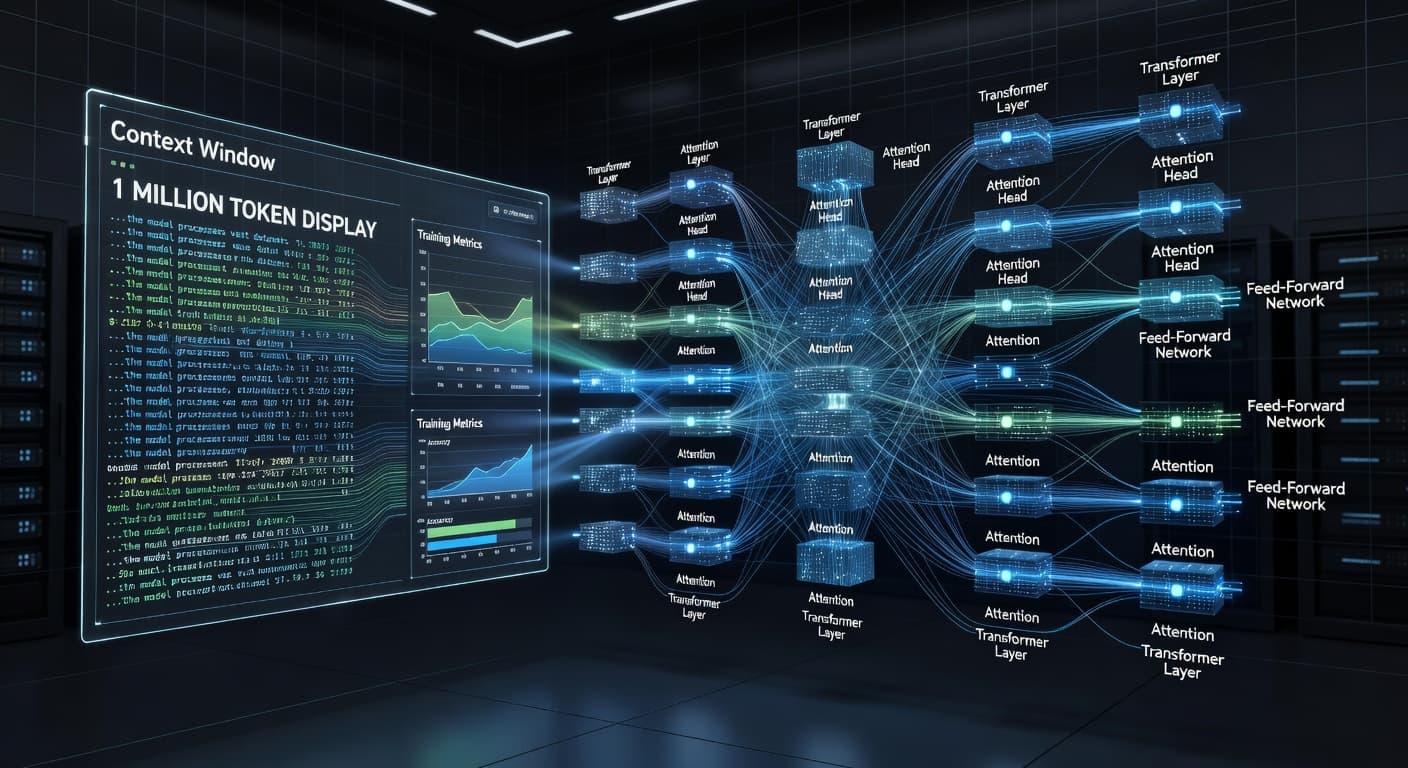
OpenAI announced the release of GPT-5.4 on March 5, 2026, introducing one of the largest context windows ever deployed in a language model: 1 million tokens. This breakthrough enables autonomous multi-step workflows and positions AI systems as viable "digital coworkers" for knowledge-intensive tasks.
What's New in GPT-5.4
The expanded context window is transformative for enterprise applications. With 1 million tokens, the model can process:
- Entire codebases and documentation simultaneously
- Extended research papers with full historical context
- Complete email and document archives for analysis
- Multi-turn conversations spanning hours of dialogue
This eliminates the need for chunking and retrieval-augmented generation (RAG) in many scenarios, allowing the model to maintain coherent reasoning across massive documents.
Benchmark Performance: Surpassing Human Experts
In benchmarks designed to test autonomous task completion:
- OSWorld-V (desktop task automation): 75-83% accuracy
- GDPVal (knowledge work evaluation): Surpasses human experts (72.4%)
These results suggest GPT-5.4 is approaching competence levels where it can handle routine knowledge work independently—writing reports, analyzing data, managing workflows—without constant human oversight.
Business Impact
OpenAI hit $25 billion in annualized revenue this quarter, driven partly by enterprise adoption of GPT-5.4. The model is already being integrated into enterprise workflows, with customers reporting 30-40% productivity improvements in document analysis and code generation tasks.
The 1-million-token context doesn't come without cost—inference is more expensive than previous models—but for high-value tasks (legal analysis, scientific research, code review), the economics work.
What This Means for AI's Role in Work
GPT-5.4 represents a step toward AI as autonomous agent, not just a chatbot. The model can now hold context long enough to understand projects holistically, make decisions based on full system knowledge, and execute complex workflows with minimal intervention.
The remaining bottleneck isn't capability—it's trust. Organizations are still learning how to integrate AI agents into workflows safely, with proper oversight and audit trails.
Source: Crescendo AI News
Comments
Loading comments...