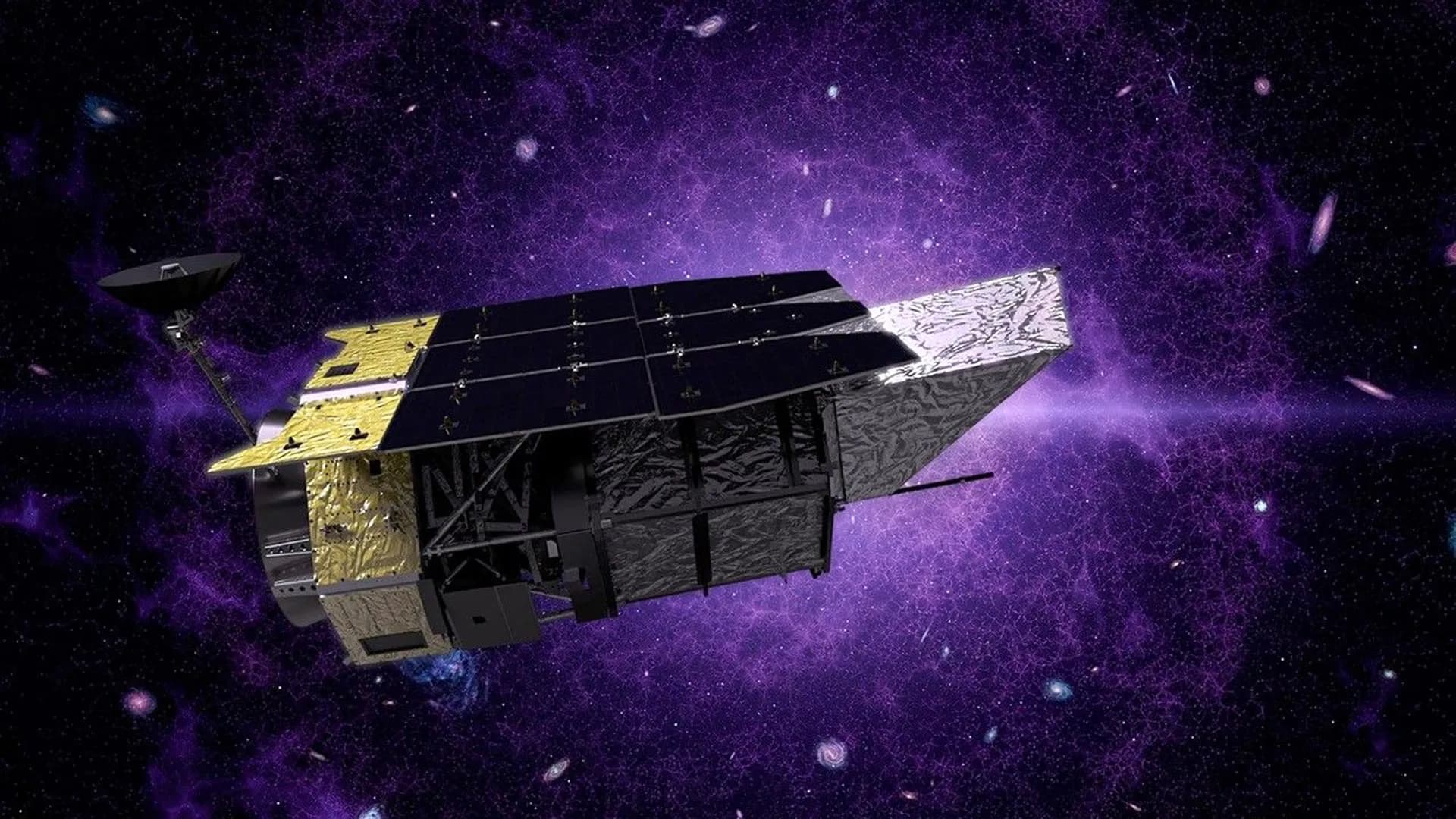
Nancy Grace Roman Space Telescope Launch Accelerated to September 2026
NASA has announced an exciting acceleration to its Nancy Grace Roman Space Telescope program. The agency now targets a launch as early as September 2026, moving the mission ahead of its previous commitment to launch no later than May 2027.
What Makes Roman Special
The Roman Space Telescope combines a massive field of view with powerful infrared imaging capabilities, allowing scientists to study vast sections of the universe in remarkable detail. This observatory represents a quantum leap in astronomical capability, building on the success of the James Webb Space Telescope while offering unique capabilities of its own.
The Big Picture
While Roman's main scientific goals focus on dark energy, dark matter, and planets beyond our solar system, researchers expect the observatory to support a wide range of astronomical discoveries that we can't even predict yet.
By the end of its planned five-year primary mission, Roman is expected to collect an enormous archive containing roughly 20,000 terabytes of data. Scientists will use this information to investigate around 100,000 exoplanets, hundreds of millions of galaxies, billions of stars, and unusual cosmic events that may include objects or phenomena never previously observed.
Launch Details
NASA plans to launch the observatory aboard a SpaceX Falcon Heavy rocket from Launch Complex 39A at Kennedy Space Center in Florida. This partnership between NASA, SpaceX, and private industry represents the kind of public-private collaboration that's reshaping modern space exploration.
As NASA Administrator Jared Isaacman noted: "Roman's accelerated development is a true success story of what we can achieve when public investment, institutional expertise, and private enterprise come together to take on the near-impossible missions that change the world."
For astrophotographers and space enthusiasts, Roman represents the next generation of tools for understanding our universe. The data it generates will fuel discovery for decades to come.
Comments
Loading comments...