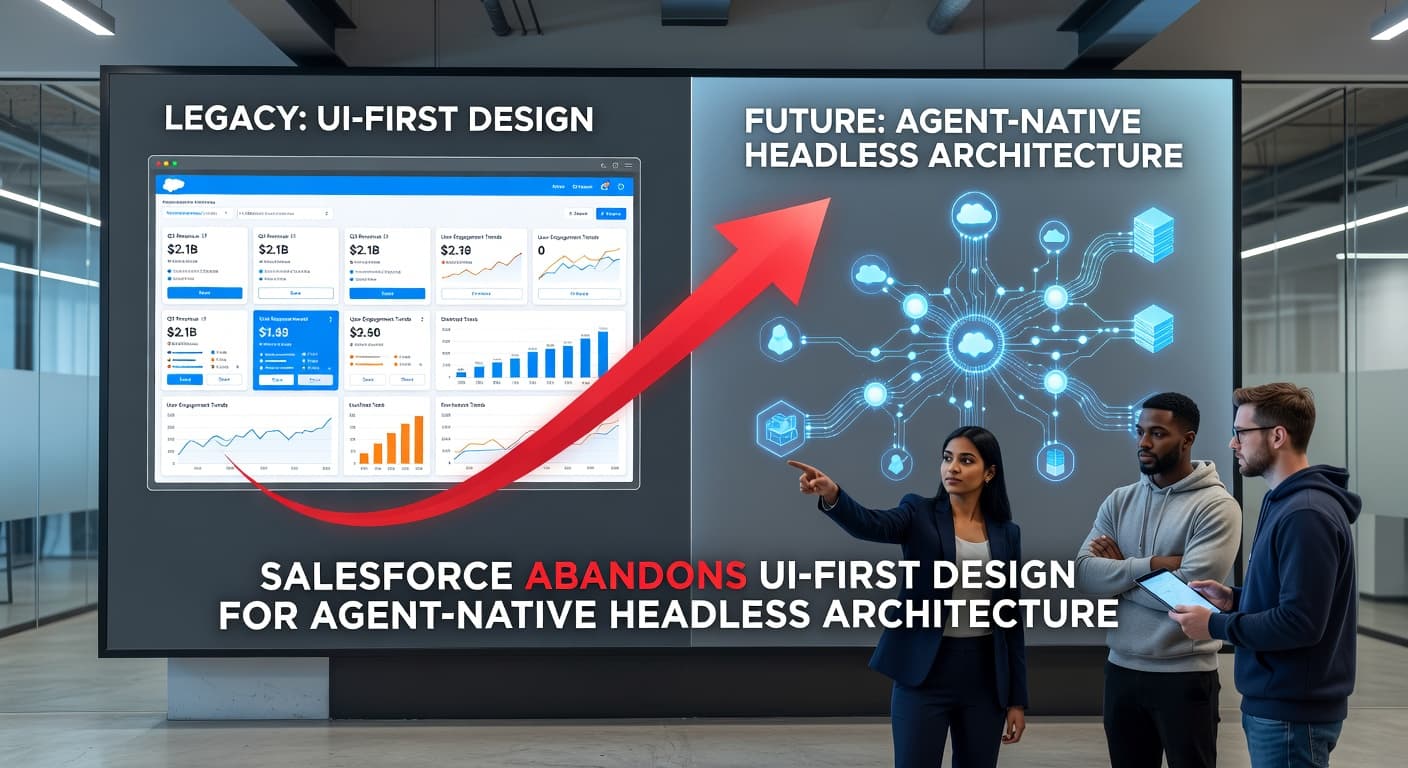
Salesforce Abandons UI-First Design for Agent-Native Headless Architecture
Salesforce Goes Headless: The End of the User Interface Era in Enterprise Software?
Salesforce just announced a radical shift: exposing its entire platform as APIs, allowing AI agents to work directly with data and workflows without ever needing a traditional user interface. This signals something fundamental about where enterprise software is heading.
What Does "Headless" Mean Here?
Traditional Salesforce (or any SaaS platform) works like this:
- Humans log into a UI
- They navigate dashboards, forms, reports
- The system handles backend logic
- Everything is designed for human comprehension and interaction
Headless architecture flips this:
- AI agents connect directly via APIs
- No UI layer between agent and data
- Agents manipulate workflows, data, and business logic directly
- Humans become optional (in many workflows)
Salesforce is signaling that the future of enterprise software isn't better UIs — it's direct programmatic access optimized for AI.
The Broader Shift: Agent-Native Software
This isn't unique to Salesforce. Across enterprise SaaS, we're seeing a broader pattern:
Traditional SaaS: Humans → UI → Backend Logic → Data Agent-Native SaaS: Agents → API → Backend Logic → Data (Humans: observing, not doing)
For Salesforce, it means:
- Outcome-based pricing (pay for results, not seats)
- Reduced need for implementation consultants
- New competitive advantages tied to data quality and domain expertise
- Potential compression of the entire services layer
What This Means for Implementation
If you're a Salesforce admin or consultant, this is disorienting. The traditional SaaS value chain (implementation, training, ongoing support through UI layers) is getting disrupted by agents that bypass all of it.
But there's opportunity: agents need guidance. They need well-designed APIs, correct data models, and clean business logic. The work shifts from "making the UI work for humans" to "making the APIs work for agents."
The Dominoes Fall
Watch these dominos in sequence:
- Salesforce goes API-first
- Other enterprise platforms follow (Workday, ServiceNow, etc.)
- Consultants retrain around agent orchestration instead of UI design
- Pricing models shift from per-seat to outcome-based
- Entire professional services industries consolidate
We're watching the software industry restructure around agentic AI, in real time.
For Technologists
The lesson: understand APIs and system architecture. The skills that matter in an agent-driven software world are clean design, data integrity, and orchestration — not UI craft or user experience design (in the traditional sense).
Salesforce's move is a signal that the industry has chosen its direction. The question now is how fast your career and skillset can adapt.
Source: Salesforce Headless Architecture announcement (April 2026)
Comments
Loading comments...