Space Science
Webb Telescope Discovers Rotten Egg Planet: A New Class of Sulfur-Rich Magma Worlds
The Planet That Smells Like Rotten Eggs
The James Webb Space Telescope has found something genuinely odd 35 light-years away: a rocky exoplanet with a hydrogen sulfide atmosphere that probably smells absolutely terrible.
L 98-59 d: A New Planetary Category
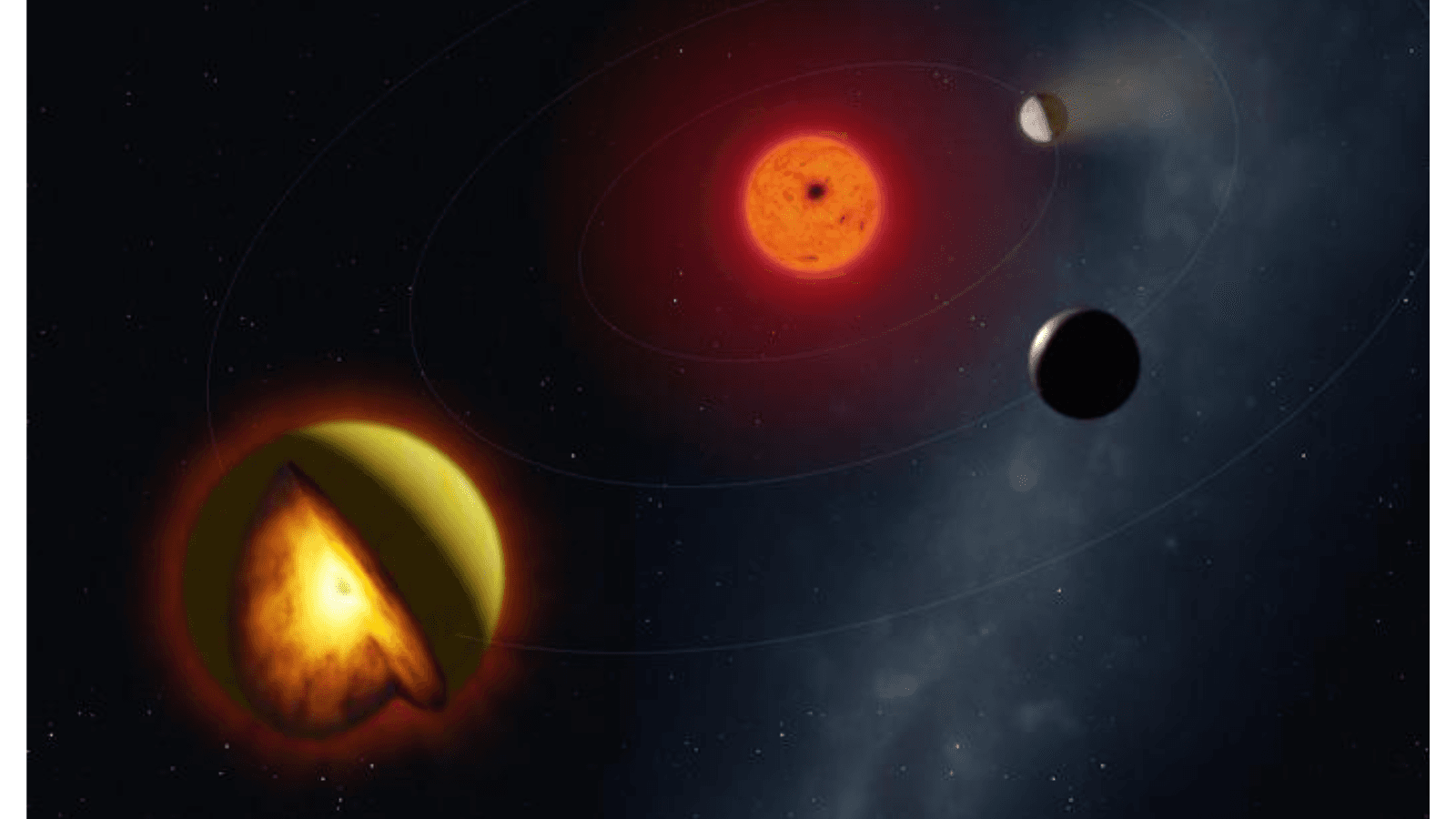
Meet L 98-59 d, orbiting a red dwarf star in the constellation Volans. This world is the first confirmed rocky exoplanet with a sulfur-dominated atmosphere—specifically, hydrogen sulfide (H₂S) wafting above a vast magma ocean.
Why this matters: We thought we understood how rocky planets formed. Theory suggested they'd have water-based atmospheres or be stripped of volatiles entirely. L 98-59 d challenges that model. Its massive magma ocean surface is rich in sulfur dioxide and hydrogen sulfide. If you could somehow stand on this world—and survive the crushing pressure and molten surface—the air would smell like rotten eggs mixed with burnt matches.
Webb's Critical Role
This discovery came from JWST's precision spectroscopy. The telescope observed the planet as it passed in front of its star, revealing the chemical composition of its atmosphere with clarity no ground-based or older space telescope could achieve. University of Oxford-led researchers published the findings March 16-17.
This is what JWST was built for: finding the weird worlds that expand our understanding of planetary diversity. We're only in the early stages of exoplanet atmospheric characterization, and already we're finding worlds that weren't supposed to exist.
The universe, once again, is weirder than we predicted.
Comments
Loading comments...