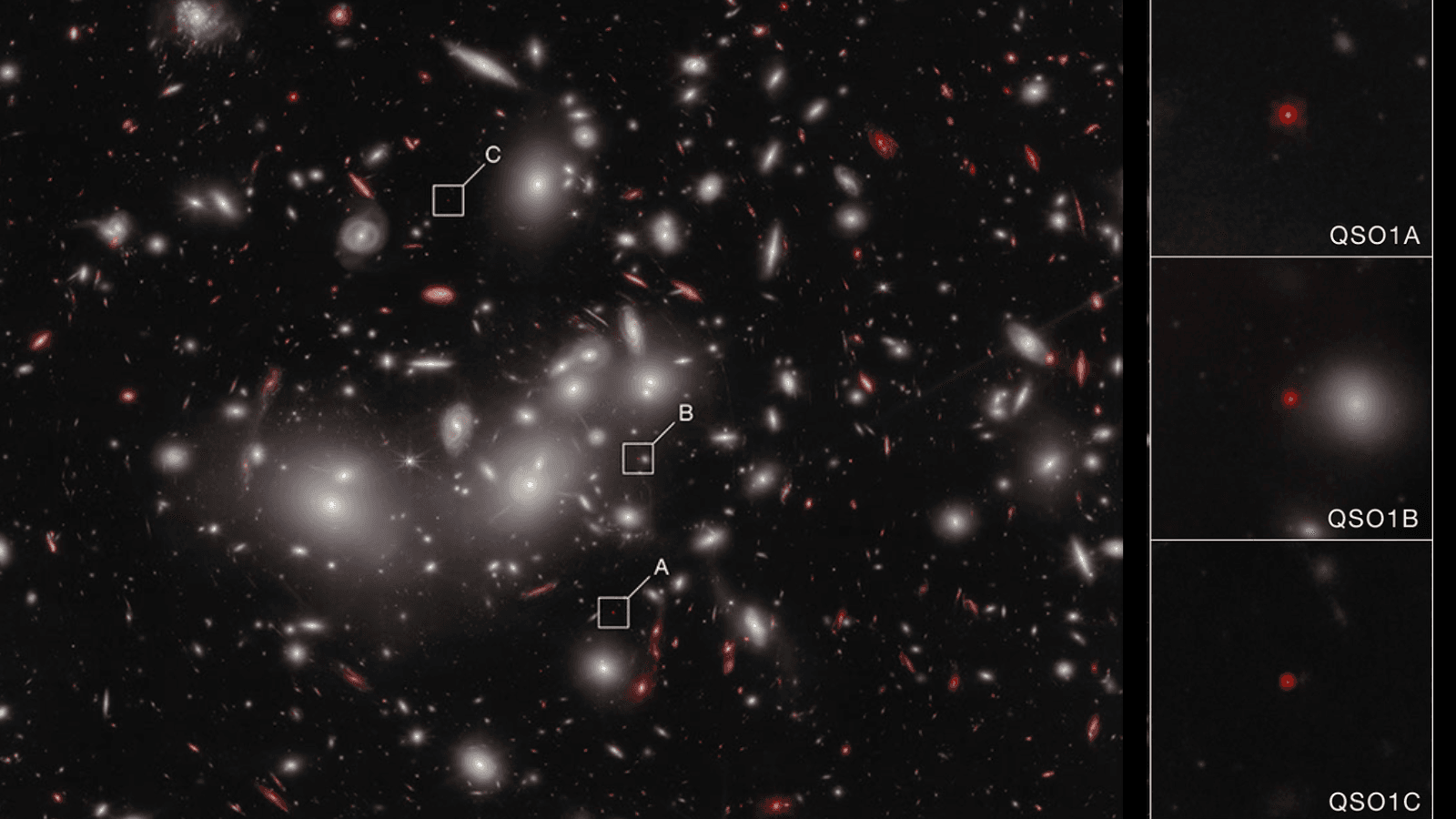
James Webb Discovers Black Hole That Predates Its Galaxy
A Puzzle at the Universe's Edge
The James Webb Space Telescope has revealed something that's upending what we thought we knew about black holes and their origins. In late May 2026, JWST observations captured evidence of a supermassive black hole that appears to have formed before its host galaxy — challenging decades of assumptions about cosmic structure.
This discovery suggests that the black hole is genuinely enormous from the very start. It's not the result of stellar collapse or gradual feeding; it's primordial. Early universe. And scientists are struggling to explain how that's even possible.
Why This Matters
Traditional models say black holes should form within galaxies or through a long process of consuming matter. This one doesn't fit either narrative. The implications are profound: either our understanding of black hole formation is incomplete, or there are formation mechanisms we haven't identified yet.
The observation data is solid. JWST's infrared sensitivity has allowed us to peer back into the early universe with unprecedented clarity, and what it found is a supermassive black hole existing in the first few billion years of cosmic history.
What's Next
The discovery opens new questions rather than closing them. Astronomers are now hunting for more examples to determine if this is a rare oddity or a common feature of the early universe. If it's the latter, textbooks get rewritten.
This is what makes JWST so transformative — not just answering questions, but forcing us to ask better ones. In the cosmic equivalent of a cold case getting reopened, we might finally understand how the universe's most violent objects came to be.
Comments
Loading comments...