AI
Should AI Automation Be Taxed? The Case for a "Minimum Wage for Robots"
Should AI Automation Be Taxed? The Case for a "Minimum Wage for Robots"
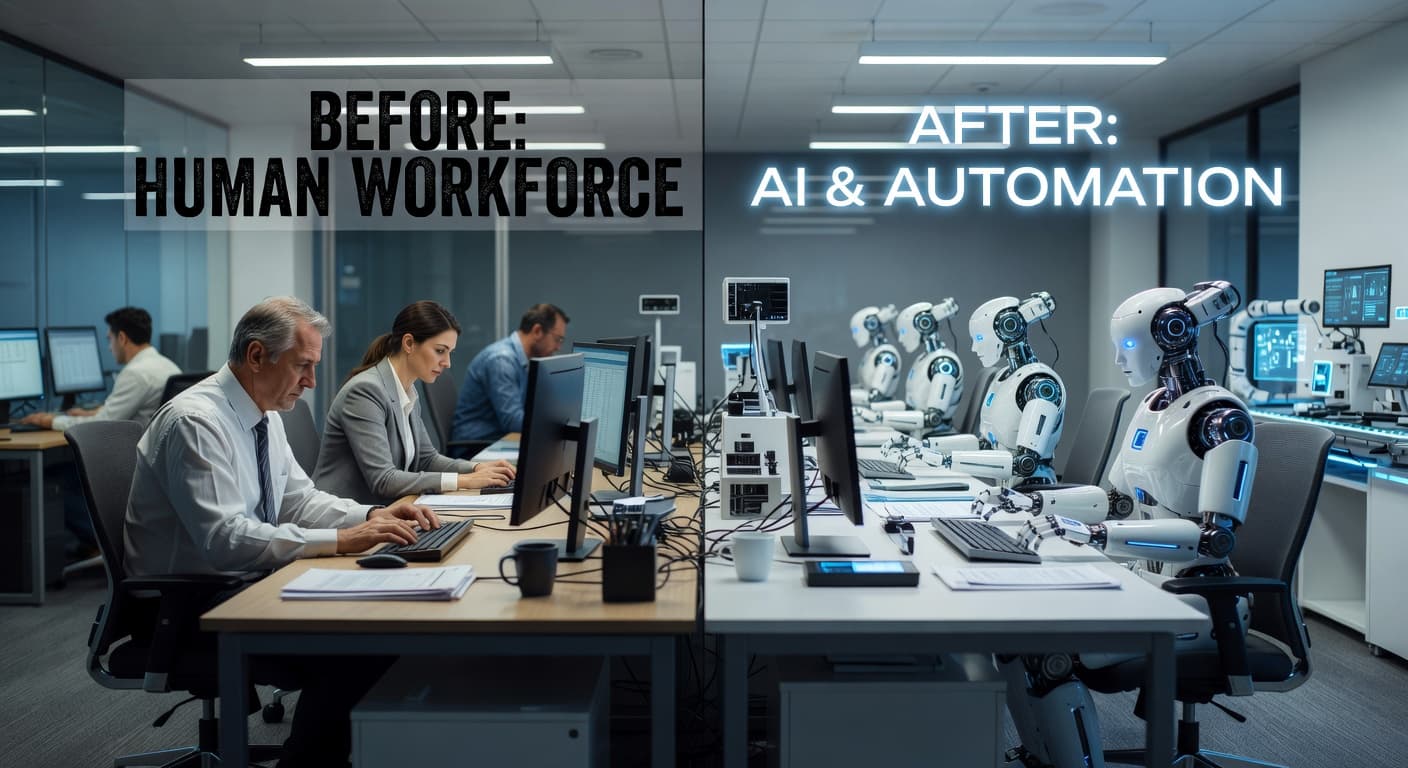
As AI systems take on increasingly complex work, a Welsh tech entrepreneur is raising an uncomfortable question: should companies pay taxes on automation to mitigate job displacement?
The Argument: Charles Radclyffe's Case
Charles Radclyffe runs a Wales-based AI company that automates office tasks—form filling, data entry, administrative workflows. His systems can complete work in seconds that humans need weeks to finish.
His thesis is stark: "Every time we bill [for a month's AI work], that is a job from the economy gone and moved into a data centre."
Some of his specific claims:
- Data-entry tasks that take humans 2 weeks take AI 20 seconds
- Companies aren't cutting jobs yet—they're just hiring fewer new staff
- White-collar workers in places like Cardiff are "absolutely in the firing line"
- Without intervention, some people could be unemployable "for the rest of their lives"
His proposed solution: a "minimum wage for robots" or taxation on AI deployment that would slow adoption, give government a lever to manage disruption, and generate revenue for retraining.
The Industry Pushback
Not everyone agrees. Oliver Conger, managing director of British Rototherm (an industrial sensor manufacturer), presented a different narrative:
Productivity gains are real: His company has increased productivity 20% over two years through AI and automation.
Roles change, they don't disappear: Staff whose jobs were automated were upskilled for other positions rather than laid off.
It's too early to regulate: "We're at the very early stages. Let's encourage the use of it." Governments should prioritize adoption and support the transition, not tax it.
The Political Response
Welsh political parties are taking cautious stances focused on monitoring, skills training, and selective support rather than taxation or restriction.
The UK Treasury announced it's "setting up a new AI Economics Institute to monitor impacts and ensure we can act quickly as the economy changes"—essentially a "we'll watch and see" approach.
Why This Matters
The tension here is real. AI genuinely can replace certain types of work faster than humans can retrain. But taxing automation could slow innovation. The question isn't whether AI will displace workers—it will. The question is whether societies have the political will to invest in transition support before it becomes catastrophic for large segments of the workforce.
History suggests they don't. The industrial transitions of Wales happened with minimal managed transition. Doing better this time requires thinking about it now, not after the disruption.
Source: BBC News - AI firms should pay tax on robots to limit job cuts, says tech boss
Comments
Loading comments...