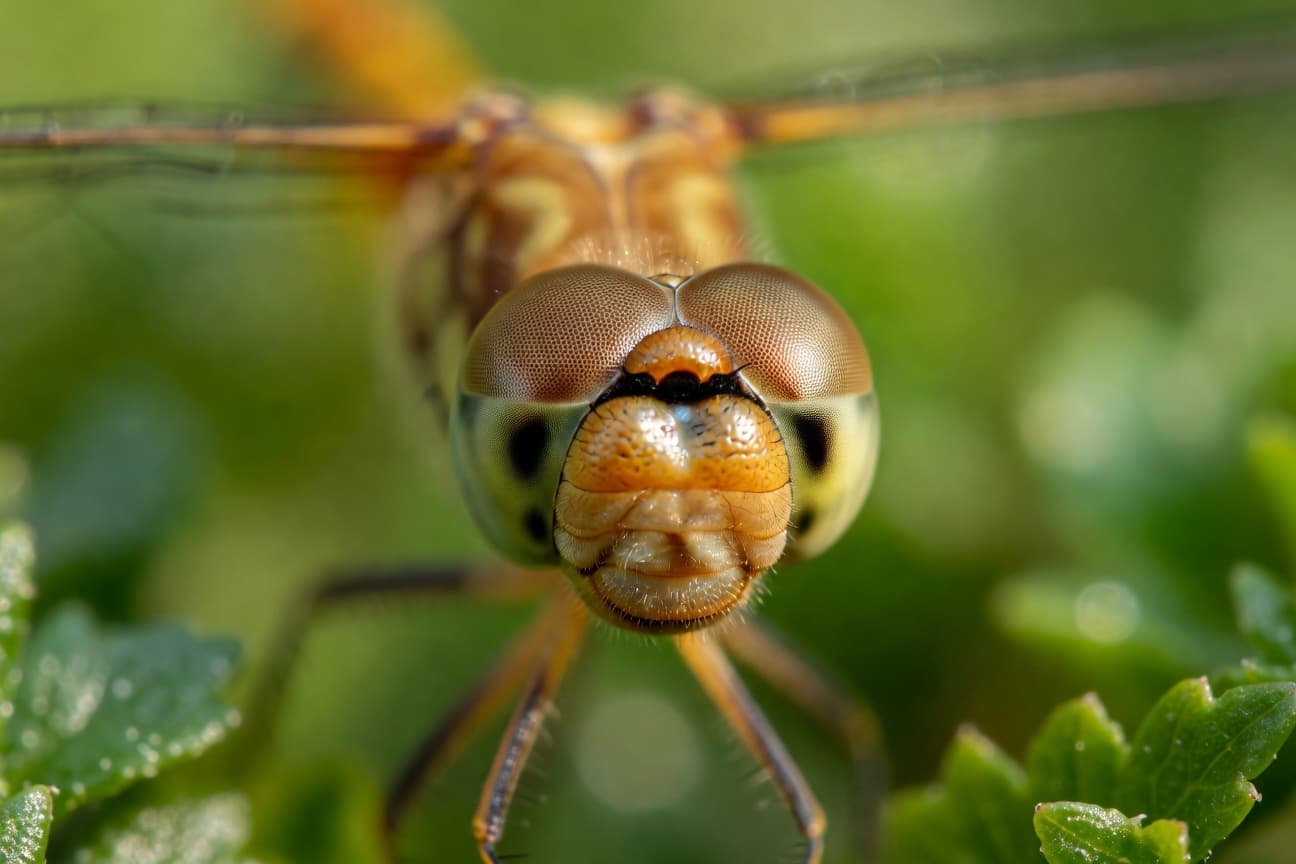
How Insect Brains Could Revolutionize AI and Robotics
How Insect Brains Could Revolutionize AI and Robotics
Researchers at the University of Sheffield have made a remarkable discovery about how insect brains process information, and the implications for artificial intelligence are profound. Their findings, published in Nature Communications, suggest that even the smallest brains can solve extraordinarily complex problems at blistering speeds—a principle that could fundamentally change how we design autonomous systems.
The Insect Brain's "Gear Shift"
The study focused on how insects make sharp turns and navigate complex environments. When an insect performs a rapid maneuver, its brain doesn't just passively process visual information the way we've traditionally understood neural processing. Instead, it "jumps into a higher gear," actively shifting its attention to focus on the most important, fast-moving information.
This mechanism is elegant and efficient. By coupling movement with adaptive information processing, insects overcome physical and neural constraints that would otherwise limit their perception. It's how a fly can evade a swatter with seemingly impossible reflexes, or how a dragonfly maintains stability at speeds that would disorient most animals.
Challenging Our Understanding of Neural Networks
The traditional model of neural processing—the one that's largely informed how we build artificial neural networks—assumes information flows through fixed pathways with built-in delays. But the Sheffield team's biophysically realistic statistical model reveals something different: vision isn't a passive input. It's a collective effort between an organism's movement, its visual input, and its brain's dynamic response.
Dr. Jouni Takalo, who led the development of the statistical model, emphasized the departure from conventional thinking: "The findings challenge traditional models of neural processing. Instead, the results support a new framework where sight is a collective effort between an insect's movement, its visual input and its brain's response."
Implications for AI and Robotics
The practical applications are significant. Autonomous vehicles, robotic systems, and real-time decision-making AI could be revolutionized by adopting similar principles. Instead of processing all available information equally, adaptive systems could dynamically adjust their focus based on movement and context—much like an insect does.
This could mean:
- More efficient autonomous vehicles that process visual information adaptively based on speed and trajectory
- Better robotics that navigate complex environments with fewer computational resources
- Smarter AI systems that make real-time decisions with movement-driven information prioritization
A Humbling Lesson
There's something humbling about this research. We've spent decades building increasingly complex artificial neural networks, often working against our understanding of how biological systems actually work. A fruit fly, with roughly 100,000 neurons compared to our 86 billion, has mastered principles of adaptive processing that we're only now beginning to understand and replicate.
The lesson isn't that we should abandon deep learning or traditional AI approaches. Rather, it's that nature has already solved many of the problems we're trying to crack. Sometimes the best innovation comes from looking at the solution that's been working for millions of years.
Source: BBC News - Sheffield researchers say insect brains could transform AI technology
Comments
Loading comments...