The AI Leap of 2026: GPT-5.4 Reaches Human-Expert Levels as Compute Explodes
The AI revolution is happening faster than anyone expected—and the world isn't ready for it.
Morgan Stanley just dropped a sobering report: a massive transformative leap in artificial intelligence is coming in the first half of 2026, driven by unprecedented compute scaling at America's top AI labs. And they're not exaggerating.
The Numbers Are Already Shocking
OpenAI's recently released GPT-5.4 "Thinking" model scored 83% on the GDPVal benchmark, placing it at or above the level of human experts on economically valuable tasks. That's not projection. That's today's reality. The model also hit 75% on OSWorld (operating system navigation, beating human baselines) and 87.5% on financial and spreadsheet tasks.
Meta's Llama 4 series (Scout, Maverick, Behemoth up to 2 trillion parameters) enables full-repository code analysis with up to 10-million-token context windows. Anthropic's Claude 4.6 is solving open graph theory problems and fixing software bugs at 70.6% success rates. These aren't marginal improvements—they're step changes in what AI can do.
Elon Musk's claim that 10x compute doubles model intelligence? The scaling laws are holding firm. The curve isn't flattening. It's accelerating.
The Infrastructure Crisis
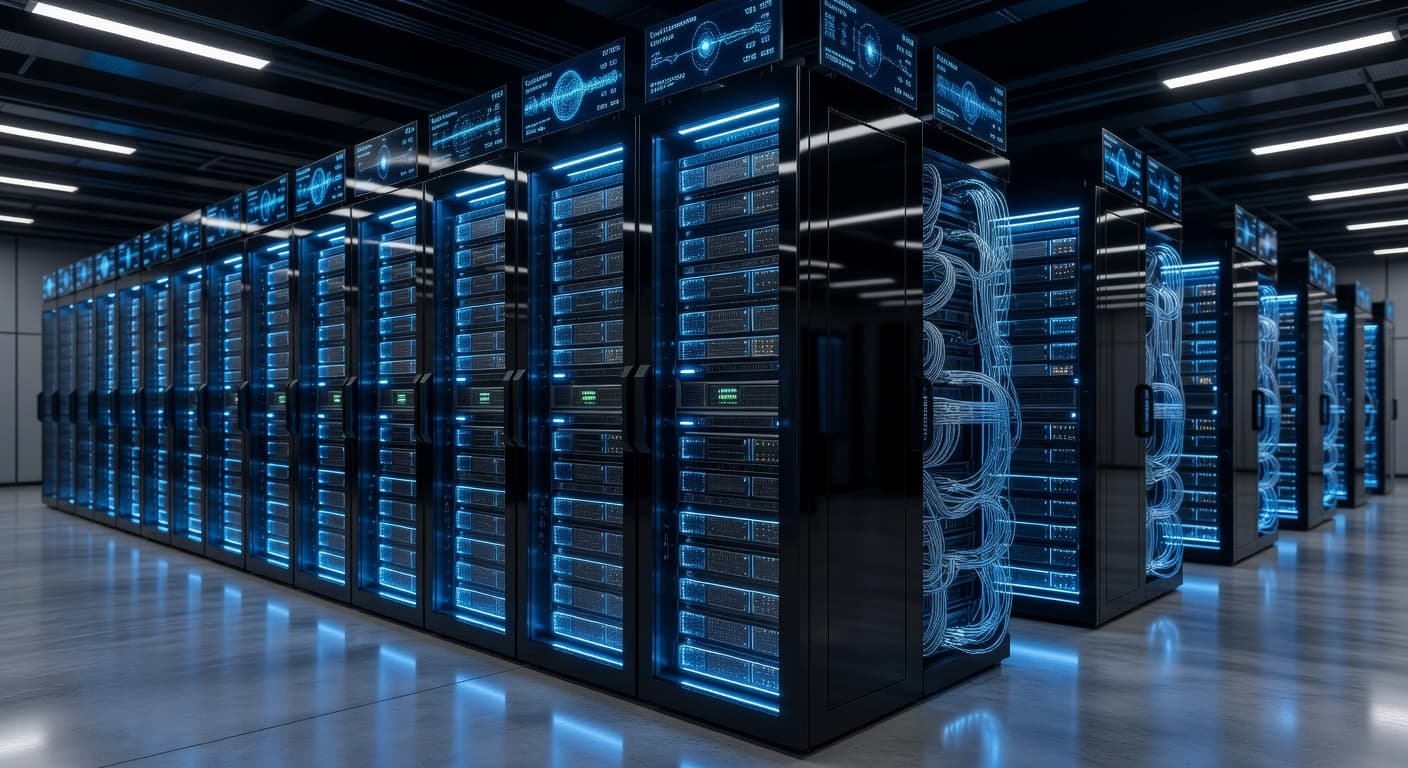
Here's where it gets grim. Morgan Stanley's "Intelligence Factory" model projects a net U.S. power shortfall of 9 to 18 gigawatts through 2028—a 12% to 25% deficit in the power needed to run all this compute.
Developers aren't waiting. Bitcoin mining operations are being converted into high-performance computing centers. Natural gas turbines are being fired up. Fuel cells are being deployed. A "15-15-15" dynamic is emerging: 15-year data center leases at 15% yields, generating $15 per watt in net value creation.
Power isn't just a constraint. It's the new currency of AI leadership.
What This Means for You
Morgan Stanley predicts "Transformative AI" will become a deflationary force, as AI replaces human work at a fraction of the cost. Executives are already executing large-scale workforce reductions because of AI efficiencies. Sam Altman envisions entire companies built by just one to five people that outcompete large incumbents.
Recursive self-improvement loops—where AI autonomously upgrades its own capabilities—could emerge by mid-2027. That's not science fiction anymore. That's the timeline analysts are penciling in.
The world isn't prepared for this. Job markets aren't. Supply chains aren't. Energy grids aren't. And frankly, neither are we.
Comments
Loading comments...