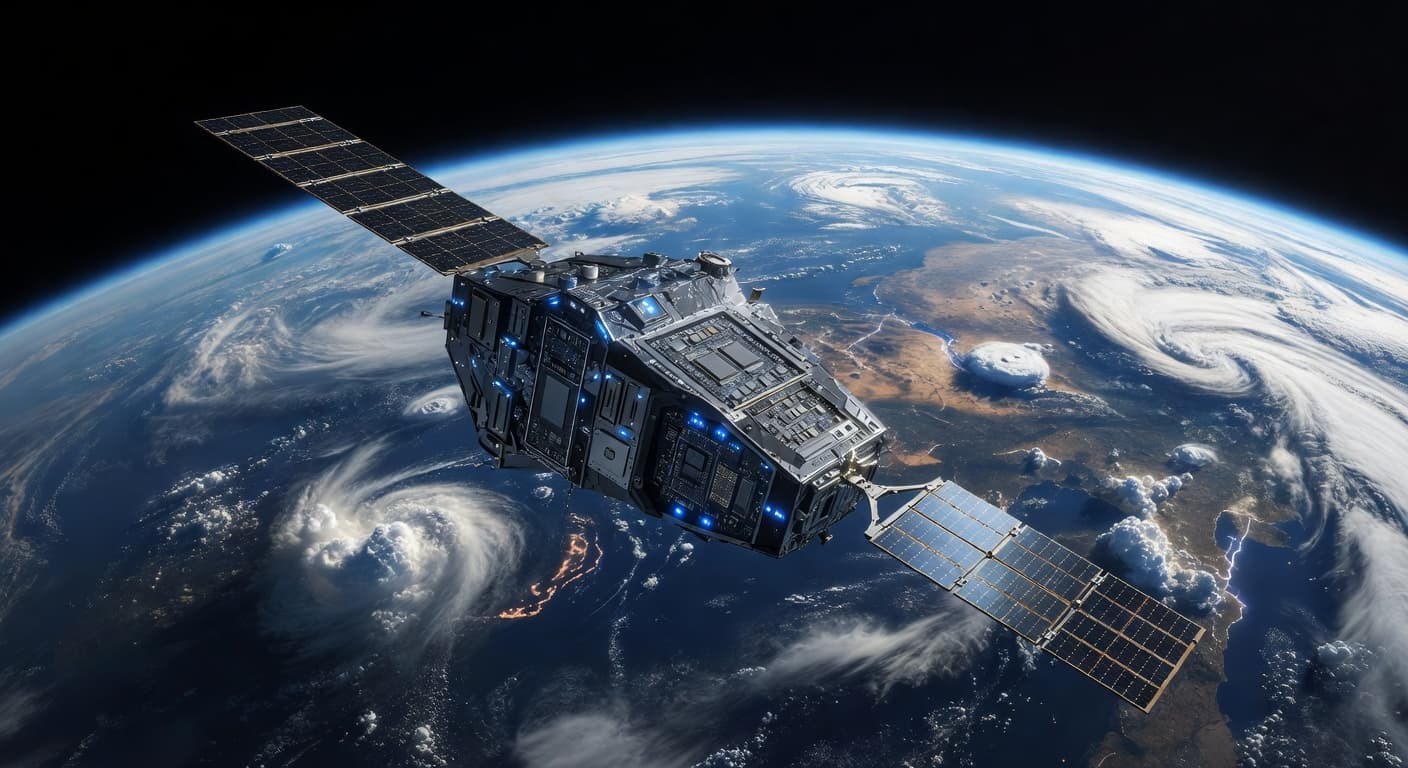
AI is Revolutionizing What Satellites Can Do in Orbit
AI is Revolutionizing What Satellites Can Do in Orbit
Satellites are no longer passive data collectors orbiting Earth. They're becoming intelligent systems that process information in real time, powered by AI and edge computing. A recent discussion between Muon Space President Gregory Smirin and Voyager Technologies CEO Dylan Taylor at CNBC's CONVERGE LIVE highlights how this shift is reshaping space-based infrastructure.
From Data Collectors to Intelligent Agents
Traditionally, satellites gathered raw data and transmitted it back to Earth for processing. This approach was slow, power-hungry, and limited by bandwidth constraints. Today's AI-enabled satellites process data on-orbit, enabling real-time analytics and decision-making without the latency of ground-based systems.
This shift has profound implications across multiple industries:
Wildfire Detection & Response — AI-powered satellites can detect heat signatures and smoke patterns autonomously, alerting emergency services in seconds rather than hours. This real-time capability is critical in a world of accelerating climate impacts.
Global Connectivity — Intelligent satellites can optimize bandwidth allocation dynamically, responding to network demand without waiting for ground station commands. This enables faster, more efficient global connectivity for remote areas.
Orbital Data Centers — The future holds computational infrastructure in space itself. Satellites processing data at the edge reduce latency and bandwidth costs, while enabling new applications in AI, streaming, and scientific research.
The Infrastructure Challenge
Making this real requires significant advances in edge computing hardware, thermal management, and power systems. Satellites must be more powerful, efficient, and reliable than ever before. Companies like Muon Space are building specialized hardware designed for in-orbit computation, while Voyager Technologies is integrating these systems into broader satellite networks.
The convergence of AI, real-time processing, and space infrastructure represents a fundamental shift in how we gather and act on information about our planet. What was once science fiction — intelligent systems in orbit making autonomous decisions — is becoming routine capability.
For space technology enthusiasts and those tracking AI's real-world applications, this is a pivotal moment. We're watching the infrastructure of tomorrow being built in real time.
Source: CNBC — How AI is Changing What Satellites Can Do in Orbit
Comments
Loading comments...