JWST Discovers Exoplanet with Dramatic Daily Weather Cycle
JWST Discovers Exoplanet with Dramatic Daily Weather Cycle
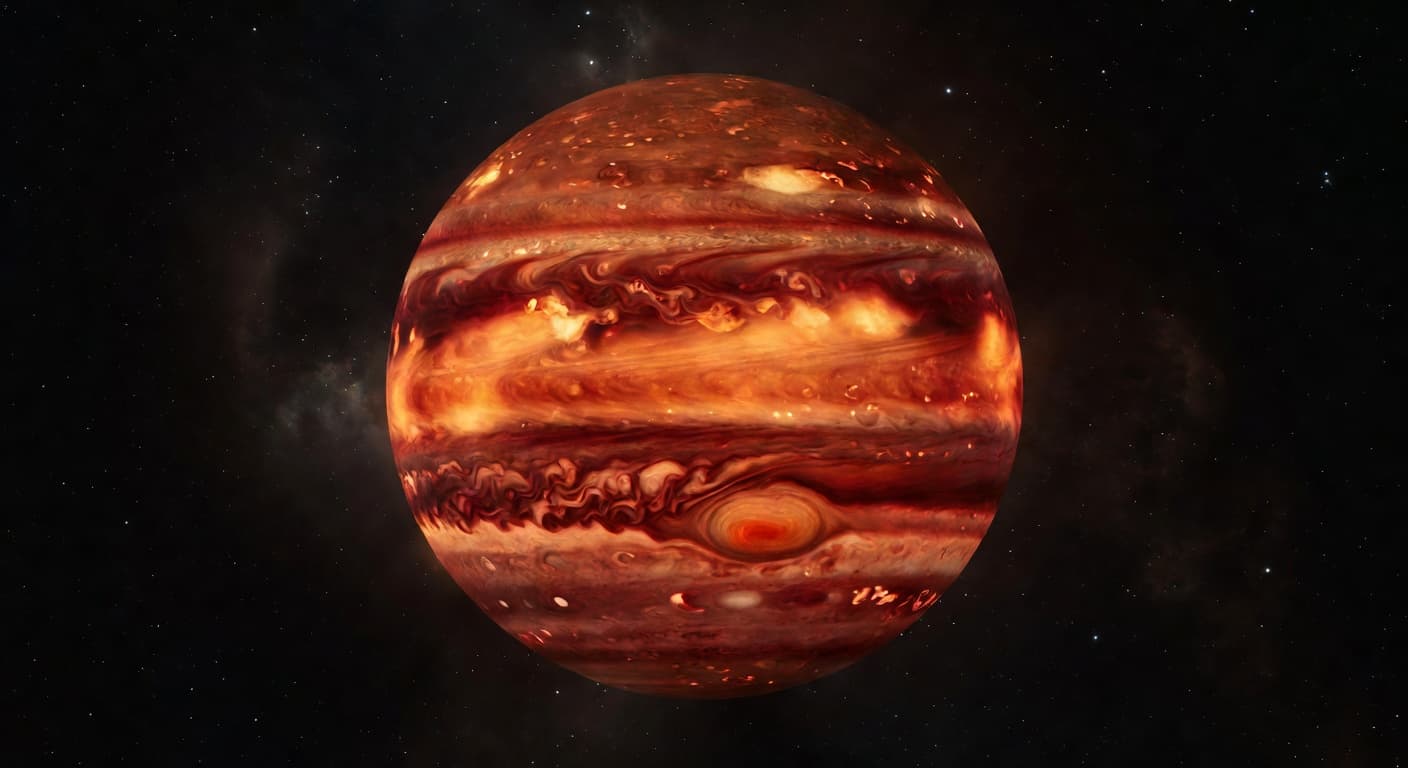
Nearly 700 light-years from Earth, on a distant Hot Jupiter called WASP-94A b, something extraordinary is happening every single day. As morning breaks across the planet, clouds made of magnesium silicate—the same mineral found in rocks on Earth—gather across the sky. By evening, they vanish completely.
This discovery, made possible by the James Webb Space Telescope and published in Science, represents one of the clearest observations yet of cloud cycling on an exoplanet. For David Sing, a Bloomberg Distinguished Professor at Johns Hopkins, it's a breakthrough after two decades of frustration.
"Clouds have been a thorn in our side when studying exoplanet atmospheres," Sing explains. "It's like trying to look at a planet through a foggy window. Not only have we been able to clear the view, but we can finally pin down what the clouds are made of and how they're condensing and evaporating."
Weather on an Alien World
WASP-94A b is a gas giant similar in size to Jupiter, orbiting extremely close to its host star. This proximity creates extreme conditions: daytime temperatures hot enough to melt rock, while the night side cools dramatically.
To study the planet's atmosphere, JWST observed it transiting in front of its star. By examining the leading edge (morning side) and trailing edge (evening side) separately, astronomers revealed a striking difference:
Morning side: Packed with clouds of magnesium silicate, formed as cooler air from the night side moves toward the intense heat of the day side.
Evening side: Nearly cloud-free, as atmospheric dynamics redistribute the clouds.
Scientists propose two mechanisms for this daily cycle. Powerful winds may drag clouds deep into the planet's atmosphere on the scorching day side, where pressure and heat destroy them. Alternatively, clouds may simply evaporate as they're carried across the terminator into the hot zone.
Why This Matters
This level of atmospheric detail was impossible before JWST. Previous observations of exoplanet atmospheres were blurred by cloudiness—we could see that clouds existed, but not what they were made of or how they behaved.
Now, we're watching weather systems on alien worlds unfold. Each discovery teaches us more about planetary formation, atmospheric chemistry, and the vast diversity of worlds beyond our solar system.
For amateur and professional astronomers alike, this is a reminder: the universe is far more dynamic and complex than we imagined. And we're only beginning to see it clearly.
Source: Science Daily — NASA's Webb Telescope Discovers a Planet Where Rock Clouds Vanish Every Night
Comments
Loading comments...