Tech
Apple at 50: The Hits That Defined an Era (And the Misses We Forgot)
Apple at 50: The Hits That Defined an Era (And the Misses We Forgot)
This week, Apple turned 50—half a century since two Steves started a company in a garage in San Francisco. It's a good moment to ask the hard questions: what actually changed how we use technology?
The Hits
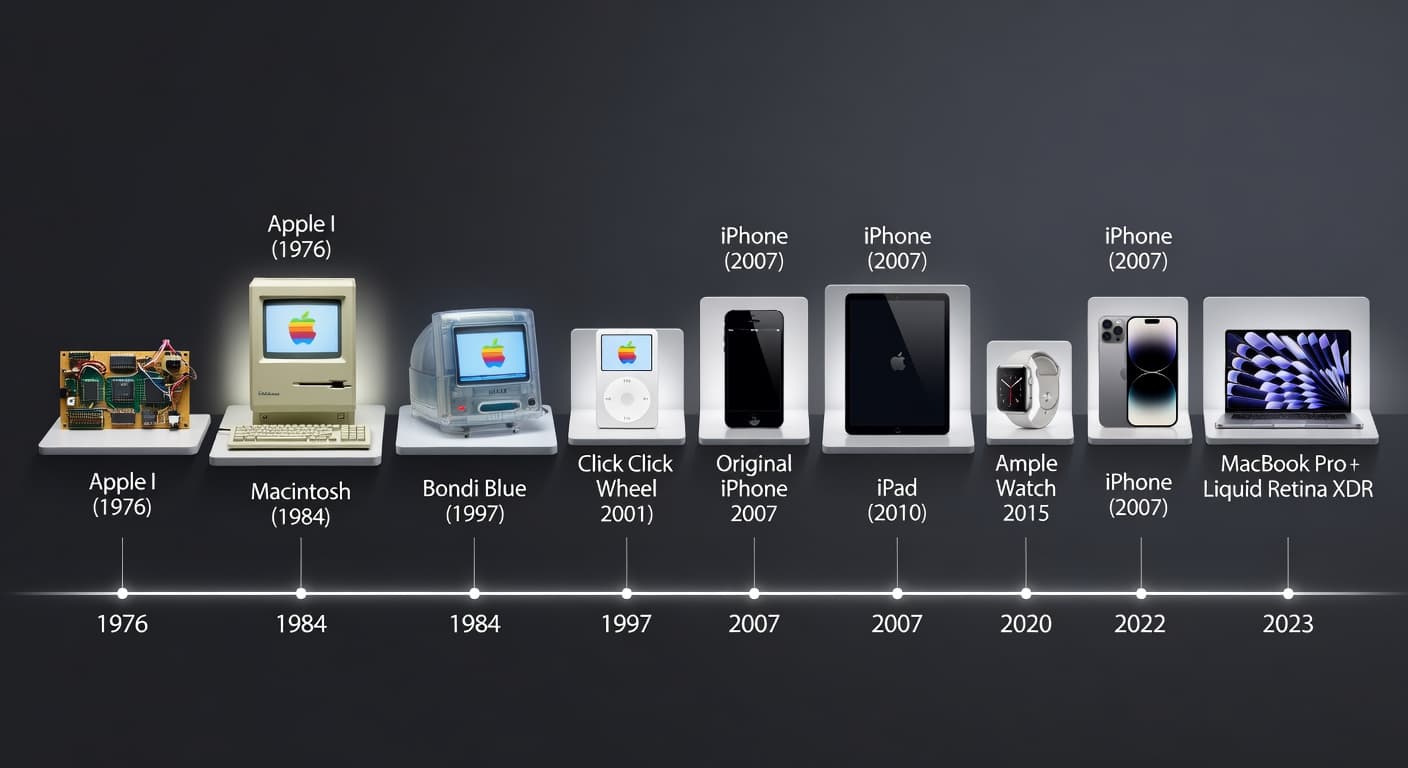
iPod (2001)
Before the iPod, portable digital music was a mess. MP3 players were clunky, storage was limited, and managing your music library felt like assembling IKEA furniture while blindfolded.
The iPod changed that. The click-wheel design was elegant. iTunes made legal music downloading accessible for the first time. It wasn't the first digital music player—but it was the one that won because it made the whole experience work.
More importantly, the iPod gave Apple the financial strength and operational maturity to later take on the smartphone industry. Without it, there's no iPhone.
iPhone (2007)
More than 200 million iPhones are sold every year. Seven per second, somewhere in the world. That's not a product; that's a category.
Steve Jobs introduced it as "an iPod, a phone, and an internet communicator—three separate devices in one." Other phones had internet capabilities. Other phones had touchscreens. But the iPhone had design. It had marketing that made people want it—not as a tech device, but as something desirable, almost romantic.
It's the "Hotel California of smartphones": once you have one, you're very unlikely to leave the Apple ecosystem.
Apple Watch (2015)
By the time the Apple Watch launched, Steve Jobs was gone. Tim Cook took over with a single goal: make the best watch in the world.
It worked. As a standalone business, the Apple Watch would rank in the top 250-300 largest companies in America. It now ships more units annually than the entire Swiss watch industry.
But its real achievement isn't just the revenue ($15 billion annually). It's the innovation in health tech—ECG monitoring, fall detection, continuous fitness tracking. The Watch made wearable health mainstream.
The Misses
Apple Lisa (1983)
The Lisa cost nearly $10,000. In 1983, that was a lot of money.
It was technically impressive—one of the first PCs with a graphical user interface and a mouse. But being ahead of the curve isn't enough if the product is priced for a different planet. The Lisa flopped commercially because it was too expensive for what it offered.
Apple learned. The Macintosh, released a year later, cost $2,495 and became iconic.
The Butterfly Keyboard (2015-2019)
Apple's "butterfly" keyboard design for MacBooks was a misstep in reliability. The two-sided hinged switches looked elegant but were fragile and often uncomfortable to type on.
It felt like Apple was prioritizing thinness over durability—a betrayal of the company's usual philosophy. By 2019, they quietly killed it and went back to a conventional design.
Vision Pro (2024)
Apple's big bet on mixed reality, the Vision Pro costs $3,500 and promised to revolutionize how we interact with digital content.
It didn't. The headset was too cumbersome, the content ecosystem was thin, and demand was so low that Apple scaled back production just months after launch.
The Verdict
Apple's track record speaks for itself: two Steves changed how billions of people use technology. But the company's golden era seems to have been during Jobs's lifetime—defined by bold, simplifying visions that made people want the products.
Since Cook took over, Apple has continued to refine and improve its existing products. But the visionary leaps have gotten rarer. The Apple of 2026 is profitable and powerful. But the Apple of the 1990s and 2000s? That was the Apple that changed everything.
Source: BBC News - Apple at 50
Comments
Loading comments...