Space
Artemis 2 Breaks Humanity's All-Time Distance Record
Artemis 2 Breaks Humanity's All-Time Distance Record
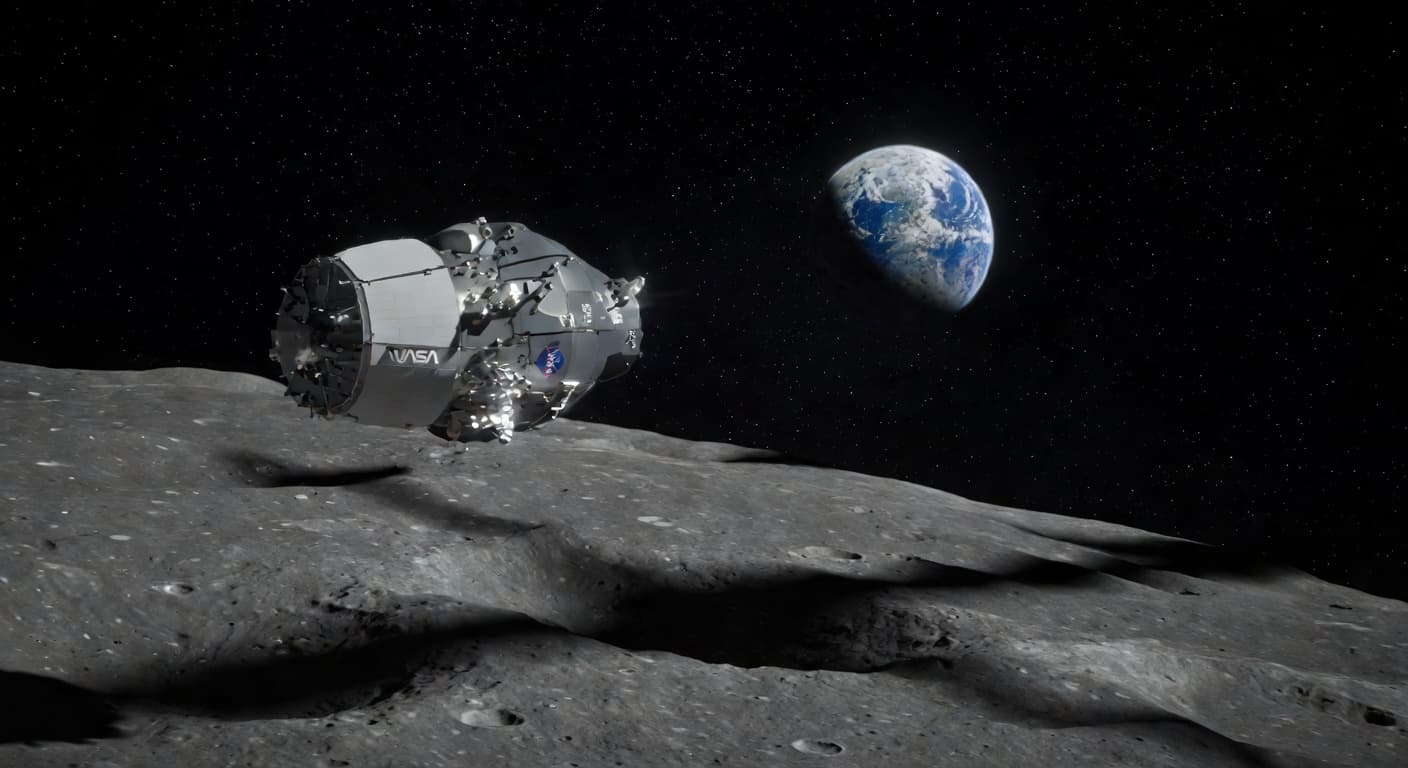
NASA's Artemis 2 moon mission has reached a historic milestone: today (April 6, 2026) at 1:57 p.m. EDT, the four-person crew surpassed Apollo 13's 50-year-old human spaceflight distance record.
The Numbers
The old record stood at 248,655 miles (400,171 kilometers) from Earth—a marker set by the Apollo 13 crew in April 1970 during their ill-fated lunar mission. Artemis 2's Orion capsule will reach a maximum distance of approximately 252,760 miles (406,778 km) from home tonight at 7:07 p.m. EDT.
That's not just a milestone; it's a statement. For more than five decades, humanity's farthest travelers remained the three astronauts of Apollo 13—a mission that was supposed to land on the moon but became a story of survival. Today, Commander Reid Wiseman, Pilot Victor Glover, Specialist Christina Koch, and Canadian mission specialist Jeremy Hansen have surpassed them.
A Message Across Time
Before his death last August, Apollo 13 commander Jim Lovell recorded a congratulations message for the Artemis 2 crew. "Hello, Artemis 2, this is Apollo astronaut Jim Lovell. Welcome to my old neighborhood," he said.
Lovell reflected on his Apollo 8 mission and the famous "Earthrise" photograph—the image of our planet rising above the lunar horizon that inspired and united people worldwide. He passed the torch to the next generation: "I'm proud to pass that torch on to you as you swing around the moon."
When Wiseman received the message, he radioed back: "That was an awesome message from Jim Lovell. Very cool to hear him welcome us to the neighborhood. It's gonna be a great day."
The Significance
This moment matters for reasons beyond the numbers. Artemis 2 is the first crewed lunar mission in over 50 years. Victor Glover is the first person of color to travel beyond low Earth orbit. Christina Koch is the first woman to do so. Jeremy Hansen is the first non-American.
The mission itself is a shakeout cruise—a test of Orion's ability to support astronauts in deep space. The crew will return to Earth on Friday (April 10) with a splashdown off the coast of San Diego. But what they're testing, what they're proving, will directly enable the lunar landings planned for late 2028 and beyond.
What Comes Next
If Artemis 2 goes to plan (and so far, it has), the next crewed moon landing will happen on Artemis 4 in late 2028. After that, NASA plans to build a lunar base near the south pole—a stepping stone to Mars.
For now, the Artemis 2 crew is doing what all deep space explorers do: they're looking back. Jeremy Hansen, aboard the spacecraft at the point where humanity has ventured farthest, said it best: "We will continue our journey even further into space before Mother Earth succeeds in pulling us back to everything that we hold dear, but we, most importantly, choose this moment to challenge this generation and the next to make sure this record is not long-lived."
Fifty years after Apollo 13, we're finally moving again.
Source: Space.com - Artemis 2 breaks humanity's all-time distance record
Comments
Loading comments...