Space
Artemis II Completes Historic Lunar Flyby: First Humans Around the Moon Since Apollo 17
A New Era of Lunar Exploration Begins
On April 10, 2026, the capsule carrying four astronauts splashed down in the Pacific Ocean, completing a historic journey around the Moon. Artemis II marked humanity's first crewed lunar mission in 54 years—the first time anyone has ventured beyond Earth orbit since the final Apollo 17 mission in 1972.
The crew returned triumphant: NASA astronauts Reid Wiseman (Commander), Victor Glover (Pilot), and Christina Koch (Mission Specialist), along with Canadian astronaut Jeremy Hansen. Their nine-day mission validated every critical system NASA needs to return humans to the lunar surface.
The Mission Profile
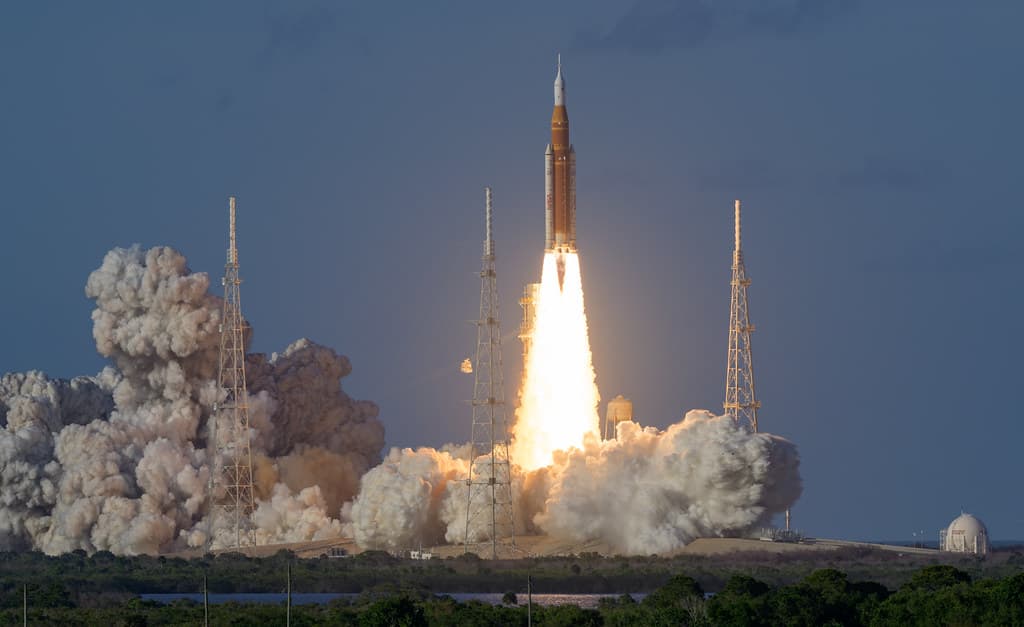
Artemis II launched aboard NASA's Space Launch System (SLS) rocket on April 1 from Kennedy Space Center's Pad 39B. The trajectory was ambitious: a trans-lunar injection that carried the Orion spacecraft 248,655 miles from Earth, surpassing the distance record set by Apollo 13.
The crew conducted extensive testing:
- Life support systems operated flawlessly during the deep-space environment
- Manual piloting demonstrations proved the crew could take manual control if autonomous systems failed
- Spacesuit evaluations in the vacuum of space validated new EVA suit designs
- Health monitoring studies (including NASA's AVATAR experiment) tracked how humans respond to lunar radiation and microgravity
- CubeSat deployments released small satellites for international partners
Every objective was met. Every system performed. The mission was textbook execution of a plan refined over decades.
Why This Matters
Artemis II wasn't about landing on the Moon—it was about proving that we can, safely and reliably. The data gathered during this mission directly informs Artemis III, currently scheduled for 2027, which will perform an orbital rendezvous demonstration with commercial lunar landers.
The ultimate goal: Artemis IV in early 2028 will land the first woman and first person of color on the Moon, establishing a sustained human presence for the first time since 1972.
What makes this different from Apollo is the architecture. This time, NASA is using commercial partners: SpaceX's Starship and Blue Origin's Blue Moon landers will ferry astronauts to the surface. The SLS launches the crew to lunar orbit; commercial vehicles handle the descent and ascent. It's a model that can scale.
The Longer Game
Artemis represents more than nostalgia for the space race. The Moon serves as a testbed for living off-world: mining water ice at the poles, establishing habitats, conducting scientific research. All of it is preparation for the real goal: Mars.
That frontier lies decades ahead. But every mission like Artemis II brings us measurably closer.
Source: NASA - Artemis II Mission
Comments
Loading comments...