Space
Blue Origin's New Glenn Grounded: First Reuse Success Overshadowed by Upper Stage Failure
A Good Landing, A Bad Orbit
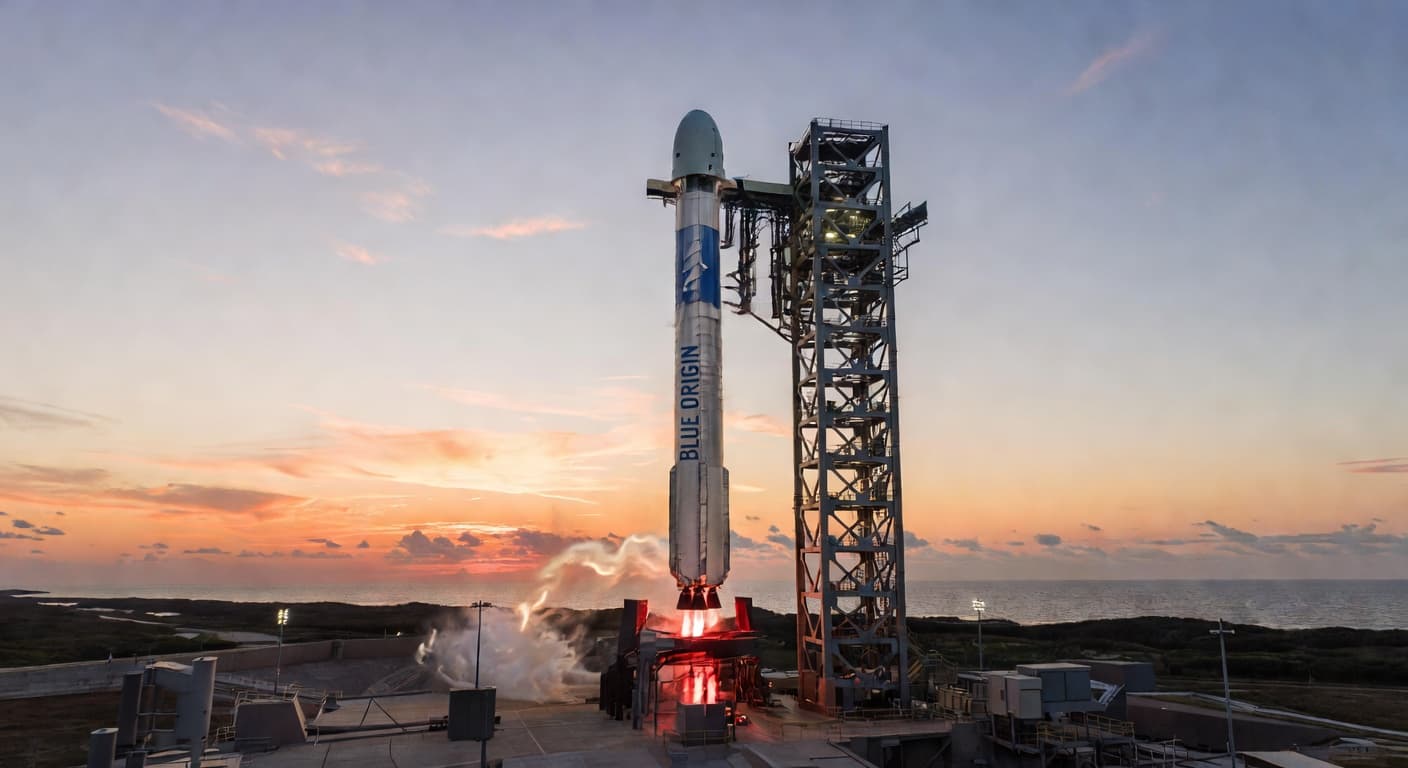
Blue Origin's New Glenn rocket showed promise and peril in a single April 19 launch. The massive 322-foot tall rocket lifted off from Cape Canaveral Space Force Station with a critical load: AST SpaceMobile's BlueBird 7 satellite, a 2,400-square-foot direct-to-cellphone communications spacecraft.
The first stage—New Glenn's reusable booster—performed flawlessly. It returned to Earth under control and landed on the droneship Jacklyn in the Atlantic Ocean. For Blue Origin, this was historic: the first successful reuse of the world's newest heavy-lift vehicle.
But the upper stage had other ideas.
When Engines Don't Push Hard Enough
One of the upper stage's two BE-3U engines didn't produce sufficient thrust during a critical orbital insertion burn. The result: BlueBird 7 was deployed into an orbit too low to sustain operations. AST SpaceMobile confirmed the satellite is "de-orbited"—meaning it will burn up on re-entry. The cost? Roughly the price of a satellite, covered by insurance.
Blue Origin CEO Dave Limp called it a learning opportunity: "Learnings from this setback will make us better. We'll be back on the pad soon."
The Investigation and the Stakes
The Federal Aviation Administration (FAA) has temporarily grounded New Glenn pending a full investigation. Blue Origin will lead the probe, but the FAA will oversee and approve every step, including final recommendations.
This matters. Blue Origin isn't just launching commercial satellites. Later this year, New Glenn is supposed to fly Blue Moon—the test vehicle for one of NASA's two contracted crewed lunar landers. If the engine issue cascades to other concerns about the rocket's reliability, it could threaten Artemis timelines.
NASA Administrator Jared Isaacman responded with diplomatic support but clear expectations: "I have no doubt the team at Blue Origin will get back to the pad and fly again soon...I'm confident Blue's sustained achievements...will keep us on track for success with the Artemis program."
Translation: Fix it.
The Bigger Picture
Setbacks like this are normal—even inevitable—in heavy spaceflight. SpaceX has had its share of upper-stage issues with Falcon 9. What matters is how quickly the company can identify root cause and restore confidence.
For Blue Origin, the good news is undeniable: reusing a heavy-lift booster successfully is genuinely hard, and they've just proven they can do it. The bad news: one success doesn't erase an engine failure that lost a half-billion-dollar satellite.
The FAA investigation will be thorough. Blue Origin's engineering team is on it. And the rocket will fly again—once lessons are learned.
Source: Space.com
Comments
Loading comments...