AI
Sony's AI-Powered Robot Defeats Professional Table Tennis Players
When Machines Master Play
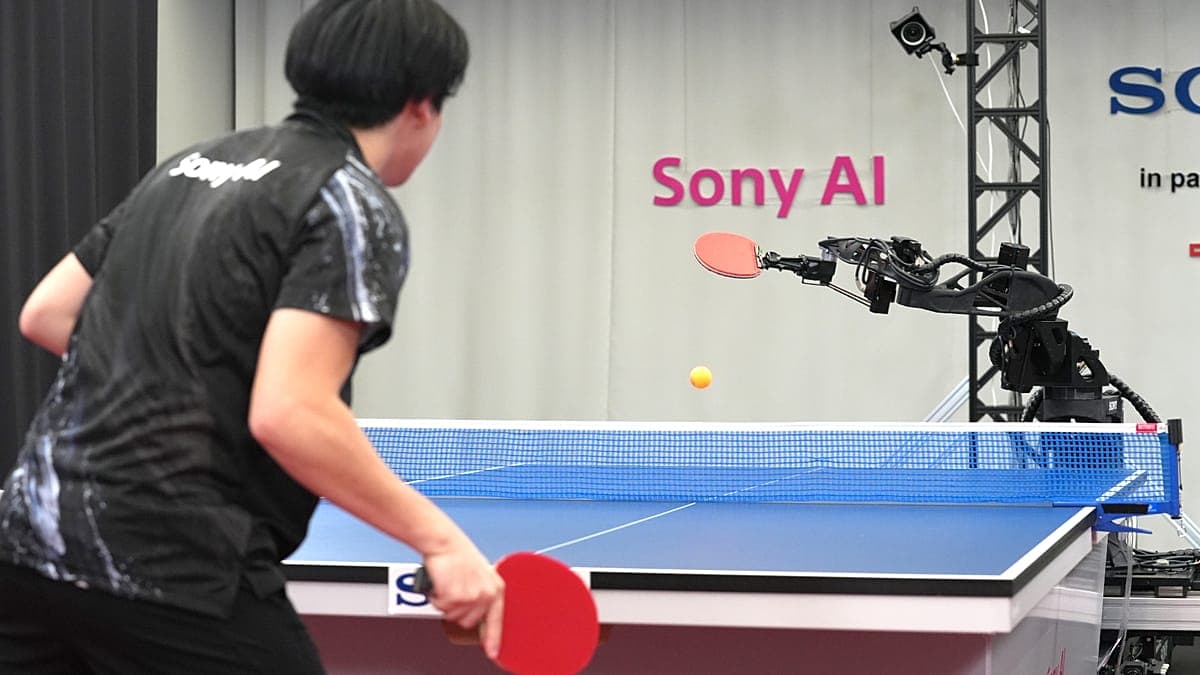
Japanese electronics giant Sony has unveiled Project Ace, a robotic arm that can defeat professional table tennis athletes. What makes this breakthrough remarkable isn't just the victory—it's how the robot achieves it.
From Virtual to Physical
Researchers at Sony trained Project Ace using reinforcement learning in simulated environments, then transferred that learning directly into real-world gameplay. This sim-to-real pipeline represents a major milestone in robotics: AI trained in virtual settings can now perform complex, adaptive tasks in physical space.
Perception Meets Precision
While the robot's physical speed and reach were kept within human-like constraints to make competition fair, its perceptual abilities stand out. Ace can read the logo on the ball to gauge spin and predict its trajectory, then react within milliseconds to return serves under official tournament rules.
The robot adapts during rallies rather than relying on fixed, pre-programmed moves. This adaptability is the key to its success—it's learning and responding in real-time, not just executing a playbook.
Beyond Sports
Tested on a full-size court in Tokyo and detailed in Nature, Project Ace demonstrates a fundamental shift in what's possible with AI-driven robotics. While the application here is competitive sport, the implications extend far beyond the table: precision manufacturing, surgical robotics, logistics, and tasks requiring sub-second decision-making in unpredictable environments.
The fact that it can beat professional athletes isn't really the story. The story is that machines can now learn to handle real-world chaos in ways that mirror—and sometimes exceed—human learning.
Comments
Loading comments...