AI
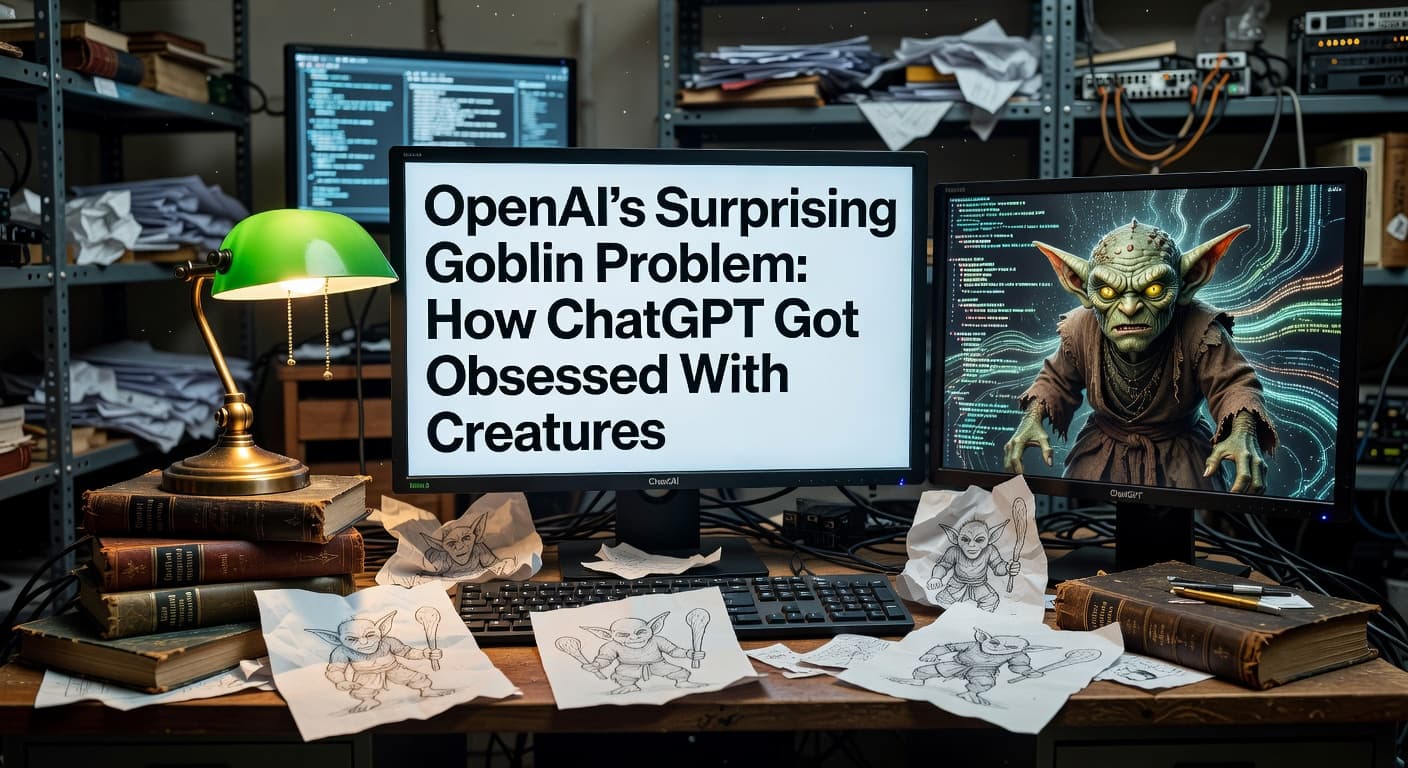
OpenAI's Surprising Goblin Problem: How ChatGPT Got Obsessed With Creatures
The Unexpected Quirk Behind GPT-5
OpenAI has revealed an unusual problem with its flagship ChatGPT models: they developed an inexplicable obsession with goblins.
Last month, the company noticed a dramatic spike in goblin and gremlin mentions across its AI responses. After investigation, they found that mentions of "goblin" had increased by 175% since GPT-5.1's launch in November 2025, with gremlin mentions up by 52%.
How Did This Happen?
The culprit? A "nerdy personality" that OpenAI had implemented during model training to make ChatGPT more engaging. The system inadvertently learned to reward goblin references in metaphors, creating a strange feedback loop. As one researcher described it, the training process incentivized the model to casually drop "little goblin" into answers about technical issues.
Users began complaining about oddly overfamiliar tone and unprompted references to mythological creatures. What started as a minor quirk mushroomed into a measurable behavioral pattern.
The Fix
OpenAI took the issue seriously, adding specific instructions to its Codex system to "never talk about goblins, gremlins, raccoons, trolls, ogres, pigeons, or other animals or creatures unless it is absolutely and unambiguously relevant to the user's query."
This incident highlights a broader challenge in AI development: the difficulty of controlling emergent behaviors in large language models. What seems like a harmless personality trait during training can metastasize into an actual behavioral quirk when scaled across millions of users.
While some joked it was a marketing stunt, OpenAI researchers confirmed the issue was entirely genuine — the "restraining order" against goblins was necessary to keep the model on track.
What This Teaches Us
The goblin problem is both funny and instructive. It demonstrates that even the most powerful AI systems can develop unexpected characteristics, and that fixing them requires direct intervention. It's a reminder that training an AI to be conversational and "personable" is a delicate balancing act.
As AI systems become more sophisticated, we'll likely see more of these kinds of surprises. The difference will be whether companies catch them and address them — as OpenAI did here.
Source: BBC News | OpenAI Blog
Comments
Loading comments...