Space
Comet PanSTARRS Approaches Earth This Weekend—Here's How to Catch It
A Once-in-a-Lifetime Visitor
Comet C/2025 R3 (PanSTARRS) is making its closest approach to Earth this weekend, offering skywatchers a rare opportunity to observe a naked-eye comet in real time. After surviving a fiery passage near the sun on April 19, the comet is now heading toward its nearest point to our planet on April 26—roughly 45 million miles away.
Viewing from Earth and Space
The comet currently shines at magnitude +4.5, making it visible to the naked eye as a hazy patch of light. Binoculars or a small telescope will reveal more detail and make it easier to locate. Importantly, the comet is only visible from the southern hemisphere following its perihelion passage, so northern hemisphere observers will need to wait for images and data from satellite networks.
Watch It from Orbit
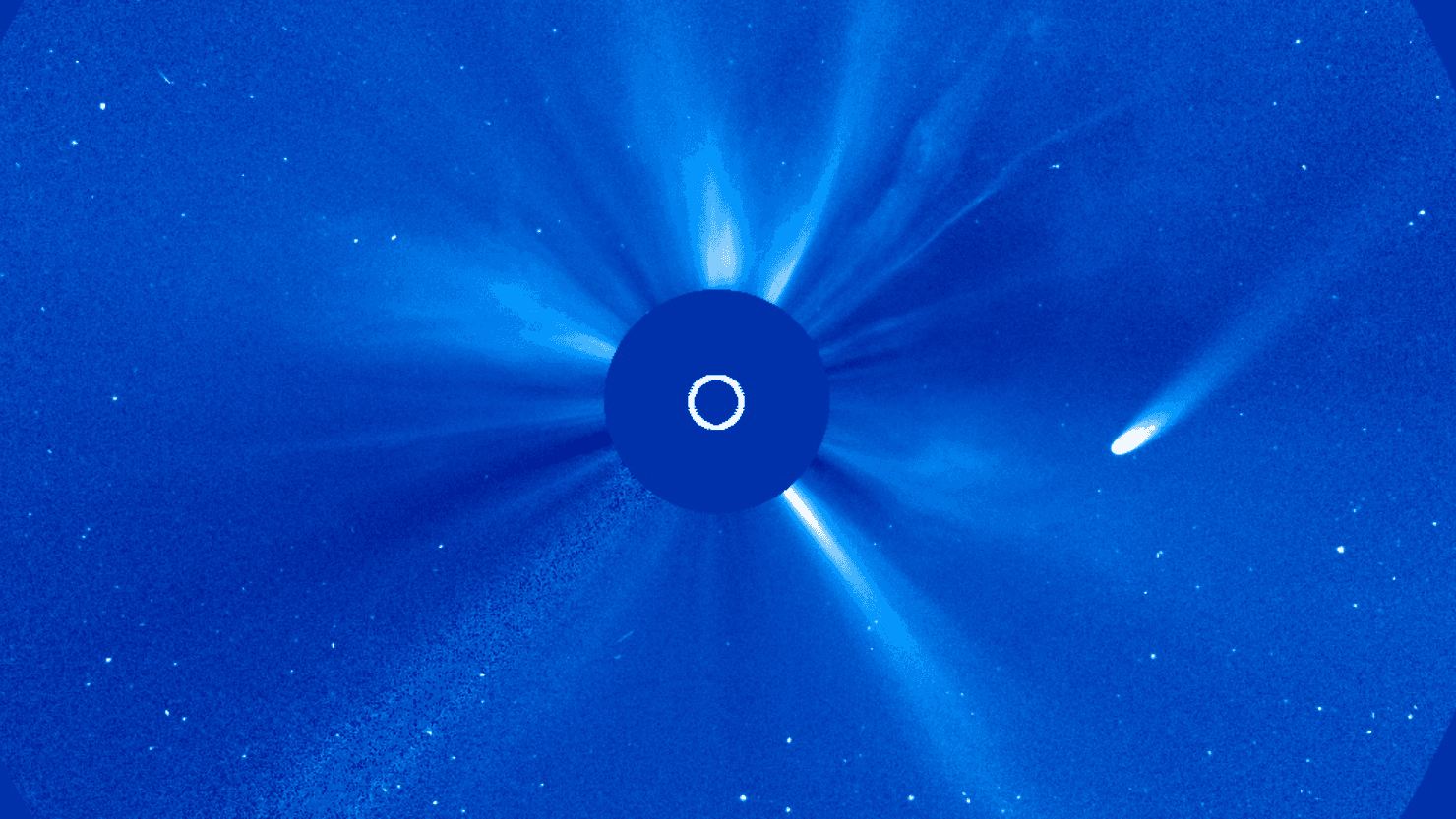
If you're in the north, don't miss the chance to observe via NASA's SOHO (Solar and Heliospheric Observatory) satellite. The LASCO instrument aboard SOHO, positioned at the First Lagrangian Point (L1) 930,000 miles from Earth, has an uninterrupted view of the inner solar system. You can follow PanSTARRS' path in real-time on the SOHO website.
NOAA's GOES-19 satellite is also tracking the comet and providing additional imagery through the Space Weather Prediction Center.
A Dramatic Backdrop
The timing is significant: as the comet approaches Earth, powerful solar flares are erupting from the sun—including two X-class events in the past 24 hours. The sun is ejecting coronal mass ejections (CMEs) that cast plasma into space, creating a dynamic and dramatic backdrop for PanSTARRS' approach.
This is a comet worth staying up for, whether you're observing from a dark sky site, watching satellite feeds, or simply marvelling at the fact that we share the inner solar system with icy wanderers from the outer reaches of our cosmic neighbourhood.
Comments
Loading comments...