Space
Cosmic Collision Within a Collision: Hubble Tracks Gamma-Ray Burst to Neutron Star Merger
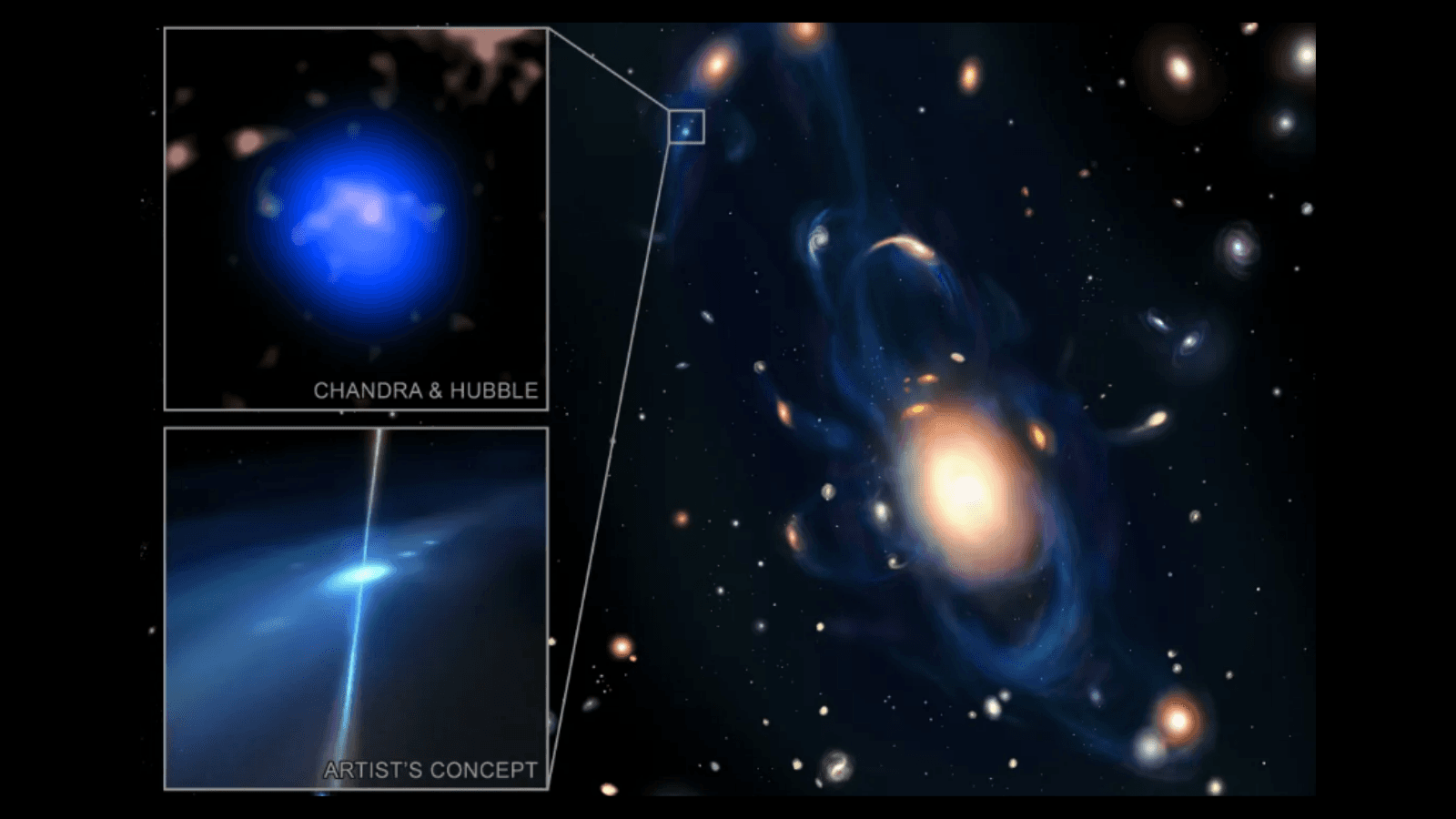
On September 23, 2023, NASA's array of space telescopes spotted something extraordinary: a gamma-ray burst (GRB) that would challenge everything astronomers thought they knew about where these cosmic blasts originate. The burst, designated GRB 230906A, was tracked using Chandra X-ray Observatory, Fermi Gamma-ray Space Telescope, Neil Gehrels Swift Observatory, and the legendary Hubble Space Telescope. What they found was remarkable: a neutron star merger not in the dense heart of a galaxy, but in a tiny, faint galaxy nestled within a river of gas 600,000 light-years long—about six times the width of our own Milky Way.
Why This Matters
Finding a neutron star collision here is, in the words of discovery team leader Simone Dichiara from Penn State University, "game-changing." It addresses two puzzles that have vexed astrophysicists for years.
First, when astronomers trace gamma-ray bursts back to their origins, they often occur in unexpected places—away from the dense galactic cores where collisions should be more common. Sometimes they appear to come from intergalactic space entirely. GRB 230906A suggests that many of these seemingly off-location bursts originate from tiny, extremely faint galaxies that are simply too dim to see—until now.
Second, neutron star collisions are the universe's forge for heavy elements like gold, silver, and platinum. Yet these elements are often found in stars far from galactic centers that should have formed before such enrichment was possible. This discovery hints at a mechanism: the explosive power of these mergers could scatter newly-forged heavy elements across vast cosmic distances.
A Collision Within a Collision
The real poetry is in the layers. The gas stream containing this merger-hosting galaxy was created when a group of galaxies collided hundreds of millions of years ago. That collision triggered a wave of star formation that, over hundreds of millions of years, led to the birth and eventual collision of the neutron stars detected on September 23, 2023. We're seeing the cascade effects of cosmic violence echoing across geological timescales.
"We found a collision within a collision," said team member Eleonora Troja from the University of Rome, Italy. It's the kind of discovery that reminds us how much the universe rewards precision observation—Chandra's pinpoint X-ray localization made the whole investigation possible.
Source: NASA Chandra Observatory
Comments
Loading comments...