Space
James Webb's Unexpected Discovery: Early Universe Galaxies Are Too Massive
A Cosmic Puzzle: Early Galaxies Are Too Massive
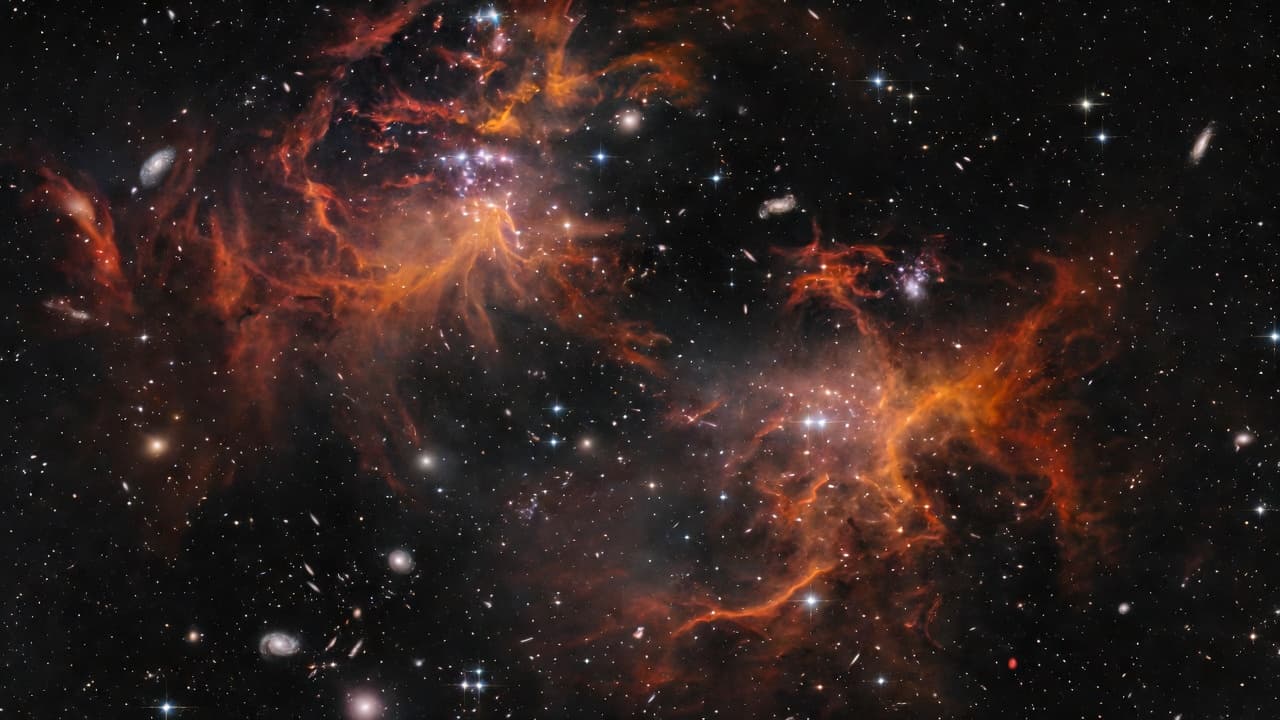
When the James Webb Space Telescope turned its infrared eyes toward the infant universe, astronomers encountered something troubling: massive, fully-formed galaxies where only small, young systems should exist.
The Paradox
Current models predict gradual galaxy growth: small systems merge over billions of years to create massive structures. The early universe—just 300-500 million years old in JWST's view—should contain only small, young galaxies.
Instead, JWST consistently observes massive galaxies as large as the Milky Way, fully mature with organized structures.
What JWST Is Seeing
- Massive disk-like galaxies with spiral structure
- Evidence of rapid star formation at unprecedented scales
- Supermassive black holes at young galaxy centers
- "Little red dots"—mysterious ancient sources
Why This Matters
If galaxies formed faster than predicted, it reshapes cosmic evolution. Possible explanations:
- Galaxy formation is more efficient than theory suggests
- Early star formation differs fundamentally from modern processes
- Supermassive black holes played a larger role than expected
The Scientific Response
Astronomers are rallying to investigate. JWST will continue observations throughout 2026, gathering spectroscopic data to understand these mysterious systems.
For ground-based observers, this is a golden era. JWST opens windows; future instruments will refine the answers.
The early universe just became even more fascinating.
Source: ESA/JWST News Archive
Comments
Loading comments...