JWST Unveils Ancient Black Hole 'Little Red Dots' in Early Universe
JWST Unveils Ancient Black Hole 'Little Red Dots' in Early Universe
The James Webb Space Telescope (JWST) has made a stunning discovery: hundreds of mysterious, compact red objects scattered across the early universe from just a billion years after the Big Bang. Known as "Little Red Dots" (LRDs), these objects are likely powered by rapidly growing supermassive black holes—and they could be the missing link in understanding how the universe's first giants formed.
What Are Little Red Dots?
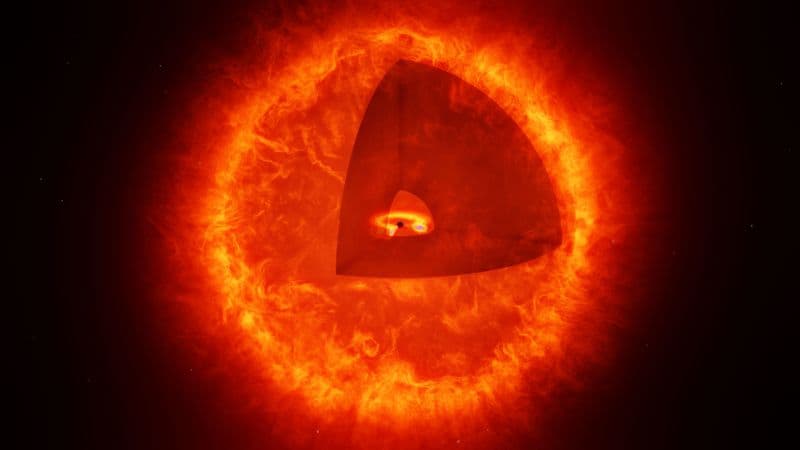
The LRDs appear as tiny, bright spots in JWST's infrared images of the distant cosmos. Their red hue comes from dust and gas heated by intense radiation from accretion disks around growing black holes. What makes them remarkable is their sheer abundance in the early universe and their tiny physical size—far smaller than local galaxies with supermassive black holes today.
Researchers believe these objects represent a crucial evolutionary stage: primordial black holes in their most aggressive growth phase, surrounded by thick clouds of hydrogen and dust that obscure their cores but radiate brightly in the infrared.
A Missing Evolutionary Link
The discovery addresses a long-standing puzzle in cosmology. Astronomers have long observed supermassive black holes in the local universe—some weighing billions of solar masses in the centers of galaxies. But growing a black hole to such enormous scales in just a few hundred million years (the early universe's timeline) seems implausibly fast.
Little Red Dots may represent the hidden phase between primordial black holes and the mature giants we see today. By studying their properties—composition, accretion rates, and radiation signatures—astronomers can trace how black holes assembled in the infant cosmos.
Technical Insight
JWST's infrared capabilities were crucial to this discovery. The dust and gas surrounding these black holes would make them invisible to visible-light telescopes like Hubble, but JWST's NIRCam and MIRI instruments penetrate the dust to reveal the energetic cores underneath. The telescope's sensitivity has enabled astronomers to detect objects too faint and distant to observe with previous technology.
What's Next
The discovery opens new avenues for investigation. Ground-based telescopes and future observations will attempt to confirm the black hole hypothesis and measure properties like black hole mass, accretion rates, and host galaxy properties. Future instruments like the Nancy Grace Roman Space Telescope will extend these observations and refine our understanding of the early universe's most energetic phenomena.
The Little Red Dots remind us that even with our most advanced telescopes, the early universe still holds surprises—and mysteries that reshape our understanding of how cosmic structures form.
Source: CNN Science — Little Red Dots: What are the mysterious objects in the Webb telescope's photos?
Comments
Loading comments...