Software
Microsoft Quantum Development Kit Gets AI-Powered Tooling and Chemistry Support
Microsoft Quantum Development Kit Gets AI-Powered Tooling and Chemistry Support
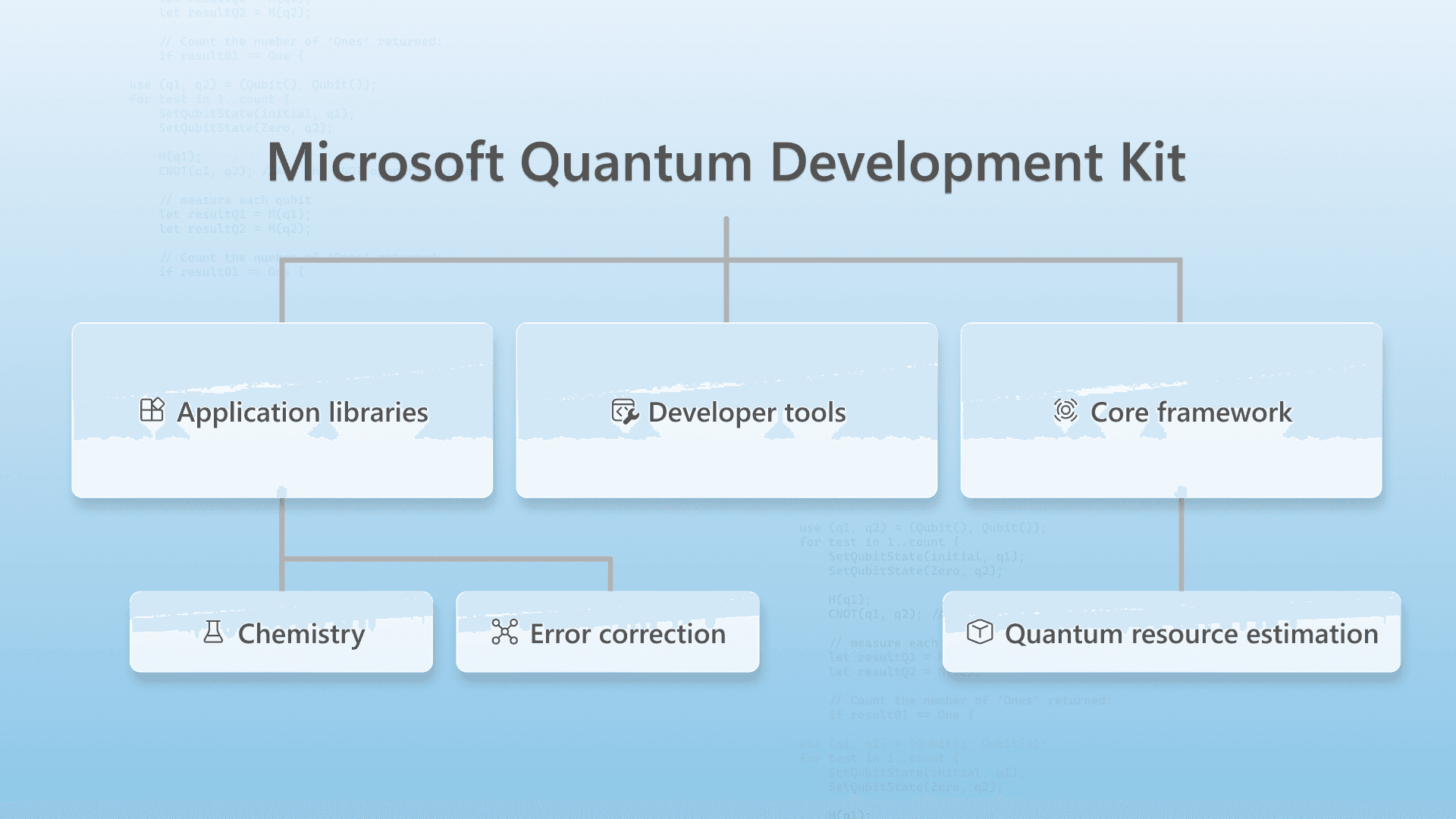
Microsoft has significantly expanded its Quantum Development Kit (QDK) with AI-assisted programming, domain-specific tools, and open-source integrations—positioning quantum development for mainstream adoption.
Core Upgrades
GitHub Copilot Integration
The QDK now integrates directly with GitHub Copilot and VS Code, automating quantum code generation, unit tests, and job submissions. Developers can leverage AI to accelerate circuit design, reducing barriers to entry for quantum programming. The integration includes:
- Real-time circuit visualization and rendering
- Breakpoint debugging and local simulators
- Hardware submission and resource estimation
- Python and Jupyter notebook support
- Histogram and visualization tools
This marks a shift toward "AI-enabled quantum programming"—letting developers focus on problem definition while Copilot handles implementation details.
Chemistry-Specific Toolkit
Recognizing quantum computing's potential in drug discovery, Microsoft launched QDK for Chemistry—a comprehensive toolkit for quantum chemistry simulations. Features include:
- Unified molecular modeling interface supporting major chemistry software packages
- Automated Hamiltonian generation and active space selection workflows
- Native VS Code visualization of molecules and quantum circuits
- Efficient classical preprocessing that reduces problem size while preserving chemical accuracy
- End-to-end workflows from problem definition through quantum execution and postprocessing
The toolkit is designed by chemists for chemists, lowering expertise barriers while enabling researchers to transform complex quantum chemistry problems into actionable results.
Error Correction Infrastructure
As quantum systems mature beyond error-prone physical qubits, Microsoft is releasing QDK for Error Correction—open-source modules for characterizing, validating, and debugging encoded quantum programs. This tooling enables:
- Customizable encoding/decoding strategies aligned with target hardware
- Logical qubit validation and debugging
- Notebook samples for common error correction workflows
- Full availability expected by end of 2026
Open Ecosystem
The QDK remains fully open-source and interoperable with Qiskit, Cirq, and OpenQASM—the industry-standard quantum languages. This approach contrasts with vendor lock-in, allowing researchers and developers to combine Microsoft's tools with ecosystem partners.
Hardware Partnership
Microsoft continues co-designing Magne—the world's most powerful quantum computer (in development with Atom Computing). The Nordic quantum initiative QuNorth will reveal Magne's defining features January 26, 2026 in Copenhagen.
Developer Ready
The expanded QDK is available now on GitHub. With Copilot integration, chemistry tooling, and error correction support, Microsoft is signaling that quantum computing is transitioning from research labs to production workflows.
Comments
Loading comments...