Space
Nancy Grace Roman Space Telescope Launches This Fall: A New Eye on the Universe
Nancy Grace Roman Space Telescope: Launching This Fall
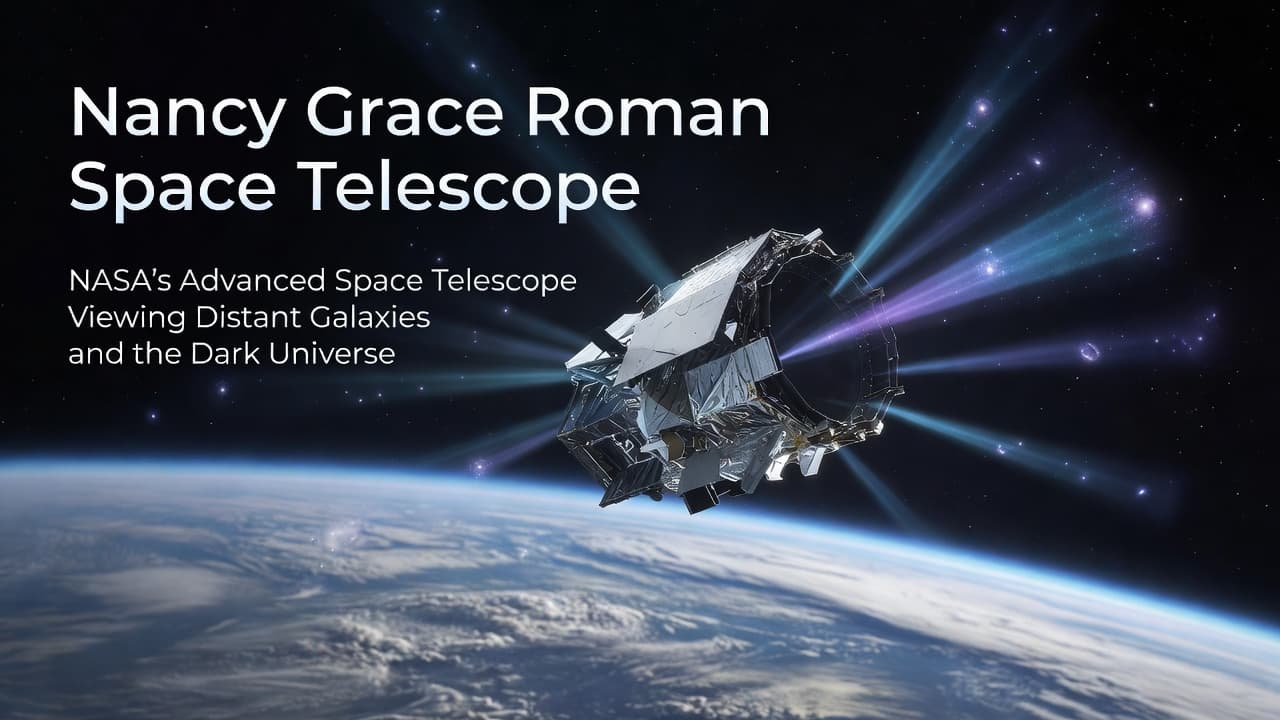
NASA's Nancy Grace Roman Space Telescope is set to revolutionize astronomical observation when it launches sometime after September 2026. Named after NASA's pioneering astronomer Nancy Grace Roman (the "Mother of the Hubble Space Telescope"), this 2.4-meter observatory promises to reshape our understanding of the cosmos.
What Makes Roman Special?
On paper, Roman looks similar to the Hubble Space Telescope — same 2.4-meter mirror, same resolution, about the size of a bus. But Roman's true superpower is its field of view: 100 times larger than Hubble's. This means Roman can survey vast swaths of sky with unprecedented speed and detail, something Hubble simply cannot do.
Three Major Science Surveys
Roman's five-year primary mission is divided into three major surveys:
Milky Way Survey: Roman will peer toward the galactic center, hunting for stars, black holes, and distant exoplanets. This will help us understand our galaxy's structure and history.
Wide Area Survey: Covering 12% of the entire sky, this survey will investigate cosmic geometry and expansion — directly probing dark energy, the mysterious force accelerating the universe's expansion.
Time-Domain Survey: By re-examining the same small patch of sky every five days, Roman will catch transient cosmic events: supernovae, stars being devoured by black holes, and other violent cosmic phenomena that appear and disappear rapidly.
The Dark Energy Connection
One of Roman's primary missions is to shed light on dark energy — a question that stumped physicists for decades. By measuring how the universe expands and changes over time, Roman will provide crucial data for understanding this fundamental mystery.
Joining an Elite Observational Fleet
Roman completes a triumvirate of space-based observatories: Hubble for optical light, the James Webb Space Telescope for infrared, and now Roman for wide-area surveys and time-domain astronomy. Each serves a different purpose; together, they provide humanity with unprecedented insight into the universe.
Source: NASA
Comments
Loading comments...