NASA's Psyche Spacecraft Approaches Mars for Historic Gravity Assist
NASA's Psyche Spacecraft Approaches Mars for Historic Gravity Assist
Tomorrow, May 15, 2026, NASA's Psyche spacecraft will make a close approach to Mars—passing just 2,800 miles (4,500 kilometers) from the planet's surface at 12,333 mph (19,848 kph). This gravity assist maneuver is a critical milestone in the mission's three-year journey to the metal-rich asteroid Psyche, one of the solar system's most unusual objects.
The Gravity Assist: Saving Fuel with Physics
Launched on October 13, 2023, Psyche relies on a solar-electric propulsion system using xenon gas. While this system provides continuous, efficient acceleration, Mars's gravity will save precious propellant by acting as a cosmic slingshot. Rather than burning more fuel, the spacecraft will let the planet's gravitational pull adjust its trajectory and speed—a clever use of orbital mechanics.
"We are now exactly on target for the flyby," said Sarah Bairstow, Psyche's mission planning lead at NASA's Jet Propulsion Laboratory. "This is our first opportunity in flight to calibrate Psyche's imager with something bigger than a few pixels, and we'll also make observations with the mission's other science instruments."
Scientific Observations: Practice Run for the Real Goal
The operations team isn't just passing by—they're using this encounter as a dress rehearsal. Psyche's multispectral imager will capture thousands of observations of Mars, providing valuable data and helping the team refine techniques they'll need when approaching and orbiting the asteroid Psyche in late 2029.
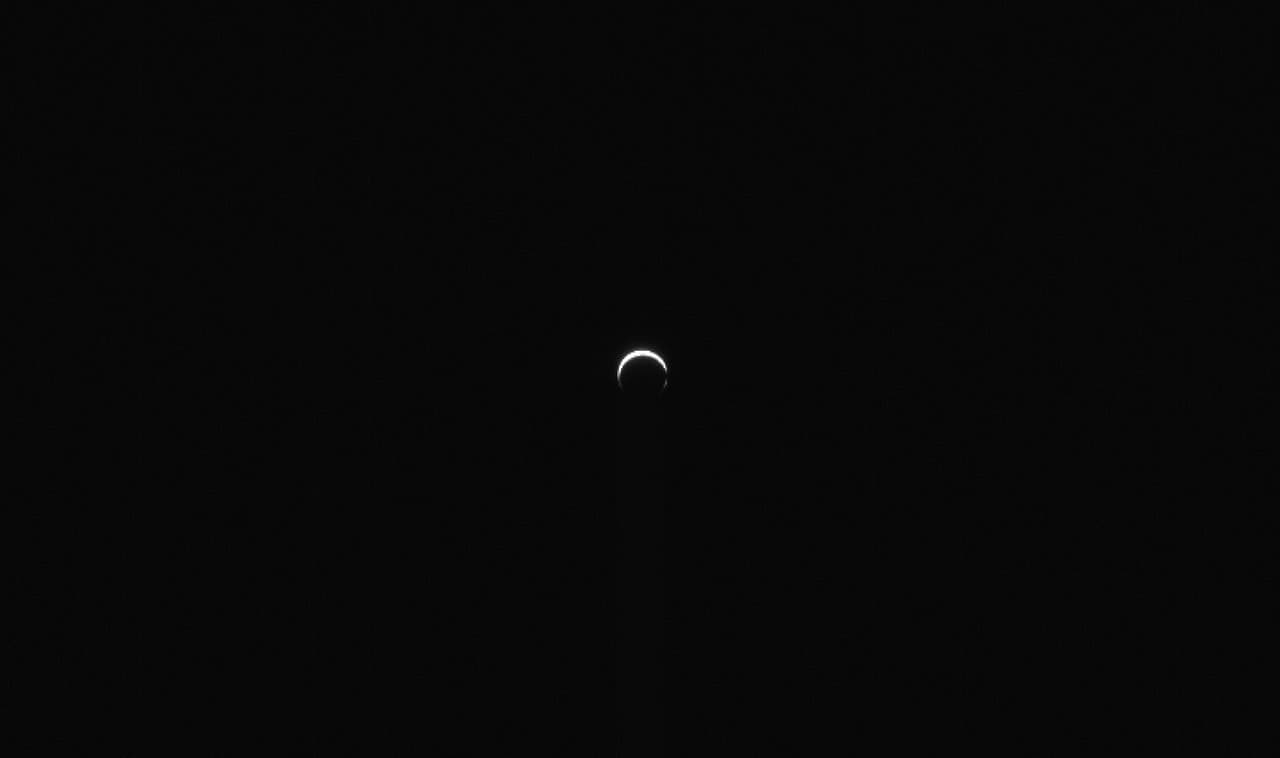
Beginning May 7, raw images from the imager have already appeared on the mission's website. The team will process these images over the coming weeks, balancing brightness and contrast, and creating a time-lapse of the entire flyby.
What Psyche Will See
From the spacecraft's vantage point, Mars won't look like the familiar reddish disk in typical photos. The probe is catching up with Mars from its night side, illuminated only by a thin sliver of sunlight. This high phase angle will create a dramatic crescent view on approach, becoming almost a full Mars after the flyby—perfect for calibration and genuinely beautiful imagery.
The spacecraft's magnetometer will also detect Mars's magnetic field, while the gamma-ray and neutron spectrometer will monitor solar particle interactions.
The Asteroid Ahead
Psyche itself remains a puzzle. Scientists believe it could be the metal-rich core of an early protoplanet, possibly containing iron, nickel, and other valuable metals. Reaching it in 2029 will require this precision approach, calibrated by tomorrow's close encounter with Mars.
For those tracking space missions in real-time, Space.com and NASA's Psyche website will have updates as the flyby approaches.
Source: NASA Science Blogs
Comments
Loading comments...