Space
NASA's Psyche Spacecraft Uses Mars Gravity Assist to Reach Metal Asteroid
NASA's Psyche Takes a Detour Through Mars on its Way to a Metal Asteroid
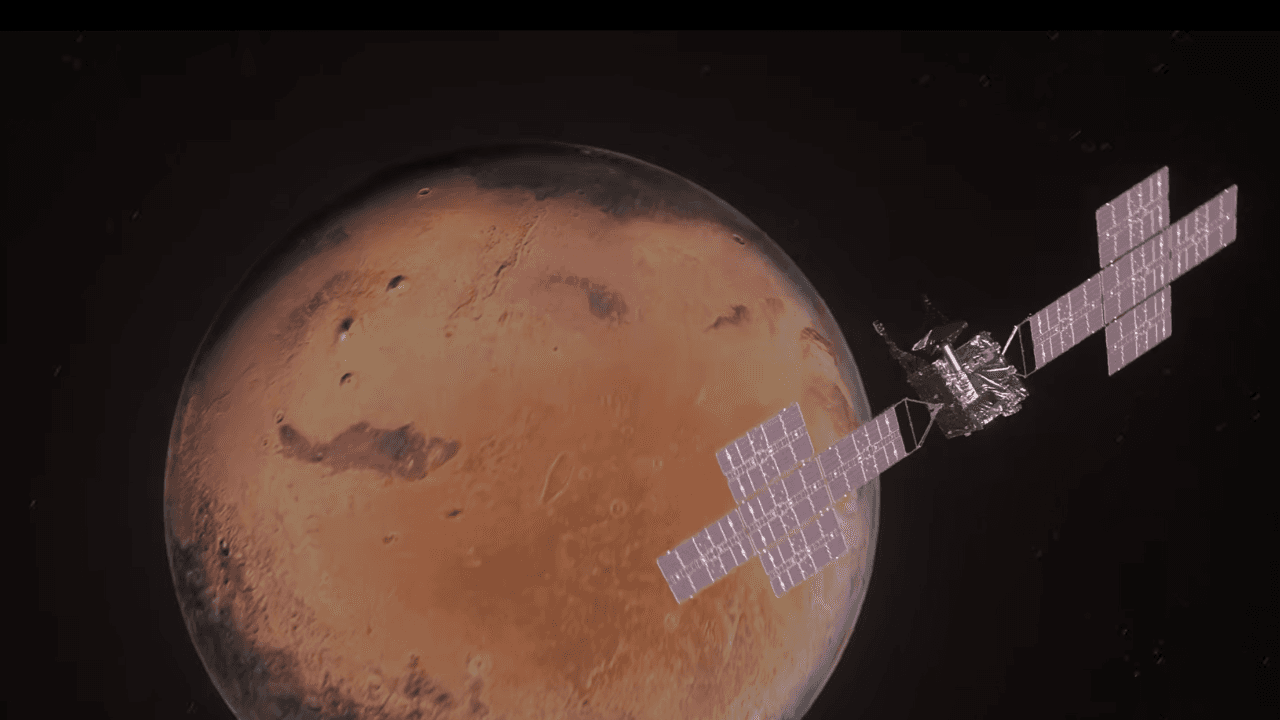
NASA's Psyche spacecraft recently made a close pass by Mars—not to explore the Red Planet, but to use one of spaceflight's most elegant techniques: a gravity assist maneuver. This planetary slingshot will help send Psyche toward its real destination: a unique metal-rich asteroid hiding in the asteroid belt.
The Long Route to Science
The Psyche mission targets a metal asteroid, 16 Psyche, which is unusual in composition. While most asteroids are rocky, this one appears to be primarily iron and nickel—similar to Earth's core. Understanding how such objects form could teach us about planetary formation and what lies deep within terrestrial planets.
But getting there isn't straightforward. Rather than launching directly toward the asteroid belt, Psyche uses Mars as a gravity assist point, allowing the spacecraft to gain speed without expending additional fuel.
How Gravity Assists Work
A gravity assist—also called a gravitational slingshot—is a maneuver where a spacecraft uses the gravity of a planet to change its trajectory and increase its velocity relative to the sun. The spacecraft approaches a planet, gets accelerated by its gravitational pull, and leaves traveling faster and in a new direction.
This technique has been fundamental to deep space exploration for decades. Every mission to the outer planets—Voyager, Cassini, New Horizons—relied on gravity assists to reach their destinations with reasonable fuel budgets.
Conservation of Energy
From a physics perspective, the spacecraft "borrows" momentum from the planet's orbit around the sun. The planet loses an infinitesimal amount of momentum (too small to measure), while the spacecraft gains a significant speed boost. It's orbital mechanics at its most elegant.
The Payoff
This detour through Mars allows Psyche to reach the asteroid belt with significantly less fuel consumption than a direct trajectory would require. For deep space missions, fuel efficiency directly translates to mission longevity and the ability to carry more scientific instruments.
Comments
Loading comments...