Space
Vera C. Rubin Observatory Discovers 11,000 Asteroids in Early Test
The Sky Survey That's Already Changing Astronomy
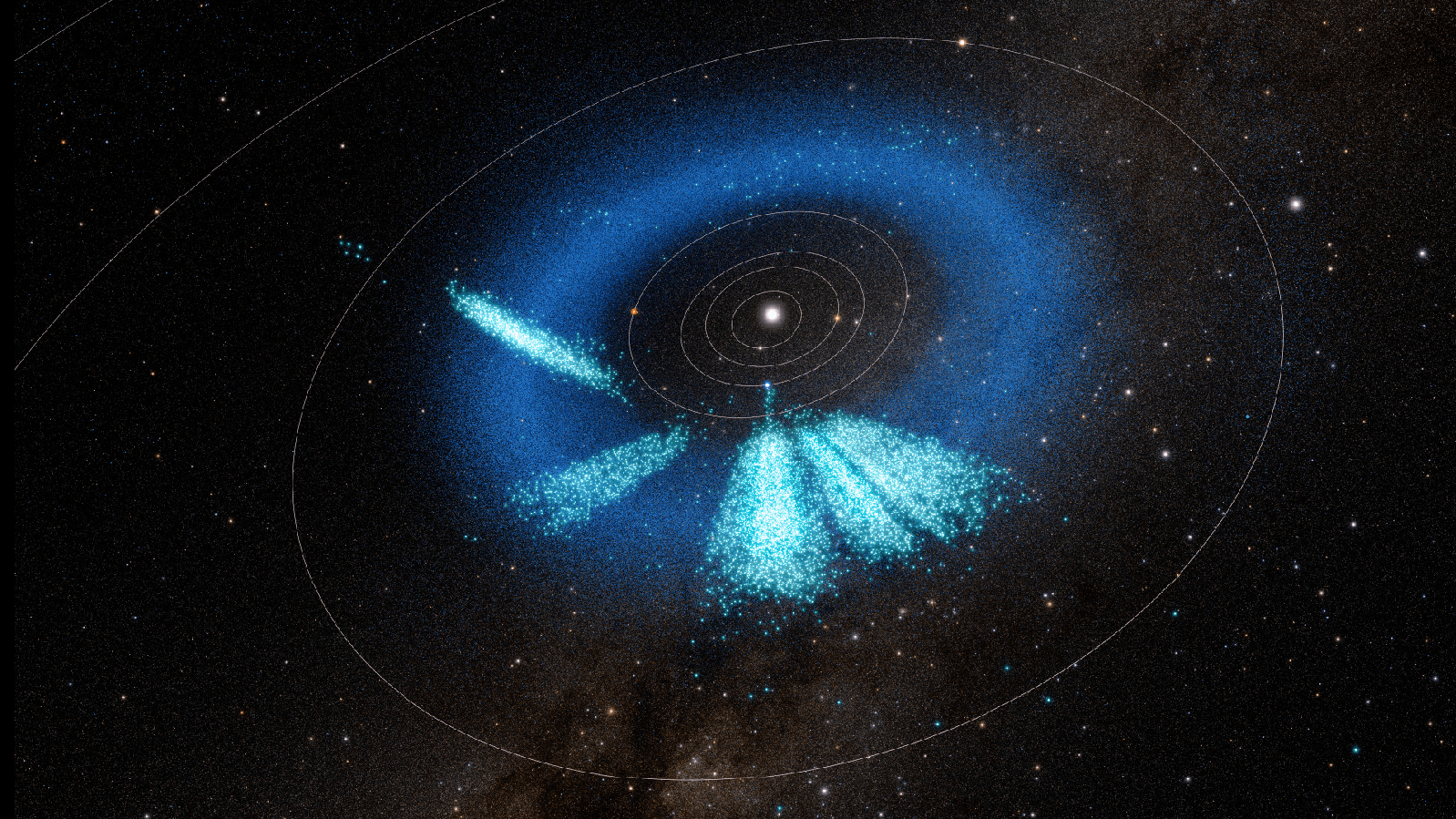
The Vera C. Rubin Observatory is living up to its name. Even with preliminary, engineering-quality data, this $800-million-plus telescope has already identified 11,000 previously unknown asteroids and measured more precise orbits for tens of thousands of others. And it's barely started.
This is transformative. Current surveys discover tens of thousands of asteroids per year. Rubin has demonstrated it can find thousands in just days.
What Makes Rubin Special
The observatory's 8.4-meter mirror and the largest camera ever built for astronomy allow it to repeatedly image the entire southern sky every few nights. That capability makes it uniquely suited to spotting faint, fast-moving objects that older surveys would miss entirely.
Most of the new discoveries are main-belt asteroids between Mars and Jupiter, but Rubin's already identified 33 near-Earth objects (NEOs)—the asteroids and comets whose orbits bring them close to the sun. None pose a threat to Earth, but finding these objects is crucial for planetary defense. Astronomers estimate that when Rubin is fully operational, it will increase the number of known large NEOs from just 40% up to 70%.
The Far Reaches of the Solar System
Perhaps more intriguingly, Rubin has detected roughly 380 trans-Neptunian objects (TNOs)—icy bodies orbiting beyond Neptune. Finding these requires advanced computational methods that sift through billions of faint light sources, testing millions of possible motion paths to pinpoint slow, subtle movements.
These distant objects are tantalizing probes: they tell us how planets moved early in the solar system's history, and whether a yet-undiscovered ninth large planet might still be lurking in the outer reaches.
Over its 10-year Legacy Survey of Space and Time, Rubin is expected to discover millions of new asteroids, dramatically expanding our census of the solar system and improving our ability to detect potentially hazardous objects decades in advance.
Source: Space.com – Rubin Observatory discovers 11,000 new asteroids
Comments
Loading comments...