Space
Russia Plans Ambitious Venus Mission for 2036 — Reclaiming Soviet Legacy
Russia Eyes Venus: A Return to Soviet Dominance
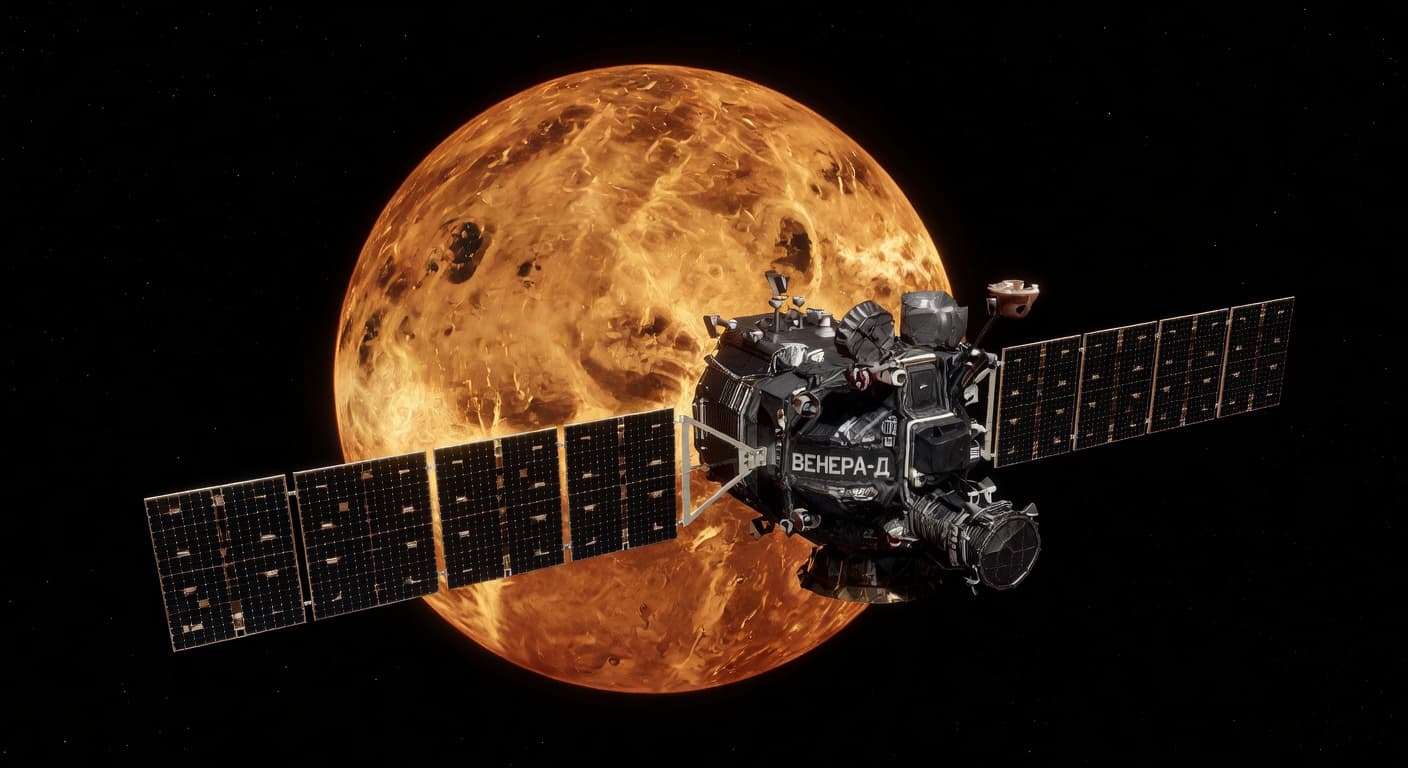
Russia has announced plans for the Venera-D mission, scheduled to launch toward Venus in 2036. The mission marks a major comeback for a space programme that once monopolised Venus exploration — an achievement that defined Soviet space prestige during the Cold War.
The Soviet Venus Legacy
During the 1960s, 1970s, and 1980s, the Soviet Union launched more successful Venus missions than the rest of the world combined. The Venera programme landed robotic probes on the Venusian surface, transmitted pictures from beneath the clouds, and gathered atmospheric data from humanity's most hostile neighbour world.
Venus, despite its hell-like conditions — surface temperatures of 462°C and atmospheric pressure 92 times that of Earth — remained a target of intense scientific interest. The Soviets proved it was possible to survive there, if only briefly.
What Venera-D Will Do
The new Venera-D mission will represent a major engineering challenge. The spacecraft will attempt to:
- Orbit Venus — conduct long-term atmospheric and surface observation
- Deploy a lander — survive long enough to transmit data from the surface
- Analyse the atmosphere — search for potential biosignatures or chemical anomalies
- Study the geology — use radar to penetrate the permanent cloud cover
Scientists remain fascinated by Venus's extreme conditions because they offer insights into planetary atmospheres, climate feedback loops, and potentially what happened to make Venus so inhospitable billions of years ago.
The Geopolitical Angle
The timing is significant. While NASA and ESA have renewed interest in Venus (with missions like EnVision and VERITAS planned for the early 2030s), Russia's 2036 mission positions the country back at the forefront of Venus science.
It also represents a defiant statement about Russian space capability at a time when Western sanctions have threatened cooperation on the International Space Station and other joint programmes.
A Challenging Target
Venus has proven notoriously difficult for modern spacecraft. No lander has transmitted data from the surface since the Soviet Venera 14 in 1985. The engineering required to repeat that feat nearly 40 years later, with modern instrumentation, represents a genuine technological accomplishment.
Comments
Loading comments...