Astronomy
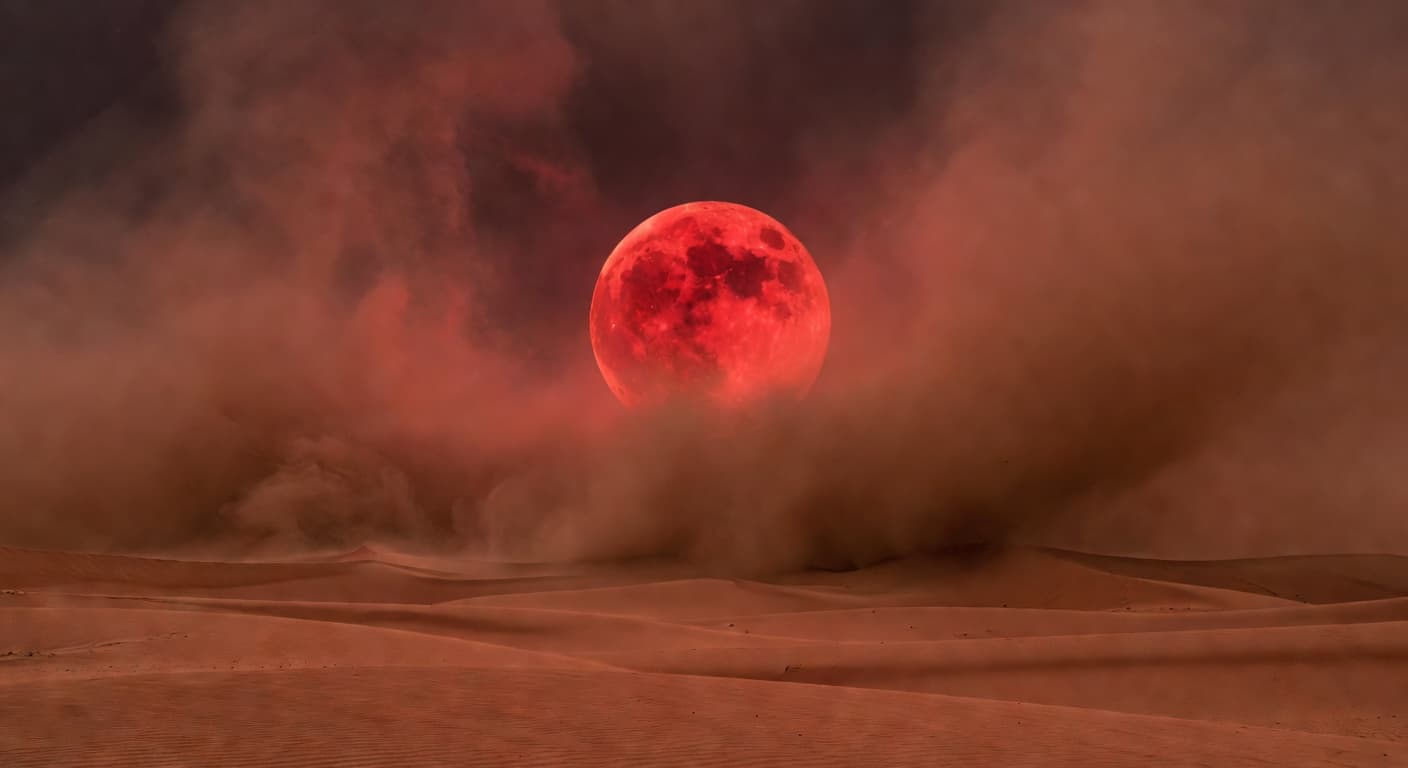
The March Full Moon Glows Eerily Red Through Saharan Dust
Dust in the Upper Atmosphere Turns the Moon Red
March's full moon displayed an unusual deep red colour — not because of a lunar eclipse, but because of a fascinating optical phenomenon high above the Earth: Saharan dust particles filtering sunlight before it reached the Moon's surface.
The effect created an eerie, otherworldly appearance that drew attention from observers across Europe and beyond.
How Dust Filters Moonlight
When the Sun's light passes through Earth's atmosphere on its way to illuminate the Moon, any suspended particles — dust, ash, pollution — preferentially scatter blue wavelengths of light, a process called Rayleigh scattering.
This is the same mechanism that makes sunsets red and sunrises orange. Blue light is scattered away, leaving reds and oranges to reach the target. In this case, the target was the Moon.
Saharan dust, lifted by powerful winds and transported thousands of miles into the upper atmosphere, is particularly effective at this scattering because of the size and composition of the particles.
Dust Transport and Climate
Saharan dust transport is a real climate phenomenon with measurable effects. Billions of tons of dust travel from North Africa annually, affecting:
- Air quality — visible haze across continents
- Rainfall patterns — dust particles influence cloud formation
- Ocean ecosystems — nutrients from African dust fertilize Atlantic phytoplankton
- Atmospheric optics — phenomena like this red moon
Scientists track Saharan dust transport using satellite data to understand both weather patterns and long-term climate effects.
A Reminder of Atmospheric Complexity
While not rare, combined Saharan dust events timed with full moons are striking enough to make headlines. It's a visible reminder that Earth's atmosphere is far from transparent — it's a dynamic, layered system constantly carrying material from place to place.
Astrophotographers and skywatchers captured the phenomenon and noted its deep, eerie tone — a colour between blood-red and rust that persisted for hours as the Moon rose and travelled across the night sky.
Comments
Loading comments...