Swift on Apple II: Modern Languages for Vintage Hardware
Swift on Apple II: Bringing Modern Languages to Vintage Hardware
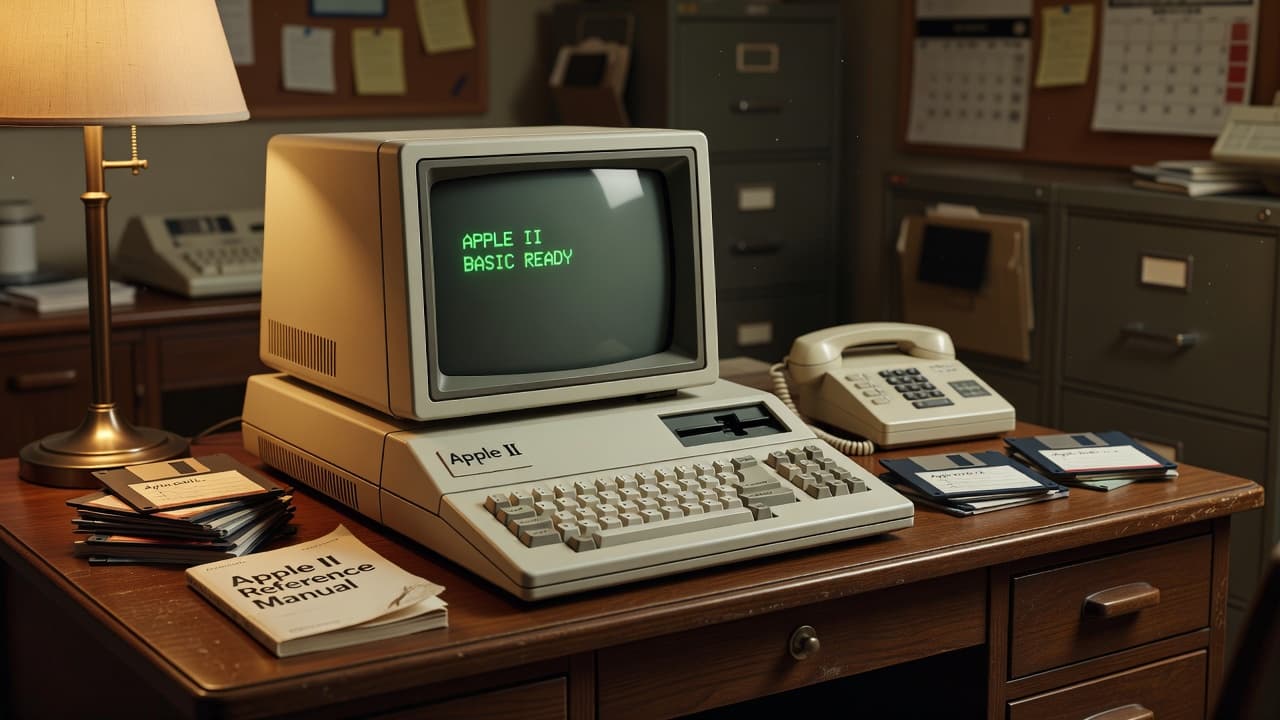
In what might be the most delightfully impractical programming achievement of July 2026, a developer has created a Swift development environment targeting the original Apple II—with its whopping 48 KB of RAM upgrade.
The Setup
The developer, Yeo Kheng Meng, built a virtual machine that runs on top of the Apple II's 6502 processor. Swift code is compiled down to bytecode for this VM, which then executes on the historic hardware. It's clever engineering: instead of trying to make Swift's full runtime fit in 48 KB, the VM abstracts away the complexity, letting developers write in a modern language while respecting the platform's harsh constraints.
The project also leverages contemporary AI tools—Claude Code and GPT 5.5 Codex—to accelerate development. It's a neat callback to how computer programming has evolved. In the 1970s and early 1980s, developers hand-optimized assembly for every byte. Now they're using AI to help translate modern abstractions back down to the constraints those same platforms imposed.
Why This Matters (More Than It Seems)
This isn't just nostalgia. It's a statement about what good tooling can achieve:
- Abstraction without waste: You can write readable, structured code without bloating your output. The VM handles the translation.
- Preservation through modernization: Retro platforms remain interesting—and findable—when they're accessible to contemporary developers.
- Constraint-driven learning: Writing Swift that compiles to a 6502 VM teaches you things about efficiency, resource limits, and careful design that cloud-native development glosses over.
The Broader Trend
This fits into a larger movement in retro computing: browser-based IDEs, cross-compilers, emulators, and BASIC interpreters that make vintage systems approachable without requiring a warehouse full of original hardware. Projects like Turbo Rascal Syntax Error (TRSE), RGC-BASIC, and HamsterWeazle (for floppy preservation) are lowering the barrier to entry.
The Apple II is 49 years old at this point. Rather than fading into museum displays, it's becoming an interesting puzzle for developers curious about how much expression and capability you can pack into severe constraints. That's worth something.
For the Curious
If you want to explore retro computing, the barrier to entry is lower than ever. Emulators run on any modern machine. Cross-compilers exist for most classic platforms. And now, you can write in languages you actually know rather than learning 6502 assembly from scratch.
Not every project needs to be cutting-edge. Sometimes the best engineering problems come from working backward through time.
Source: Hackaday – Retrocomputing Category
Comments
Loading comments...