July 2026 Skywatching: Planetary Alignment, Comet 10P, and the Milky Way
July 2026 Skywatching Guide: Planetary Alignment, Comet, and the Milky Way
July is one of the best months for dark-sky observing in the Northern Hemisphere. NASA's monthly skywatching guide highlights several events worth marking on your calendar—and your telescope.
Key Events This Month
July 11–12: Predawn Planetary Alignment
Before sunrise on these dates, look toward the eastern sky for the waning crescent Moon, Mars, Saturn, and (if you have binoculars or a telescope) Uranus. The Moon acts as a convenient pointer, and Saturn's brightness makes it easy to spot. Mars appears as a small reddish point. This alignment is a great reminder that the outer solar system isn't far away—it's been there all along, waiting in the dawn sky.
July 14: Comet 10P/Tempel 2 and the Milky Way
The New Moon on July 14 creates the darkest skies of the month. This is prime time for:
Comet 10P/Tempel 2: This short-period comet (returns every 5½ years) swings by Earth now. Look in Capricornus with binoculars or a telescope for a small fuzzy glow with a possible short, fan-shaped tail. It won't be dramatic, but it's real, visible, and rewarding for observers willing to venture to a dark location.
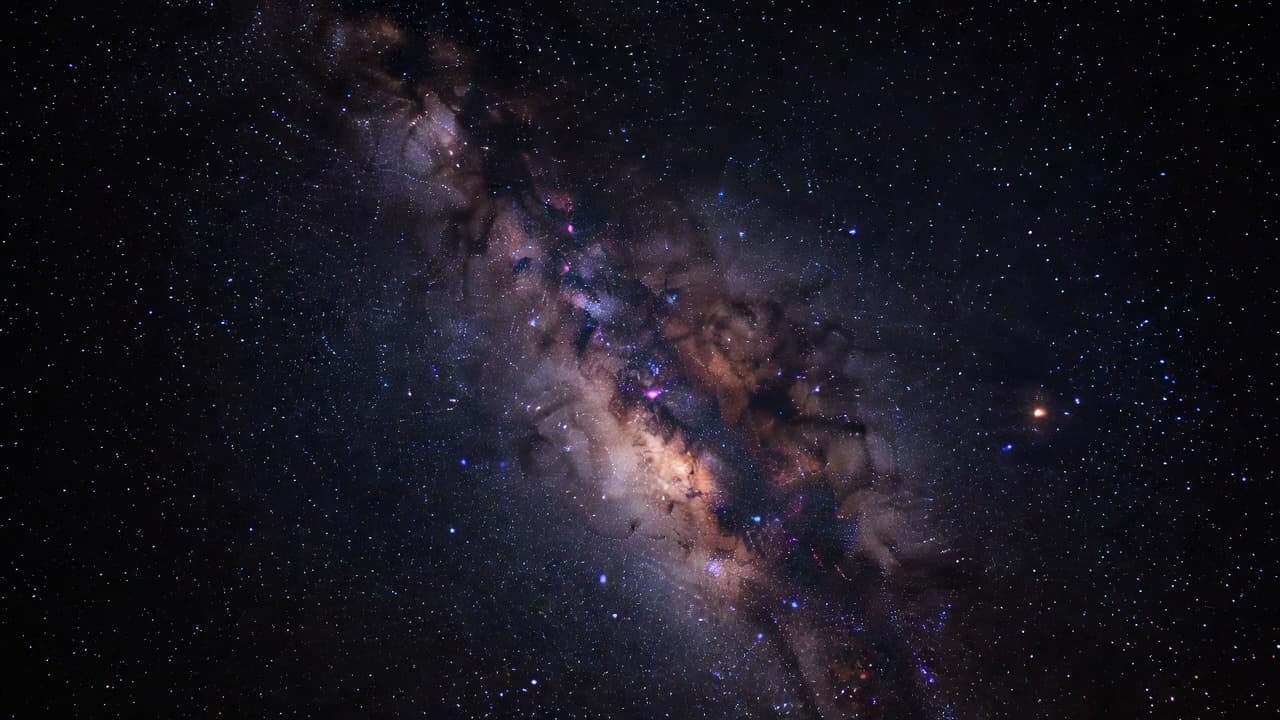
The Milky Way: From a dark location away from city lights, the Milky Way appears as a pale, cloudy band stretching across the summer sky. The densest part marks the galactic center near Scorpius and Sagittarius—countless stars crowded behind cosmic dust. It's a humbling sight that photographs never quite capture.
Late July: Saturn's Rings at a New Angle
Saturn's rings appear unusually thin from Earth's perspective in late July due to Saturn's orbital tilt. This means the rings are nearly edge-on, creating a striking and unusual view through a telescope. If you have access to moderate optical power, it's worth the view.
Practical Tips
- Get dark skies: City light pollution kills observing. Apps like Dark Sky Finder show you nearby dark-sky locations.
- Start observing about 45–60 minutes after sunset for comet hunting.
- For planetary observations, use binoculars or a small telescope (even a 50mm refractor works well).
- The July 14 New Moon window is your best bet for any deep-sky work.
The Bigger Picture
July's events remind us that astronomy doesn't require expensive equipment or exotic destinations. A pair of binoculars, dark skies, and a willingness to wake early or stay up late opens up the solar system to amateur observers.
Source: NASA Science – What's Up July 2026
Comments
Loading comments...