Using Earth Volcanism to Understand Venus: A Hawaiian Connection
Could monitoring Earth's volcanoes help us detect activity on Venus? A new study suggests the answer is yes, using data from a recent Hawaiian eruption to inform our understanding of Venusian volcanism.
Ancient Activity or Current Eruptions?
Venus remains geologically mysterious. The planet's surface was extensively resurfaced by volcanism within the past 500 million years, with over 85,000 identified volcanoes. For decades, scientists assumed this volcanism occurred all at once, billions of years ago. But recent radar analysis suggests something intriguing: Venus may still be volcanically active today.
Atmospheric anomalies—excess carbon dioxide, sulfur dioxide, and molecular nitrogen—hint at ongoing volcanic processes. Yet conclusive evidence has remained elusive. No direct observations of volcanic plumes have been confirmed, complicating efforts to understand Venus's current geological state.
Learning from Mauna Loa
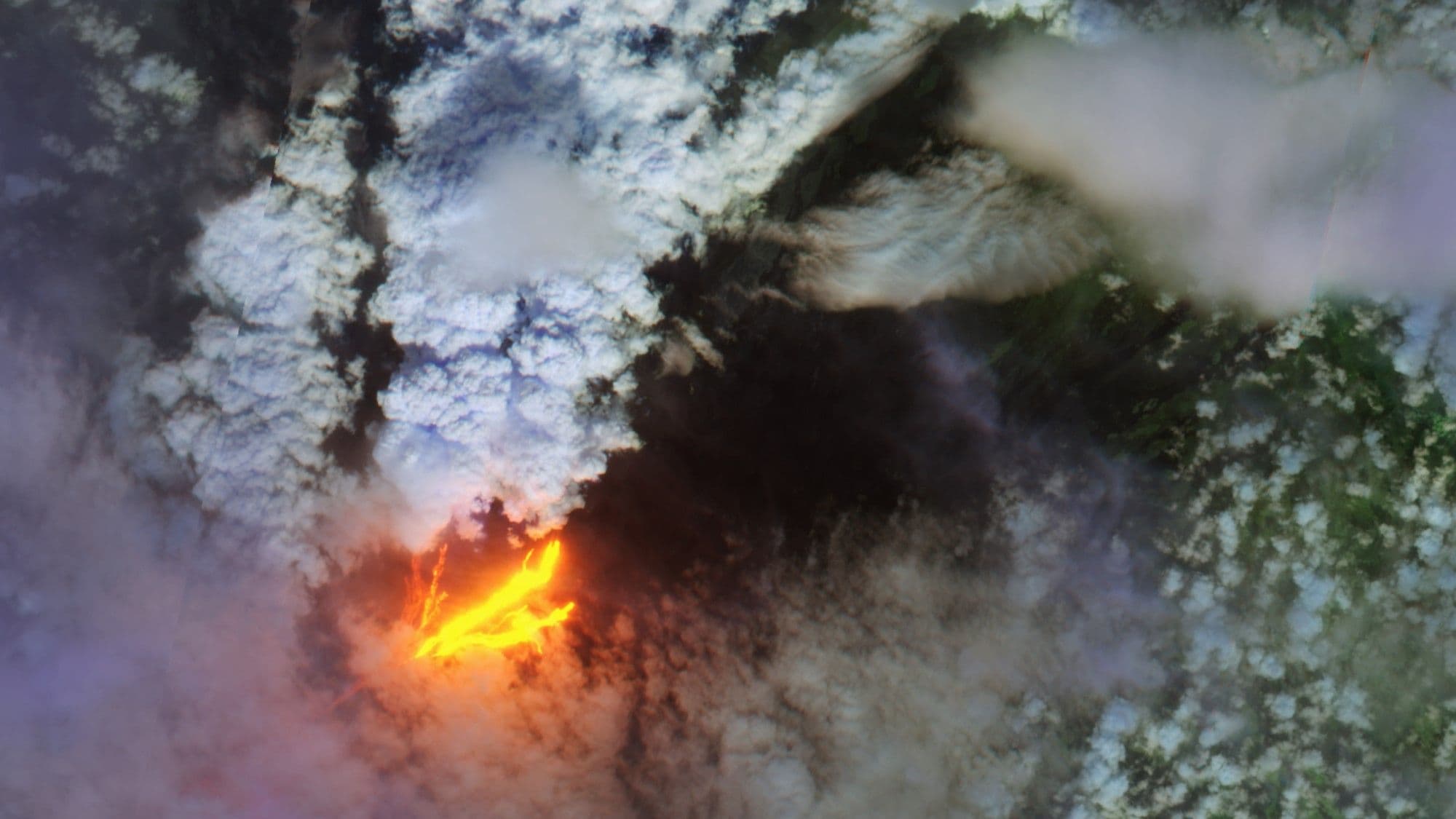
Geologist Ian Flynn from the University of Pittsburgh found an unexpected connection: data from Hawaii's Mauna Loa eruption in November-December 2022 could illuminate Venusian volcanism.
Mauna Loa is Earth's most active large volcano, with 34 recorded eruptions since 1843. The 2022 event was particularly valuable for study because lava flows came within 1.7 miles of Saddle Road, a major thoroughfare, making comprehensive monitoring essential.
From 2D to 3D Lava Flow Analysis
Flynn's team combined data from government-funded satellites and newly available private satellite imagery to track the eruption's progression. But they went further: collaborating with NASA's Goddard Space Flight Center, they developed techniques to measure lava flow thickness from orbital data—converting flat 2D satellite views into 3D volumetric models.
This represents a breakthrough for volcanic science. Flow thickness directly determines cooling rates and duration. The researchers found that lava flows thicker than 20 meters (66 feet) required approximately 21 months to cool completely.
Implications for Venus Research
These findings carry profound implications for detecting and characterizing Venusian volcanism. Knowing how long lava takes to cool on Earth allows scientists to better interpret thermal signatures on other planets. When combined with upcoming Venus missions—NASA's VERITAS, DAVINCI, and ESA's EnVision—this technique could finally confirm whether Venus remains geologically active, reshaping our understanding of planetary evolution.
Comments
Loading comments...