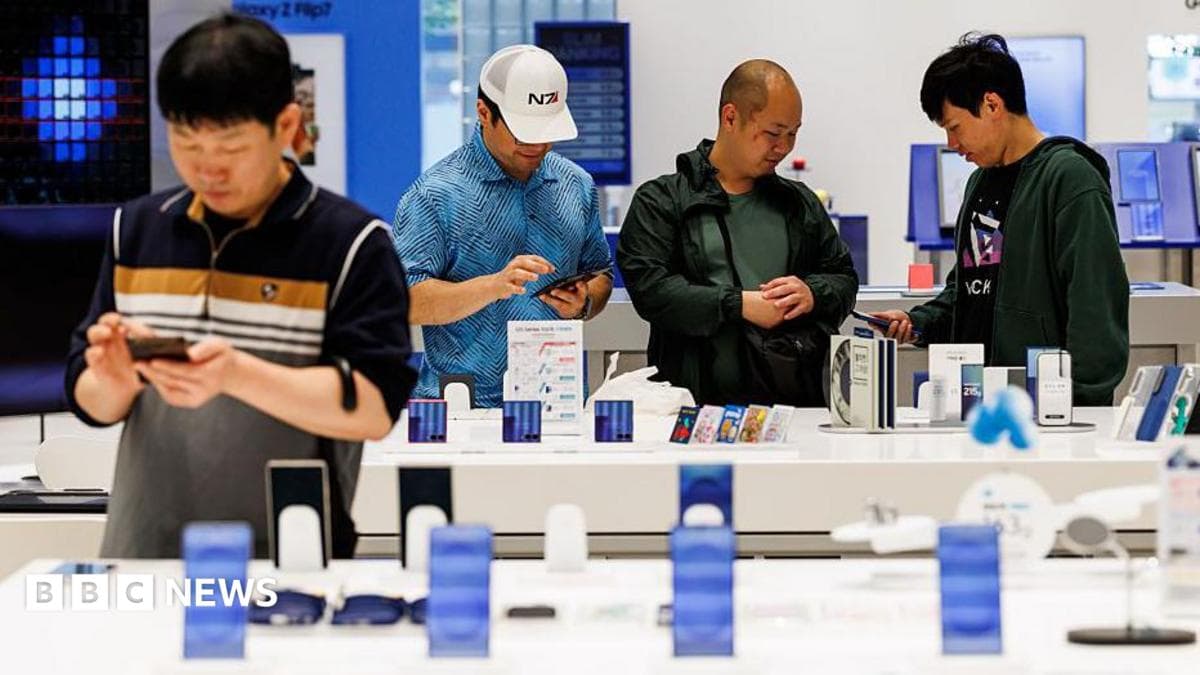
Samsung's Profits Soar 19-Fold on AI Chip Demand
Samsung Electronics has announced a staggering 19-fold jump in operating profits for Q2 2026 (April-June), forecasting 89.4 trillion won (£43.6bn / $58.4bn) in earnings. The South Korean technology giant attributed the surge entirely to global demand for artificial intelligence memory chips.
This is Samsung's third consecutive quarter of record-breaking profits, and the forecast—released ahead of detailed financial reports due in July—comes at a pivotal moment for the semiconductor industry. Memory chip prices have skyrocketed as demand from AI data centers continues to vastly outstrip available supply.
The AI Memory Bottleneck
The story here is supply and demand in its purest form. Data centers racing to deploy large language models, neural networks, and AI infrastructure are consuming memory chips faster than manufacturers can produce them. This has created a perfect storm: tight supplies, surging prices, and record profitability for the few companies positioned to supply the market.
Samsung's sales for the quarter reached approximately 171 trillion won—more than double the same period last year. Marc Einstein, an industry analyst at Counterpoint Research, called it "one of the best quarterly performances ever" from a semiconductor maker, approaching the sector record set by Nvidia earlier this 2026.
"This has everything to do with the AI boom," Einstein noted. "Memory companies continue to ride a tidal wave driven by limited supply and unprecedented demand."
The memory industry—dominated by Samsung, SK Hynix, and Micron—is experiencing something genuinely unprecedented. Unlike traditional semiconductor cycles, this demand surge shows no signs of abating. Research firm IDC's Bryan Ma observed that supply constraints are expected to persist through 2027, given "unabated demand from AI data centres."
Geopolitical Competitiveness
Samsung's performance has lifted the broader South Korean semiconductor sector. Rival SK Hynix's shares have jumped over 200% this year, and South Korea's benchmark Kospi index is up more than 80%. The government has responded by announcing at least $880 billion in investments to expand chip manufacturing capacity through 2030, led by Samsung and SK Hynix.
Rival manufacturing powers—Japan, Taiwan, and China—are making equally aggressive bets on expanding fab capacity to capture share of this lucrative market.
The Nvidia Parallel
For context, Nvidia reported record quarterly sales and profits with $80 billion in revenue for Q1 2026. However, Nvidia's stock fell after the earnings, signaling investor concerns about rising competition. By contrast, Samsung's stock fell 7% on Tuesday despite the record forecast—suggesting some investors had expected even higher profits, or are concerned about a potential supply-demand rebalancing ahead.
Memory chips are the unglamorous backbone of AI infrastructure. While everyone talks about GPUs (Nvidia's domain), nothing happens without sufficient DRAM and NAND flash. Samsung's record quarter is a reminder that the semiconductor supply chain's success depends on steady, boring competence in memory—exactly what Samsung provides.
Source: BBC News
Comments
Loading comments...