Vast Space Enters Satellite Market Alongside Commercial Space Station Plans
Vast Space Enters Satellite Market Alongside Commercial Space Station Plans
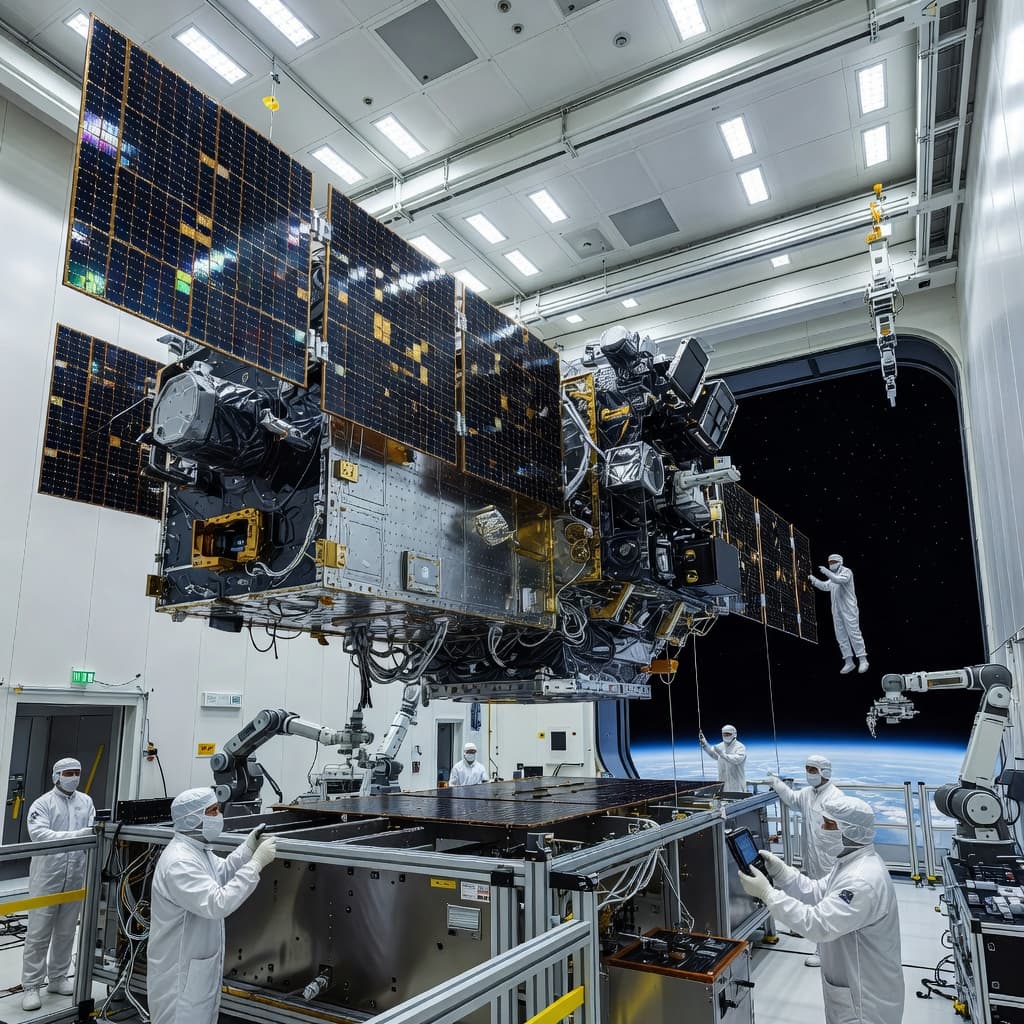
Vast Space, the California startup building commercial space stations, announced today a strategic diversification: a new line of high-power satellites designed for demanding orbital applications.
Two Products, One Manufacturing Base
Vast's move mirrors classic aerospace consolidation. Rather than focusing purely on station modules, the company is leveraging its $1 billion investment in manufacturing infrastructure—including state-of-the-art clean rooms built for spacecraft production—to enter the increasingly competitive satellite sector.
The company's primary focus remains Haven-1, the inaugural commercial space station expected to launch in 2026 following successful qualification testing of its pathfinder module. But satellites represent significant additional revenue potential.
The Satellite Market is Exploding
The numbers tell the story:
- For decades, Earth orbit housed roughly 4,000 satellites
- That number has grown to 14,000 in just five years, primarily due to SpaceX's Starlink expansion
- Industry estimates suggest 500,000 satellites will orbit Earth within a decade
This growth is driven by communications, Earth observation, orbital data centers, and emerging applications we haven't even conceived yet.
Vast's Market Position
Traditional aerospace titans—Boeing, Lockheed Martin, Northrop Grumman, Maxar—built expensive, bespoke satellite designs costing tens to hundreds of millions of dollars each.
The landscape has shifted:
- The U.S. Space Development Agency now prefers proliferated constellations of smaller satellites over centralized, expensive assets
- Falcon 9's increased launch cadence and rideshare missions have made small-to-medium satellite deployment economical
- A new generation of manufacturers (K2 Space, Rocket Lab, Blue Canyon) are building modular, cost-effective alternatives
Vast's competitive edge is manufacturing maturity. Most satellite startups are still emerging with immature products. If Vast executes, their established clean rooms and supply chain could position them as a market leader, particularly for power-hungry applications.
Numbers Game
Of an expected 500,000 new satellites over the next decade, perhaps 10% might be available to companies like Vast (the other 90% reserved for SpaceX, Amazon, Blue Origin, and other megaplayers). That's still 50,000 potential satellites—a market worth competing for.
This move doesn't diminish Vast's commitment to space stations. It diversifies revenue streams while maximizing their existing infrastructure. In space commerce, that kind of vertical integration is increasingly common.
Comments
Loading comments...